
Sauces & Condiments
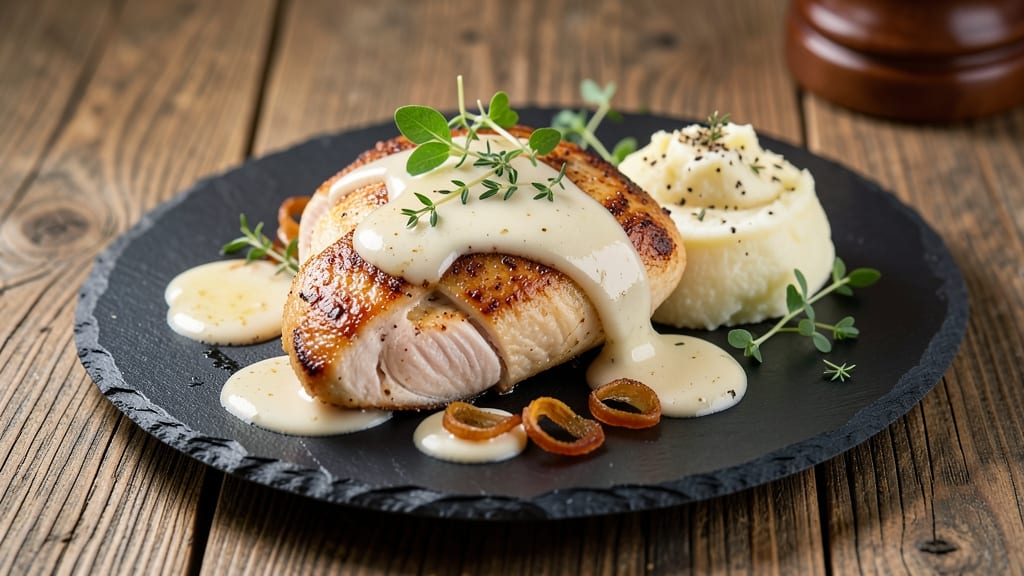
This chicken breast with white wine sauce transforms a simple weeknight dinner into something restaurant-worthy with minimal effort. The secret lies in a velvety white wine reduction that clings to perfectly seared chicken, turning ordinary into extraordinary.
I developed this recipe during a particularly busy week when I needed a dish that felt special without requiring hours in the kitchen.
The process is straightforward: marinate the chicken briefly to tenderize, then pan-sear until golden brown. While the chicken rests, deglaze the pan with white wine and shallots, creating a sauce that's rich yet light—no heavy cream required.
This technique ensures the sauce is silky and packed with flavor, cutting through the chicken's richness beautifully.
What you'll end up with is juicy, perfectly cooked chicken breast topped with a glossy, aromatic white wine sauce that's effortlessly elegant. The sauce's acidity brightens the dish, while the wine's depth adds complexity that elevates every bite.
This is the kind of meal that feels impressive yet remains simple enough for any night of the week.
Pair it with roasted asparagus, garlic mashed potatoes, or crusty bread to soak up every last drop of that silky sauce. The recipe delivers restaurant-quality results without the fuss, proving that great meals don't always require complicated techniques—just the right approach.
Ingredients for chicken breast with white wine sauce
Twelve ingredients transform ordinary chicken into restaurant-worthy elegance with minimal effort.
| Ingredient | Amount | Notes |
|---|---|---|
| Boneless, Skinless Chicken Breast 🍗 | 1 ½ lb | Pounded to even thickness |
| Dry White Wine 🍷 | 1 cup | Sauvignon Blanc or Pinot Grigio |
| Shallots 🧅 | 3 whole | Minced, not sliced |
| Unsalted Butter 🧈 | ½ cup | Cold, cubed for searing |
| Chicken Broth 💧 | ½ cup | Low-sodium preferred |
| Fresh Thyme 🌿 | ¼ cup | Leaves only, stems removed |
| Fresh Parsley 🌿 | ⅛ cup | Chopped, for garnish |
| Garlic Cloves 🧄 | 3 cloves | Minced, not pressed |
| Diamond Crystal Kosher Salt 🧂 | 1 ½ tsp | For seasoning only |
| Freshly Ground Black Pepper 🌶️ | ½ tsp | Cracked, not powdered |
| All-Purpose Flour 🌾 | 1 tbsp | For sauce thickening |
| Lemon Juice 🍋 | 1 tbsp | Freshly squeezed |
The chicken breast is where precision matters most—look for uniform thickness (about 1/2-inch) to ensure even cooking. Whole Foods or Trader Joe's carry pre-pounded breasts, but if buying whole, pound with a meat mallet. For wine, Sauvignon Blanc or Pinot Grigio work best—their acidity brightens the sauce without overpowering. The shallots? Use fresh, never jarred, as they add delicate sweetness that's lost in preserved versions. Thyme and parsley should be bright green and fragrant—wilted herbs mean compromised flavor.
No white wine? Dry vermouth or chicken broth works in a pinch, though the sauce will lack depth. Substitute shallots with 1/4 cup finely chopped yellow onion, but you'll lose that subtle sweetness. For butter, European-style (like Plugrá) has higher fat content, creating a richer sauce. The flour is a secret weapon—use all-purpose, not cake flour, as it thickens more effectively. If you're gluten-sensitive, cornstarch at half the amount is a viable alternative. Fresh lemon juice is non-negotiable—bottled lacks the zesty punch needed to balance the sauce.
Store chicken breasts in the coldest part of your fridge, covered with parchment paper, for up to 2 days. Fresh herbs should be wrapped in damp paper towels and sealed in a plastic bag for 5-6 days. The sauce reheats beautifully—simmer on low for 2-3 minutes until just warmed through. For meal prep, portion sauce separately to maintain texture. Leftovers keep 3-4 days in the fridge or 3 months frozen, though the sauce's velvety texture may separate slightly upon thawing—just stir vigorously to restore.
Why You'll Love This Recipe
- Here’s what sold me: I use whatever cheap white wine I have on hand, and the butter stretches thin with the broth. Feels fancy, costs next to nothing. My roommates still think I’m a gourmet chef.
- Wine Cabinet Magic: I swear by this trick—just a splash of white wine transforms plain chicken into something restaurant-worthy. That bright acidity cuts through the richness of the butter, and suddenly you’ve got depth without extra effort.
- One-Pan, Zero Stress: Honestly, this is my go-to when I’m too tired to wash dishes. Sear the chicken, deglaze with wine, let it simmer—all in the same pan. The shallots caramelize right into the sauce, so you’re not left with a pile of scraps.
- Leftovers That Beg for More: Between us, this sauce clings to chicken like glue, so every reheat tastes fresh. I’ll make extra just to toss with pasta or serve over rice later—no one ever complains when I pull this out for lunch.
Step-by-step instructions for chicken breast with white wine sauce
This method transforms simple chicken into restaurant-worthy elegance using just 10 ingredients.
Pound and Season the Chicken
Place the 1.5 lb boneless, skinless chicken breast between two sheets of plastic wrap. Using a meat mallet, pound it to an even ½-inch thickness—this ensures even cooking and prevents dryness. The goal is uniform thickness so all parts cook simultaneously.
Season both sides generously with 1.5 tsp Diamond Crystal kosher salt and 0.5 tsp freshly ground black pepper. I press the seasoning firmly into the meat so it adheres well. Let the seasoned chicken rest at room temperature for 15 minutes—this prevents uneven cooking when it hits the hot pan.
Sear the Chicken in Butter
Heat 0.5 cup unsalted butter in a large skillet over medium-high heat until the butter foams but doesn't brown. Add the chicken and cook for 4-5 minutes per side until the exterior develops a golden-brown crust. I press down gently on the chicken during the first minute to prevent curling, which ensures even contact with the pan.
Transfer the cooked chicken to a plate and tent loosely with foil to keep warm. The residual heat will finish cooking the center while you build the sauce. Don't skip this resting step—it prevents the chicken from overcooking while you work on the sauce.
Build the White Wine Sauce
Reduce heat to medium and add the 3 whole minced shallots to the same skillet. Cook for 2-3 minutes until softened but not browned. Add the 3 cloves minced garlic and cook for 30 seconds until fragrant—this prevents bitter garlic flavors that can ruin the delicate wine sauce.
Pour in the 1 cup dry white wine and scrape up all the browned bits from the bottom of the pan with a wooden spoon. This deglazing step captures all the concentrated chicken flavor. Let the wine simmer for 3-4 minutes until reduced by half—you should see a glossy, syrupy consistency forming.
Thicken and Finish the Sauce
Stir in the 0.5 cup chicken broth and 0.25 cup fresh thyme leaves, then sprinkle the 1 tbsp all-purpose flour over the mixture. Whisk constantly for 1-2 minutes until the sauce thickens to a velvety consistency. If it's too thick, add 1-2 tablespoons of water to reach your desired sauce-to-chicken ratio.
Return the chicken to the skillet and spoon the sauce over it. Add the 1 tbsp freshly squeezed lemon juice and simmer together for 2 minutes to meld the flavors. The acidity from the lemon brightens the wine, balancing the richness of the butter.
Rest and Serve
Transfer the chicken to a warm serving platter and tent with foil. Let it rest for 5 minutes—this allows the juices to redistribute, ensuring each bite is moist and flavorful. The sauce can be kept warm in the skillet over low heat while you plate.
Garnish with 0.125 cup chopped fresh parsley just before serving. The vibrant green contrasts beautifully with the golden chicken and creamy sauce. Serve immediately with your choice of sides—roasted vegetables, crusty bread, or a simple green salad to complement the dish.
Pro Tips For Making Chicken Breast With White Wine Sauce
- SEAR THE CHICKEN HARD: I learned this the hard way—skipping a deep sear means dry chicken later. Use a heavy pan (cast iron if you have it) and cook the breasts over medium-high heat for 5-6 minutes per side until golden brown. The crust locks in moisture when you deglaze with wine.
- MINCE SHALLOTS FINE: Too many big chunks in your sauce? I was skeptical until I tried it—finely mincing shallots (almost paste-like) dissolves smoothly into the wine and butter, giving that silky texture instead of visible bits. A sharp knife and a little elbow grease make all the difference.
- DEGLAZE WITH COLD WINE: Cold wine shocked me at first, but it’s the only way to stop the cooking process instantly when you pour it over the hot pan. If you use warm or room-temp wine, it’ll just cook off the alcohol and leave you with a flat, buttery sauce instead of bright, tangy flavor.
- STRAIN THE BROTH FIRST: Homemade or store-bought broth often has bits that turn your sauce grainy. Strain it through a fine-mesh sieve before adding it to the wine reduction—yes, it’s an extra step, but the result is a velvety sauce that doesn’t taste like you skimped. (Your future self will thank you.)
Flavor customization for this chicken breast with white wine sauce
Herb Variations
Swap thyme for fresh tarragon or rosemary to add a distinct herbal note. Tarragon brings an anise-like sweetness that pairs beautifully with white wine, while rosemary adds earthy depth. I've found that ½ tsp dried tarragon works well if fresh isn't available, but fresh always delivers better flavor.
For a Mediterranean twist, add 1 tsp finely chopped oregano along with the thyme.
Spice Levels
Add ½ tsp red pepper flakes to the sauce for a subtle kick, or a pinch of cayenne for heat lovers. For a smoky option, stir in ¼ tsp smoked paprika when building the sauce.
I like to add a dash of hot honey at the end for a sweet-spicy balance that cuts through the richness. Always taste as you go—spices intensify during reduction.
Creamy Enhancements
For a richer sauce, stir in 2 tbsp heavy cream or ½ cup crème fraîche at the end. The acidity of the wine sauce balances the creaminess perfectly. I recommend French-style crème fraîche for its tangy depth.
For a lighter option, replace half the butter with 2 tbsp olive oil—it adds a fruity note that complements the wine.
Citrus Brightness
Boost the sauce's brightness with 1 tbsp orange zest or ½ cup orange juice reduction. The citrus enhances the wine's acidity while adding a refreshing note. I often use blood orange juice for its natural sweetness and deep color. For a tropical twist, add ½ cup pineapple juice.
Umami Depth
Add 1 tsp fish sauce. or ½ tsp soy sauce. to the sauce for umami richness. The fish sauce works exceptionally well with white wine, creating a complex flavor profile.
For a vegetarian option, use 1 tsp mushroom powder. or 1 tbsp miso paste. dissolved in the broth before adding to the sauce. These additions deepen the sauce's complexity without overpowering the wine.
Cheese Finish
Stir in ¼ cup grated Parmesan. or ½ cup goat cheese. at the end for a creamy, tangy finish. The Parmesan adds a salty depth, while goat cheese brings a bright acidity that cuts through the butter.
I recommend using aged Parmigiano-Reggiano. for its nutty complexity. For a vegetarian version, omit the chicken and serve the sauce over mushroom risotto.
Nutrition facts
Frequently asked questions
Can I use red wine instead of white wine for this sauce?
The recipe specifically calls for white wine to maintain a bright, delicate flavor profile that complements the chicken beautifully. Red wine would overpower the dish with its tannins and boldness. If you must substitute, try dry vermouth or a light-bodied red like Pinot Noir, but reduce it by half to maintain balance.
How do I prevent the chicken from drying out?
Pounding the chicken to an even ½-inch thickness is key, along with letting it rest for 15 minutes before cooking. Use a meat thermometer to check doneness—chicken should reach 165°F in the thickest part. Never skip the 5-minute rest after cooking to redistribute juices.
What's the best way to reheat leftovers?
Reheat chicken and sauce together in a skillet over low heat for 2-3 minutes until warmed through. Avoid microwaving—the sauce may separate. For extra richness, add 1 tbsp butter or cream while reheating. Store leftovers in an airtight container for 3-4 days.
Can I make this sauce ahead of time?
Prepare the sauce up to 2 days ahead and store it in the refrigerator. When reheating, warm it gently on the stove—it may thicken further. For best texture, add 1 tbsp water per cup of sauce before reheating. The chicken is best cooked fresh, but you can reheat it separately.
What's the secret to getting a glossy sauce?
Deglaze the pan thoroughly after searing the chicken, scraping up all browned bits. Reduce the wine until syrupy, then whisk in the flour and broth until smooth. For extra shine, finish with 1 tsp cold butter or a splash of lemon juice just before serving.