
Sauces & Condiments
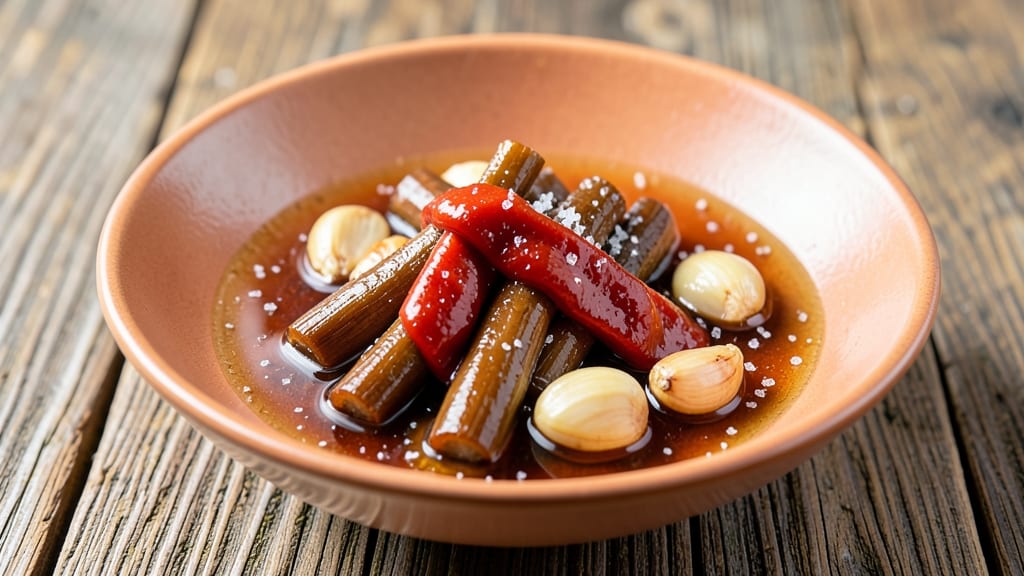
This bamboo sauce recipe transforms humble fermented bamboo shoots into a complex, umami-rich condiment that elevates stir-fries and dipping dishes. The marriage of soy, chili, and aromatic roots creates a sauce that's tangy, slightly sweet, and packed with heat—perfect for balancing rich meats or noodles.
I developed this version after tasting it in Taiwanese night markets, where it's used to cut through fatty dishes while adding depth.
The preparation is straightforward but requires patience: fermented bamboo shoots (available in Asian markets) form the base, simmered with soy sauce, rice vinegar, and a touch of sugar to balance the acidity.
Fresh garlic, ginger, and chili paste infuse the sauce with aromatic warmth, while a final reduction concentrates the flavors into a glossy, clingy consistency. The result is a sauce that clings to every noodle or bite of grilled pork.
What makes this sauce special is its versatility—use it as a dipping sauce for dumplings, a stir-fry glaze, or even a marinade for tofu. The fermentation process develops complex notes over time, making it taste even better after a few days.
Store it in the refrigerator for up to two weeks, where the flavors continue to meld and deepen. For those who prefer milder heat, reduce the chili paste slightly, or add a pinch of sugar to balance the tang.
The key is achieving that perfect harmony between umami, acidity, and spice—a balance that transforms simple dishes into something extraordinary.
Ingredients for bamboo sauce
Nine ingredients blend into a complex sauce with umami depth and balanced heat.
| Ingredient | Amount | Notes |
|---|---|---|
| Fermented Bamboo Shoots 🌿 | 1 cup | Packed, drained and rinsed |
| Soy Sauce 🥫 | ½ cup | Dark soy preferred for color |
| Rice Vinegar 🍶 | ¼ cup | Seasoned preferred for depth |
| Granulated Sugar 🍯 | 2 tbsp | Light brown sugar works too |
| Red Chili Paste 🌶️ | 2 tbsp | Adjust for heat preference |
| Garlic Cloves 🧄 | 4 cloves | Minced for aromatic infusion |
| Fresh Ginger 🌿 | 1 tbsp | Grated, for zesty brightness |
| Asafoetida Powder 🌶️ | ¼ tsp | Optional, for umami depth |
| Sesame Oil 🫒 | 1 tbsp | Toasted for nutty aroma |
Fermented bamboo shoots are the heart of this sauce—Asian markets carry them in jars or cans, often labeled as 'pickled bamboo.' Look for vibrant shoots with a tangy aroma. If unavailable, substitute with 1 cup additional soy sauce and 1 tbsp apple cider vinegar to mimic the fermented tang. The dark soy sauce adds rich color and depth, while the seasoned rice vinegar contributes acidity. For the chili paste, Maesri or Thai bird's eye chili paste delivers the most authentic heat profile, but any red chili paste will work. Fresh ginger and garlic are non-negotiable—they infuse the sauce with aromatic warmth that can't be replicated with powders.
No asafoetida? Skip it entirely—this sauce still shines without it. The sesame oil adds a nutty aroma, but if you're avoiding it, substitute with 1 tbsp neutral oil plus 1 tsp toasted sesame seeds for visual appeal. For milder heat, reduce the chili paste to 1 tbsp and add an extra 1 tbsp sugar to balance the tang. The sugar isn't just for sweetness—it helps caramelize the sauce during reduction, creating a glossy finish. If you're short on time, pre-minced garlic and ginger from the Asian section of your grocery store saves prep work without sacrificing flavor.
This sauce tastes better with age—store in a sealed jar in the refrigerator for up to 2 weeks, where the flavors continue to meld. For longer storage, transfer to a clean jar and freeze for up to 3 months. The sauce thickens as it cools, so stir before using. It's incredibly versatile—drizzle over noodles, use as a dipping sauce for dumplings, or marinate tofu in it for 30 minutes before cooking. The umami profile deepens with each use, making it a pantry staple worth the effort.
Why You'll Love This Recipe
- Five-Ingredient Magic: That’s it—just fermented bamboo shoots, a splash of soy, vinegar, sugar, and chili paste. Honestly, my pantry already had three of them, so I’m always stocked for this.
- Umami Bomb: The fermented bamboo shoots bring this sauce to life with that deep, funky flavor—like a cross between miso and pickles. One taste and you’ll understand why I reach for it constantly.
- Dip or Drizzle: Slather it on dumplings, toss it with noodles, or just eat it with chopsticks. I’ve used it for everything from takeout leftovers to a quick stir-fry, and it never lets me down.
- Budget Stretch: A little goes a long way, and since I make big batches, it’s my go-to for feeding the family without breaking the bank. Plus, it keeps for weeks in the fridge—zero waste.
Step-by-step instructions for fermented bamboo sauce
This sauce delivers bold umami and spicy depth through precise layering of flavors.
Prepare the Base Ingredients
In a medium saucepan, combine the 1 cup Fermented Bamboo Shoots with the 0.5 cup Soy Sauce and 0.25 cup Rice Vinegar. Bring to a gentle boil over medium heat, then immediately reduce to a simmer. Cook uncovered for 8-10 minutes until the liquid reduces by about one-third and the bamboo shoots soften slightly. You'll notice the sauce darkens and thickens as it cooks.
Use a wooden spoon to stir occasionally, ensuring the bamboo shoots don't stick to the bottom. The sauce should smell tangy and slightly sweet from the vinegar and soy combination. If you notice any foam forming, skim it off to maintain a clean sauce. This reduction step concentrates the flavors and creates the foundation for the sauce's rich depth.
Add Sweetness and Spice
In a small bowl, whisk together the 2 tbsp Granulated Sugar and 2 tbsp Red Chili Paste until fully combined. This mixture should be smooth with no visible sugar granules. Slowly pour this into the simmering bamboo shoot mixture while stirring constantly. The sauce will bubble vigorously as the sugar dissolves.
Continue simmering for another 5-6 minutes until the sugar is completely incorporated and the sauce thickens further. You'll see the sauce take on a glossy sheen and develop a deeper red hue from the chili paste. Taste at this stage—you should detect a balance of sweetness and heat, with the bamboo shoots adding their fermented tang. If the heat level feels too intense, reduce slightly by adding 1 teaspoon of rice vinegar at a time.
Build Complexity with Aromatics
While the sauce simmers, finely mince the 4 cloves Garlic Cloves and grate the 1 tbsp Fresh Ginger using a microplane. Add these to the sauce along with the 0.25 tsp Asafoetida Powder and 1 tbsp Sesame Oil. Stir well to distribute the aromatics evenly. The asafoetida will dissolve completely, adding its signature umami depth without any visible particles.
Simmer for an additional 3-4 minutes, allowing the garlic and ginger to soften and infuse their flavors. The sesame oil will create a delicate aroma that complements the spicy and sweet notes. You'll notice the sauce becomes even more fragrant, with layers of garlic's sharpness and ginger's zesty brightness cutting through the richness. Remove from heat once the aromatics are fully incorporated and the sauce reaches your desired consistency.
Rest and Adjust for Perfect Texture
Transfer the sauce to a clean bowl and let it cool to room temperature, which takes about 20-30 minutes. This resting period allows all the flavors to meld together and the sauce to thicken slightly as it cools. While cooling, taste the sauce again—this is when you can make any final adjustments to balance the flavors perfectly.
If the sauce needs more depth, add a splash of rice vinegar or a pinch of salt. For extra richness, stir in 1 teaspoon of sesame oil. The ideal sauce should have a harmonious balance of sweet, spicy, umami, and tangy flavors with a smooth, slightly glossy texture. Once adjusted, transfer the sauce to a clean jar and store in the refrigerator for up to 2 weeks, allowing the flavors to develop even further over time.
Pro Tips For Making Bamboo Sauce
- SOAK THE SHOOTS FIRST: Fermented bamboo shoots are tough unless you give them a quick 10-minute soak in warm water before chopping. I learned this the hard way—skipping it leaves you with a sauce that’s more like chewing on rubber than enjoying the funky depth.
- LOW AND SLOW SIMMER: Bamboo sauce needs time to meld, not burn. Start on medium heat, then drop to a bare simmer once everything’s in—about 15-20 minutes total. After burning my first batch, I now treat it like a patient stew, not a quick stir-fry.
- SALT THE SHOOTS BEFORE COOKING: Toss the chopped fermented bamboo shoots with a pinch of salt (½ tsp) right when you add them to the pan. This draws out their natural oils and mellows the sharpness, so the soy and vinegar shine without fighting for balance.
- SWEETEN THE PASTE FIRST: Mix the red chili paste with the sugar before adding it to the sauce. This dissolves the sugar faster and cuts the heat’s intensity—no more surprise spice bombs. (Yes, even if you’re impatient like me, wait 2 minutes for the paste to bloom.)
Perfect pairings for this dish
Noodle Pairings
This sauce transforms simple noodles into a flavor-packed meal. Toss it with steamed jasmine rice noodles or udon noodles for a quick, restaurant-quality dish. I like adding sliced scallions and cilantro for freshness.
For extra texture, stir in crispy fried shallots just before serving. The sauce's tangy-sweet balance clings beautifully to the noodles, making every bite satisfying. 🍜
Dumpling Dip
Serve this sauce warm as a dipping sauce for steamed or pan-fried dumplings. The heat from the chili paste cuts through the richness of pork or shrimp dumplings, while the umami depth enhances their natural flavors.
For a complete experience, pair with pickled vegetables on the side to balance the richness. I often double the batch specifically for this purpose—it disappears fast! 🥟
Grilled Meat Glaze
Brush this sauce onto grilled pork chops, chicken thighs, or tofu during the last 5-7 minutes of cooking. The high heat caramelizes the sugar in the sauce, creating a glossy, sticky glaze that locks in moisture.
For extra depth, marinate the meat in the sauce for 30 minutes before grilling. The result is tender, flavorful meat with a perfect balance of sweet and spicy. 🔥
Rice Bowl Elevator
Use this sauce as a topping for steamed white or brown rice bowls. Drizzle it over grilled shrimp, shredded chicken, or tofu along with quick-pickled cucumbers and sesame seeds. The sauce's complexity elevates simple rice bowls into a gourmet meal.
For a heartier option, add soft-boiled eggs and crispy fried onions on top. The flavors meld beautifully when mixed together. 🍚
Spring Roll Dip
Warm the sauce slightly and serve it as a dip for spring rolls or egg rolls. The tangy, spicy profile complements the crispy exterior and savory filling perfectly.
For extra flair, garnish with lime wedges and fresh Thai basil on the side. This is my go-to sauce for game night—everyone loves it! 🌿
Breakfast Pairing
Don't overlook this sauce for breakfast! Drizzle it over scrambled eggs or congee (rice porridge) for a savory, spicy kick. The umami depth pairs surprisingly well with the richness of eggs, while the heat wakes up your taste buds.
For a complete meal, serve with steamed buns or crispy bacon. It’s a flavor-packed way to start your day! 🍳
Nutrition facts
Frequently asked questions
What can I substitute if I can't find fermented bamboo shoots?
No fermented bamboo shoots? Mix 1 cup soy sauce with 1 tbsp apple cider vinegar to mimic the tangy fermented flavor. For extra depth, add 1 tsp fish sauce or 1 tbsp miso paste. The sauce will still be delicious, though the texture will be smoother without the bamboo's slight crunch.
How do I adjust the heat level in this sauce?
Start with 1 tbsp chili paste for mild heat, or keep the original 2 tbsp for medium spice. For extra kick, add ½ tsp red pepper flakes or a dash of Sichuan chili oil at the end. Always taste as you go—you can always add more heat, but you can't remove it!
Can I make this sauce without sesame oil?
Skip the sesame oil and use 1 tbsp neutral oil (like vegetable or canola) instead. For a nutty aroma without the oil, sprinkle 1 tsp toasted sesame seeds on top when serving. The sauce will still taste amazing—just with a slightly different texture.
Why does my sauce look too thin after cooking?
Simmer the sauce uncovered for 5-10 more minutes to thicken it naturally. If it's still too thin, mix 1 tsp cornstarch with 1 tbsp water, stir it in, and cook for another 2 minutes. Avoid over-reducing, though—this sauce should be glossy, not syrupy.
How long does homemade bamboo sauce keep?
Store in an airtight container in the fridge for up to 2 weeks. For longer storage, freeze for 3 months. Thaw overnight in the fridge—never at room temperature. The flavors actually improve over time, so it's worth making a big batch!