
Sauces & Condiments
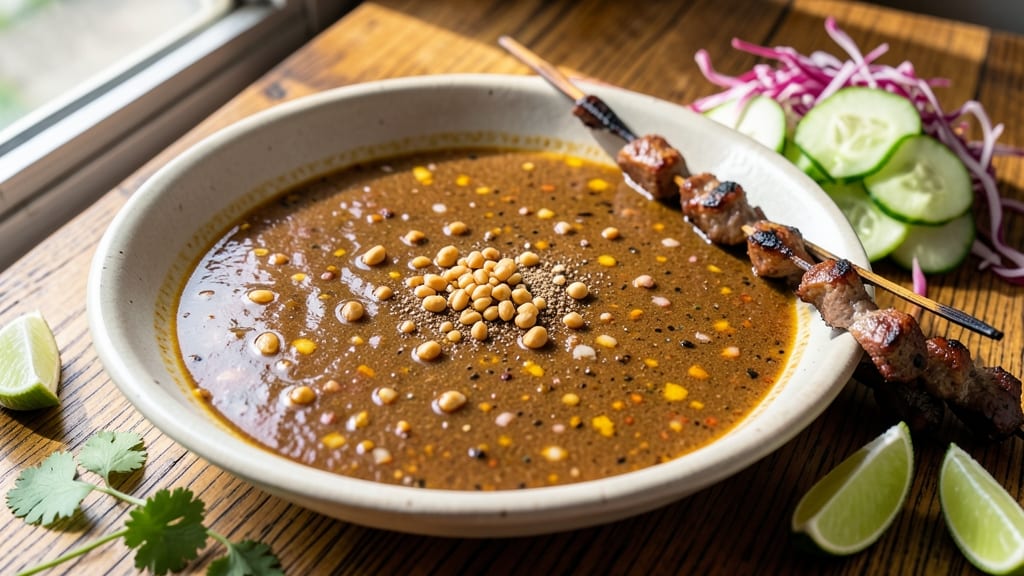
This Balinese satay sauce recipe transforms simple pantry staples into a nutty, tangy, and aromatic condiment that elevates any dish. The secret lies in toasting peanuts and spices to unlock deep, toasty flavors, then blending them with coconut milk, lime, and tamarind for that signature sweet-sour balance.
I developed this version after tasting authentic satay in Bali—it’s the same rich, creamy sauce that makes every bite unforgettable.
The sauce starts with dry-roasted peanuts and spices like turmeric and coriander, which form the foundation of its complex flavor. Coconut milk adds creaminess, while lime juice and tamarind bring the signature tang that cuts through the richness.
Unlike store-bought versions, this recipe delivers a smooth, velvety texture with layers of flavor that work perfectly as a marinade or dipping sauce.
What makes this sauce truly special is its versatility—it’s not just for satay. Use it to glaze grilled chicken, drizzle over rice dishes, or toss with fresh vegetables for a quick salad.
The nutty depth pairs beautifully with proteins like shrimp, tofu, or even roasted vegetables. Once you taste the difference between homemade and bottled, you’ll never go back.
The process is straightforward: toast the peanuts and spices, blend with coconut milk and aromatics, then simmer until thick and fragrant. The result is a sauce so rich and flavorful, it turns simple dishes into something extraordinary. Ready to make restaurant-quality satay at home?
Ingredients for balinese satay sauce
Nine simple ingredients unlock that signature Balinese peanut-lime zing everyone loves.
| Ingredient | Amount | Notes |
|---|---|---|
| Raw Peanuts 🥜 | ½ cup | Unsalted, dry-roasted until golden |
| Ground Cumin 🌿 | 1 tbsp | Toasted for deeper aroma |
| Ground Coriander 🌿 | 1 tbsp | Freshly ground preferred |
| Turmeric Powder 🌶️ | ½ tsp | Bright yellow color |
| Garlic Cloves 🧄 | 4 cloves | Peeled, roughly chopped |
| Fresh Ginger 🌿 | 1 tbsp | Grated, fresh preferred |
| Coconut Milk 🥥 | 13 ½ oz | Full-fat canned preferred |
| Lime Juice 🍋 | ¼ cup | Freshly squeezed |
| Tamarind Paste 🍯 | 2 tbsp | Adjust for sweetness |
| Brown Sugar 🍚 | 2 tbsp | Packed lightly |
| Salt 🧂 | ½ tsp | Kosher or sea salt |
| Black Pepper 🌶️ | ¼ tsp | Freshly ground |
The peanuts and spices are non-negotiable for that authentic toasty depth. Trader Joe's has the best dry-roasted peanuts in bulk, but any unsalted variety works—just toast them until golden. Freshly ground spices make all the difference, so if you've got whole cumin and coriander seeds, toast them first in a dry pan for 30 seconds. The turmeric? Grab the bright yellow kind from the bulk section—it's more potent. For tamarind paste, look for the block form at Asian markets and grate it fresh if possible, but the jarred stuff in a pinch works fine too.
No tamarind? Substitute lime juice plus 1 tsp maple syrup—it's not identical, but close. Fresh ginger is ideal, but powdered works at half the amount if you're in a rush. The coconut milk can be light, but full-fat gives that creamy richness you can't get from bottled sauce. Want it spicier? Add a pinch of cayenne or a dash of chili flakes. The brown sugar balances the tang—don't skip it, even if you're not sweet-toothed. And yes, you can use white sugar in a bind, but the molasses in brown sugar adds depth.
This sauce keeps beautifully—1 week in the fridge or 3 months frozen. I like to portion it into ice cube trays for easy use later. The flavors actually meld better after a day or two, so make it ahead if you can. If it thickens too much, just whisk in a splash of water or coconut milk. And for the love of all things nutty, always store it in a sealed jar—the aromas are too good to waste.
Why You'll Love This Recipe
- No-Fuss Pantry Magic: I swear by this sauce because it lives in my spice rack. Toast those raw peanuts in a dry pan for 3 minutes—that’s it—then grind them with cumin, coriander, and turmeric. No soaking, no fancy tools, just pure convenience.
- Garlic Bomb Power: One crushed garlic clove in the mix and suddenly you’ve got depth that’ll make you question why you ever bought store-bought sauce. The toasted peanut oil carries that aroma like a flavor superhero—nutty, spicy, and just a little addictive.
- Weeknight & Party Star: Drizzle it over grilled chicken for dinner, toss it with rice and veggies for lunch, or serve it as a dip with chips when friends drop by. It’s the one sauce that works everywhere—no excuses, no last-minute panic.
- Budget-Friendly Staple: A handful of peanuts and a few spices cost less than $5 and stretch for weeks. Freeze leftovers in ice cube trays, then toss them into stir-fries or marinades later. Honestly, I’ve had this sauce last me through two grocery budgets.
Step-by-step instructions for Balinese satay sauce
Here's how to create this vibrant, nutty sauce that balances sweet, tangy, and aromatic flavors perfectly.
Toast the Peanuts and Spices
Heat a dry skillet over medium heat and add the 0.5 cup raw peanuts. Toast them for 3-4 minutes, stirring constantly, until they turn a rich golden brown and release their nutty aroma. This dry-roasting enhances their flavor and prevents the sauce from becoming too greasy later.
Remove the peanuts and immediately add 1 tablespoon ground cumin and 1 tablespoon ground coriander to the same skillet. Toast the spices for 30 seconds, stirring constantly, until fragrant. The warmth will awaken their earthy notes and prepare them to meld with the other ingredients. Transfer both to a bowl and set aside.
Sauté Aromatics Until Fragrant
In the same skillet, add 4 cloves garlic cloves and 1 tablespoon freshly grated ginger. Cook over medium heat for 2-3 minutes until the garlic turns golden and the ginger loses its raw bite. You'll smell their sweet, pungent aromas filling the kitchen—this is when they're ready.
Real talk: Don't walk away. Garlic burns faster than you think, and burnt garlic turns bitter. If it starts to darken too quickly, reduce the heat slightly. The goal is fragrant, not charred. Once golden, remove the aromatics and set them aside with the peanuts and spices.
Build the Sauce Base
Pour 13.5 oz coconut milk into the skillet and bring to a gentle simmer over medium heat. Add 2 tablespoons tamarind paste, stirring until fully dissolved. The sauce should start to thicken slightly as the tamarind releases its tangy sweetness. Stir in 2 tablespoons brown sugar and 0.5 teaspoon salt, letting everything meld for 3-4 minutes.
Here's the thing—tamarind paste can be potent. If the sauce tastes too sour after adding it, you can balance it with a touch more brown sugar later. The coconut milk should be just starting to bubble gently when you're ready for the next step.
Combine and Simmer to Perfection
Return the toasted peanuts, spices, and aromatics to the skillet. Add 0.25 cup freshly squeezed lime juice and 0.25 teaspoon freshly ground black pepper. Stir everything together and bring to a gentle simmer. Let it cook for 5-7 minutes, stirring occasionally, until the sauce thickens to a smooth, velvety consistency.
You'll know it's ready when the sauce coats the back of a spoon and the peanuts are evenly distributed. The color should be a rich, golden brown with flecks of toasted peanuts throughout. If it's too thick, add 1-2 tablespoons water to reach your desired consistency.
Finish and Adjust
Remove the skillet from heat and let the sauce sit for 2-3 minutes. Taste and adjust the balance—add a pinch more salt if needed, or a splash of lime juice for extra tang. The sauce should be sweet, tangy, and nutty with a subtle spicy kick from the cumin and coriander.
Transfer to a serving bowl and let it cool slightly before using. This sauce pairs perfectly with grilled skewers, rice, or even as a dip. The flavors will deepen as it sits, so it's best made fresh but will keep in the refrigerator for up to 5 days if stored properly.
Pro Tips For Making Balinese Satay Sauce
- TOAST PEANUTS LOW AND SLOW: Skip the high-heat blitz—toast raw peanuts in a dry pan over medium-low for 8-10 minutes, stirring constantly, until they’re golden and smell nutty. I learned this the hard way: burning them turns the sauce bitter, and you’ll taste it every bite. Once toasted, let them cool completely before grinding—warm peanuts make oily sludge.
- GRIND SPICES WITH GARLIC: Pulse the garlic cloves first in your food processor until they’re a fine paste before adding spices. This ensures even distribution of cumin, coriander, and turmeric—no clumpy bits lurking in your sauce. (Yes, even if you’re impatient like me—trust the extra 10 seconds.)
- WATCH THE TURMERIC: Start with half the turmeric called for, taste the sauce, then add the rest. Too much turns your rich peanut sauce into a sad, yellowish mess. Balinese satay sauce should be golden, not neon—adjust gradually.
- SIMMER NOT BOIL: After blending, simmer the sauce on low heat for 5-7 minutes—just until it thickens slightly. Boiling burns the peanut oils and makes the sauce separate. Stir often, and resist the urge to crank the heat. (Your future self will thank you.)
Perfect pairings for balinese satay sauce
Satay Skewers
This sauce was made for grilled satay skewers, and that’s where it truly shines.
Thread 1 lb chicken thighs (or shrimp for a lighter option) onto skewers, marinate in ½ cup sauce mixed with 1 tbsp soy sauce for 30 minutes, then grill over medium-high heat for 8-10 minutes until charred and cooked through.
The nutty sauce caramelizes beautifully on the grill, creating a perfect balance of smoky and sweet flavors. 🔥
Grilled Chicken
For a hands-off approach, brush 2 boneless chicken breasts with ¼ cup sauce and grill over medium heat for 6-7 minutes per side. The sauce adds a rich, aromatic glaze that keeps the chicken moist and flavorful.
Serve with steamed jasmine rice and a side of cucumber slices for a refreshing contrast.
Rice Dishes
Stir ¼ cup sauce into 1 cup cooked jasmine rice with 1 tbsp coconut milk and a pinch of salt. The nutty, tangy sauce elevates simple rice dishes into something special.
For extra richness, top with fried shallots and a sprinkle of cilantro. This works especially well with dishes like nasi goreng or as a flavorful side to curries.
Vegetable Dips
Thin the sauce with 2 tbsp water for a dipping sauce that pairs perfectly with fresh veggies. Serve with carrot sticks, cucumber slices, and bell pepper strips for a healthy, flavorful snack. The tangy-sweet balance makes it irresistible for dipping, and it’s a great way to use up leftover sauce.
Protein Glazes
Use the sauce as a glaze for grilled or roasted proteins like pork tenderloin or tofu. Brush ½ cup sauce over 1 lb protein during the last 5 minutes of cooking to create a sticky, flavorful crust.
The sauce caramelizes beautifully, adding depth and richness to any dish. Perfect for weeknight dinners or special occasions.
Salad Dressing
Mix 3 tbsp sauce with 2 tbsp lime juice and 1 tbsp olive oil for a bold, nutty salad dressing. Toss with mixed greens, shredded cabbage, and sliced avocado for a refreshing and flavorful salad.
The tangy, creamy sauce adds a unique twist to your favorite greens, making every bite unforgettable. ✨
Nutrition facts
Frequently asked questions
Can I make this sauce without peanuts?
Peanuts are essential for that signature nutty flavor, but you can substitute with ½ cup roasted cashews or almonds for a similar texture. Toast them first just like the peanuts, then blend into the sauce. The flavor will be slightly different but still delicious. For a peanut-free version, try blending ¼ cup peanut butter with 1 tbsp coconut milk instead of roasting whole nuts.
How do I adjust the spice level?
This recipe is mild, but you can easily make it spicier by adding ½ teaspoon cayenne pepper or 1 teaspoon chili flakes during the final simmer. For heat lovers, add a pinch of freshly grated galangal or lemongrass (common in Balinese cuisine) for a unique kick. Always taste as you go—spices intensify when simmered!
Can I use this sauce for non-meat dishes?
This versatile sauce works beautifully with tofu, tempeh, or grilled vegetables like eggplant or bell peppers. For extra richness, marinate the protein or veggies in ¼ cup sauce mixed with 1 tbsp soy sauce for 20 minutes before grilling. It also makes a fantastic dip for spring rolls or a glaze for baked sweet potatoes.
Why does my sauce taste too sour?
Tamarind paste can be potent! Balance the tang by adding 1 extra tablespoon brown sugar or 1 teaspoon maple syrup while simmering. If the sauce is already thickened, stir in 1-2 teaspoons lime juice to dilute the sourness slightly. The key is adjusting while warm—flavors settle as it cools, so don't overcorrect at first.
How can I make this sauce thicker or thinner?
For a thicker sauce, simmer uncovered for 2-3 extra minutes to reduce the liquid. If it's too thick, whisk in 1-2 tablespoons water or coconut milk to reach your desired consistency. For a thinner sauce (like a dipping sauce), add 2-3 tablespoons water or lime juice while warm. The sauce should coat the back of a spoon but remain smooth and pourable.