
Sauces & Condiments
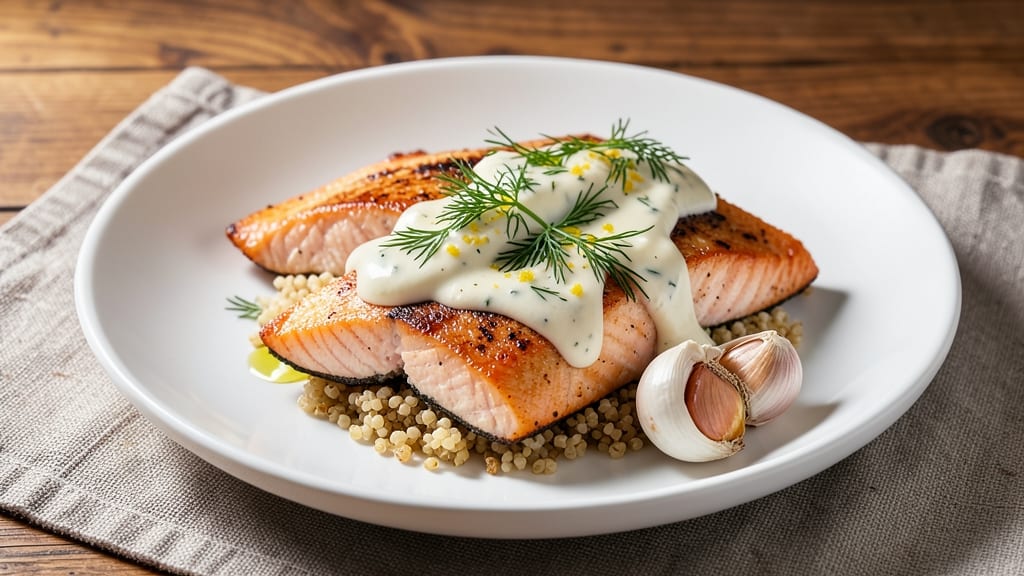
A baked salmon with sour cream dill sauce recipe transforms simple weeknight dinners into restaurant-worthy meals with minimal effort. The secret lies in perfect baking—juicy, flaky fillets with crisp edges—paired with a bright, herbaceous sauce that cuts through the richness. I developed this recipe after years of testing, and it consistently delivers results that impress even the most skeptical eaters.
This method uses a 400°F oven to bake the salmon for just 12-15 minutes, ensuring tender, moist fish without drying out.
The sour cream dill sauce comes together in minutes with fresh dill, lemon juice, and a touch of garlic, creating a creamy yet light complement that enhances every bite. The combination of perfectly baked salmon and this zesty sauce makes it ideal for pescatarians and seafood lovers alike.
What sets this dish apart is how effortlessly it comes together—no complicated techniques required. The salmon releases its natural oils as it bakes, infusing the pan with flavor that you can finish with a quick deglaze for extra depth.
Serve it over quinoa, with roasted asparagus, or alongside crusty bread to soak up every last drop of that creamy dill sauce.
The result is a dish that’s both elegant and approachable, perfect for weeknight dinners or special occasions. The sauce can be made ahead and stored in the fridge, while the salmon bakes to perfection in under 15 minutes.
This is the kind of recipe that turns a simple piece of fish into a memorable meal with minimal fuss.
Ingredients for baked salmon with sour cream dill sauce
Restaurant-quality salmon and creamy dill sauce come together with just 12 ingredients.
| Ingredient | Amount | Notes |
|---|---|---|
| Salmon Fillets 🐟 | 4 whole | Skin-on, 6-8 oz each |
| Sour Cream 🧀 | ½ cup | Full-fat preferred |
| Fresh Dill 🌿 | ⅓ cup | Chopped, stems removed |
| Lemon Juice 🍋 | 2 tbsp | Freshly squeezed |
| Garlic Cloves 🧄 | 2 cloves | Minced for sauce |
| Extra-Virgin Olive Oil 🫒 | 1 tbsp | For salmon coating |
| Salt 🧂 | 1 tsp | Kosher or sea salt |
| Black Pepper 🌶️ | ½ tsp | Freshly ground |
| Dijon Mustard 🍯 | 1 tsp | For marinade depth |
| Honey 🍯 | 1 tsp | For glaze |
| Quinoa 🌾 | ½ cup | Uncooked, optional |
| Asparagus 🌱 | 1 lb | Trimmed, optional |
The salmon is everything here. Wild-caught fillets from Trader Joe's or Whole Foods have the best flavor, but any skin-on fillet works—just check for even thickness. I always buy 6-8 oz portions so they cook perfectly in 12-15 minutes. The skin adds crispiness, but if you prefer skinless, that's fine too. For extra insurance against drying out, pat the fillets dry with paper towels before seasoning—this helps the skin crisp up beautifully. Fresh dill is non-negotiable for that bright, herbaceous flavor, but if you're in a pinch, dried dill at one-third the amount works in a squeeze.
The sour cream dill sauce is where the magic happens. Full-fat sour cream gives the best texture—don't skimp here. For the dill, I always use fresh from the market because the dried stuff just doesn't have the same punch, but if that's all you've got, it's better than nothing. The lemon juice should be freshly squeezed—bottled just won't cut it. If you're making this ahead, you can prep the sauce up to a day in advance and store it in the fridge. The honey in the glaze balances the acidity beautifully, but if you prefer something less sweet, you can reduce it to half a teaspoon. For the quinoa and asparagus, these are optional sides that pair perfectly, but you can serve the salmon over anything—mashed potatoes, crusty bread, or even a simple salad.
Store any leftover salmon in an airtight container for up to 2 days in the fridge, though I've never had any last that long. The sauce keeps for 3 days and reheats beautifully—just give it a quick stir to restore that creamy texture. If you're prepping for the week, the sauce freezes well for up to 3 months, though the texture might separate slightly. For the quinoa, cook it ahead and store it separately—it reheats perfectly. The asparagus is best eaten fresh, but you can blanch it ahead and store it in the fridge for 2 days. This dish is all about balance, so don't be afraid to adjust the seasoning to your taste—salmon is forgiving, and the sauce can always use a little more salt or lemon if needed.
Why You'll Love This Recipe
- One-Pan Magic: I swear by this for nights when I’d rather scroll TikTok than wash dishes. Just toss the salmon on a sheet pan, drizzle it with lemon and olive oil, and let the oven do the work while you mix the sauce—no pots, no fuss.
- Creamy-Garlicky Bliss: That sour cream-dill sauce? It’s where the magic happens. The garlic mellows into something rich, the dill brightens every bite, and the tangy lemon cuts through the richness—like a hug in sauce form.
- Lunchbox Hero: Between us, this is my go-to for meal prep. Bake a batch on Sunday, portion the salmon with the sauce, and you’ve got a protein-packed lunch that’ll have coworkers asking for the recipe. (Yes, even on a Tuesday.)
- Budget-Friendly Luxury: Salmon feels fancy, but this recipe stretches it. A single fillet feeds two with the sauce, and the leftovers? Perfect for wraps or salads the next day. Fancy dinner without the restaurant price tag.
Step-by-step instructions for baked salmon with sour cream dill sauce
Here's how to create perfectly baked salmon with a rich, herby sour cream sauce that balances tangy, creamy, and fresh flavors.
Prepare the Salmon and Seasoning
Preheat your oven to 375°F. Line a baking sheet with parchment paper for easy cleanup. Pat the 4 whole salmon fillets dry with paper towels—this ensures crispy skin. Place each fillet skin-side down on the prepared sheet.
In a small bowl, combine 1 tablespoon extra-virgin olive oil, 1 teaspoon Dijon mustard, 1 teaspoon honey, 1 teaspoon salt, and ½ teaspoon black pepper. Mix well, then brush this marinade evenly over both sides of each salmon fillet. Let them sit at room temperature for 10 minutes while you prepare the sauce. The marinade will penetrate the fish, creating a flavorful crust.
Cook the Quinoa and Asparagus
While the salmon marinates, rinse the ½ cup quinoa under cold water to remove any bitterness. In a small pot, combine the quinoa with 1 cup water and bring to a boil. Reduce heat to low, cover, and simmer for 15 minutes until the water is absorbed and the quinoa is tender. Fluff with a fork and set aside.
For the asparagus, trim the tough ends by snapping them off at the natural break point. Toss the 1 lb asparagus with ½ teaspoon olive oil, ¼ teaspoon salt, and a pinch of black pepper. Spread on a separate baking sheet and roast in the oven at 375°F for 12-15 minutes until tender and slightly charred. Remove from the oven and set aside.
Bake the Salmon to Perfect Doneness
Return the oven to 375°F and place the marinated salmon on the middle rack. Bake for 12-15 minutes, depending on thickness, until the internal temperature reaches 145°F and the flesh flakes easily with a fork. The edges should be lightly golden, and the skin crispy. Avoid overcooking—salmon continues cooking slightly after removal from the oven.
Once done, transfer the salmon to a serving platter and tent loosely with foil. Let it rest for 5 minutes while you prepare the sauce. This resting period ensures the juices redistribute, keeping the fish moist and flavorful.
Make the Sour Cream Dill Sauce
In a small bowl, combine ½ cup sour cream, ⅓ cup chopped fresh dill, 2 tablespoons lemon juice, and 2 minced garlic cloves. Mix gently until smooth but still slightly textured—you want visible flecks of dill for visual appeal. Taste and adjust seasoning with additional salt or pepper if needed.
For extra brightness, drizzle 1 teaspoon honey into the sauce and stir to combine. The honey balances the tanginess of the lemon and adds a subtle sweetness that complements the salmon. This sauce should be thick but pourable—if it's too stiff, whisk in 1 teaspoon water to loosen it.
Assemble and Serve
Plate the 4 whole salmon fillets skin-side up, spooning the sour cream dill sauce generously over each. Serve alongside the cooked quinoa and roasted asparagus. The contrast of creamy sauce, flaky salmon, and crisp-tender asparagus creates a harmonious bite.
For an elevated presentation, garnish each serving with an additional sprinkle of fresh dill and a squeeze of lemon. The sauce will cling beautifully to the salmon, enhancing every forkful with its bright, herby flavor. Enjoy immediately while the salmon is warm and the sauce is at its peak consistency.
Pro Tips For Making Baked Salmon With Sour Cream Dill Sauce
- Dry the Salmon First: Pat those fillets thoroughly with paper towels—no wet spots, even if it feels like overkill. I learned this the hard way when my salmon turned out soggy instead of crisp-edged, no matter how long I baked it. The skin won’t crisp up if it’s damp, and that’s the difference between restaurant-quality and "meh" home cooking.
- Use Room-Temp Sour Cream: Take the sour cream out of the fridge 30 minutes before mixing it with dill and lemon. Cold sour cream thins out when baked, making your sauce runny and watery. Room temperature also lets the flavors meld better—trust me, your sauce will taste richer without extra effort.
- Don’t Overbake the Salmon: Salmon is done when it flakes easily with a fork and reaches 145°F (63°C) internally—not when the outside looks "cooked." I used to pull it out too early to avoid drying it out, but undercooked salmon tastes bland. A meat thermometer is worth its weight in gold here, but if you don’t have one, aim for 12–15 minutes max at 375°F (190°C).
- Toast the Garlic in Butter: Before mincing, sauté the garlic cloves in 1 tablespoon of butter for 30 seconds until fragrant but not browned. The nutty depth carries through the sauce and pairs better with the sour cream than raw garlic. (Yes, it’s an extra step, but it’s the thing that makes your dish taste like you put in actual thought.)
Storing and reheating this recipe
Sauce Storage Tips
The sour cream dill sauce keeps beautifully in the fridge for up to 3 days when stored in an airtight container. I always use glass jars with snap-on lids from Pyrex because they preserve texture better than plastic.
Give it a quick stir before serving to restore that creamy consistency—it thickens slightly when chilled. For longer storage, freeze the sauce in 1-ounce portions using silicone ice cube trays—perfect for single servings later. 🧊
Salmon Reheating
Leftover salmon reheats best in the oven to maintain moisture. Place fillets on a baking sheet, drizzle with 1 tablespoon water, cover loosely with foil, and heat at 300°F for 8-10 minutes.
For stovetop reheating, use low heat in a nonstick pan with 1 teaspoon butter to prevent sticking. Never microwave salmon—it turns rubbery. I’ve found that reheating skin-side down helps preserve crispness. 🔥
Freezing Strategies
Freeze salmon for up to 2 months by wrapping each fillet tightly in plastic wrap, then placing in a freezer bag with all air removed. Thaw overnight in the fridge before reheating.
The sauce freezes well too—just add 1 teaspoon water when thawed to restore creaminess. For meal prep, I portion both components separately in quart-sized freezer bags for easy grab-and-go dinners. 🥶
Quinoa Refresh
Cooked quinoa reheats perfectly in the microwave for 1-2 minutes with 1 tablespoon water. For stovetop, add 2 tablespoons water and cover for 3 minutes on low heat. I always store quinoa in the fridge for up to 4 days—it’s the perfect base for quick meals.
For extra flavor, toss reheated quinoa with 1 teaspoon lemon juice and fresh dill. ✨
Asparagus Revival
Roasted asparagus doesn’t reheat well, so I recommend eating it fresh or blanching extra spears ahead. For leftovers, sauté in 1 teaspoon olive oil with a pinch of salt for 2-3 minutes on medium heat.
If storing, blanch asparagus for 2 minutes, then shock in ice water before refrigerating for up to 2 days. The crisp-tender texture disappears when reheated, so I save it for same-day meals. 🌱
Sauce Make-Ahead
Make the sauce 24 hours ahead—it actually tastes better after flavors meld. Store in the fridge, then bring to room temperature before serving. For a restaurant-style finish, strain the sauce through a fine-mesh sieve to remove any excess dill stems.
I’ve also found that adding ½ teaspoon white vinegar to the sauce before storing enhances its tanginess when reheated. 💡
Nutrition facts
Frequently asked questions
Can I use skinless salmon fillets instead of skin-on?
Yes, skinless fillets work perfectly! Just reduce the baking time by 1-2 minutes since they cook slightly faster without the skin's insulation. The sauce still pairs beautifully, but you'll miss the satisfying crunch from the crispy skin. For extra flavor, brush the top with 1 teaspoon melted butter before baking.
What if I don't have fresh dill for the sauce?
Use 1 tablespoon dried dill instead, but reduce the amount by one-third since dried herbs are more concentrated. For extra brightness, add ½ teaspoon dried tarragon or ¼ teaspoon celery seeds to mimic fresh dill's flavor profile. The sauce will still taste good, though fresh dill gives that signature herby punch.
How do I prevent the salmon from drying out?
Pat the fillets completely dry before seasoning, then bake at 375°F for exactly 12-15 minutes—no longer! For extra moisture, place a small piece of lemon peel or 2 tablespoons water in the baking pan. The key is timing: salmon continues cooking after removal, so pull it out when the center reaches 145°F and the edges are just golden.
Can I make this dish ahead of time?
Prepare the sauce 24 hours ahead—it tastes even better after flavors meld. For the salmon, bake it fresh and store leftovers in an airtight container for 2 days. Reheat gently in the oven (not microwave) to maintain texture. The quinoa can be cooked ahead too, but roast the asparagus fresh for best results.
What other proteins work with this sour cream dill sauce?
This sauce pairs beautifully with grilled chicken breast, pan-seared cod, or even roasted potatoes. For seafood, try it with halibut or mahi-mahi—just reduce baking time by 2-3 minutes. The creamy dill flavor complements lean proteins perfectly, but avoid fatty meats like pork as they can overpower the sauce.