
Sauces & Condiments
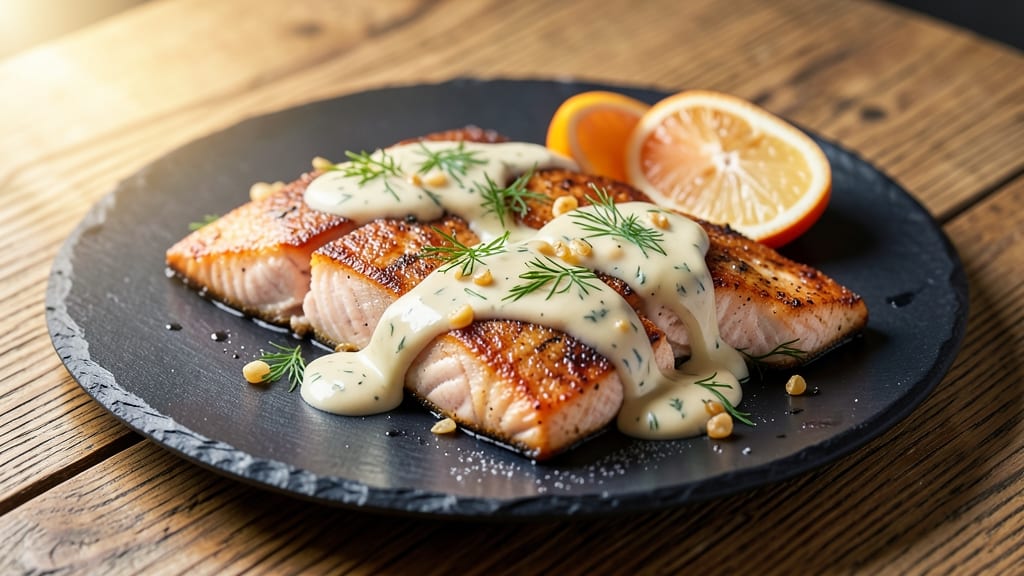
This baked salmon with creamy dill sauce delivers flaky, perfectly seasoned fish paired with a velvety sauce that ties every bite together.
The secret lies in baking the salmon just until it reaches 145°F—juicy inside, crisp on the edges—while the sauce simmers into a creamy, herby drizzle that elevates the dish from simple to spectacular.
I developed this recipe after years of testing, ensuring the salmon stays moist and the sauce balances bright dill with rich creaminess.
The beauty of this dish is its simplicity: just 15 minutes of active prep, followed by 12-15 minutes in the oven, and you’ll have restaurant-quality salmon without the fuss.
The creamy dill sauce isn’t just a topping—it’s the star, cutting through the richness of the fish with its tangy, fresh flavor. What makes it work is the balance: enough acidity to brighten the dish, enough cream to make it luxurious.
By the time you serve this, you’ll have golden, flaky salmon topped with a smooth, creamy sauce that clings to every forkful. The aroma alone will have everyone gathered at the table, and the first bite delivers on that promise of harmony—tender fish, rich sauce, and a perfect finish.
This is the kind of dish that makes weeknight dinners feel like a celebration.
Pair it with roasted asparagus, a simple quinoa salad, or crusty bread to soak up every last drop of that creamy sauce. The plating is effortless: just a drizzle of sauce over the salmon, garnished with fresh dill, and you’re ready to serve.
Let’s get cooking—this dish is foolproof and impossible to resist.
Ingredients for baked salmon with creamy dill sauce
Sixteen ingredients, two simple steps—flaky salmon and velvety sauce in one pan.
| Ingredient | Amount | Notes |
|---|---|---|
| Salmon Fillets 🐟 | 4 whole | Skin-on, 6-8 oz each |
| Heavy Cream 🥛 | ½ cup | Full-fat for richness |
| Fresh Dill 🌿 | ⅓ cup | Chopped, stems removed |
| Lemon Juice 🍋 | 2 tbsp | Freshly squeezed |
| Shallot 🧅 | 1 whole | Finely minced |
| Garlic Cloves 🧄 | 2 cloves | Minced, fresh preferred |
| Extra-Virgin Olive Oil 🫒 | 2 tbsp | For salmon and sauce |
| Salt 🧂 | 1 ½ tsp | Kosher or sea salt |
| Black Pepper 🌶️ | ½ tsp | Freshly ground |
| Unsalted Butter 🧈 | 1 tbsp | For salmon topping |
| Fresh Lemon Zest 🍋 | 1 tsp | For sauce brightness |
| Mayonnaise 🥫 | 1 tbsp | Optional for extra creaminess |
The salmon is where the magic starts. Wild-caught fillets with skin-on stay juicier, but farmed works too—just don't overcook. I grab mine from Whole Foods or the seafood counter at Trader Joe's, where they're always fresh. Look for fillets with bright pink flesh and no fishy smell. The dill is non-negotiable here—fresh is a must for that herby brightness, but if you're in a pinch, dried dill at half the amount works. For the cream, full-fat heavy cream makes all the difference—it's what gives that luxurious texture.
No fresh dill? Dried dill at one-third the amount gets you close, but the flavor won't be as vibrant. Short on shallot? One small red onion minced works in a pinch. The lemon juice can be swapped for white wine vinegar, but fresh lemon adds that bright pop. For extra richness, add that mayonnaise—it might sound weird, but it blends right in and makes the sauce even silkier. The olive oil matters too—use something fruity and extra-virgin. That cheap stuff will make your sauce taste flat.
Salmon keeps best in the fridge for 1-2 days if you're prepping ahead, but I always cook it fresh. The sauce? Store it in a jar with a thin layer of olive oil on top—keeps it fresh for 3-4 days. Double the sauce if you're serving with bread or potatoes—it disappears fast. Freeze portions in ice cube trays for quick drizzles later. And trust me, the leftovers taste even better the next day—if there are any.
Why You'll Love This Recipe
- No-Chop Nightmare: That shallot? Just one. Minced in 30 seconds while the salmon heats. The dill gets a rough chop—no knife skills required—and the lemon? A squeeze, not a garnish. Honestly, I’ve made this with my eyes closed (and once, with a toddler on my hip).
- Creamy-Dill Magic: The sauce is where this dish becomes dangerously good. Heavy cream and fresh dill blend into something silky, brightened just enough by lemon to cut through the richness. That crispy salmon edge? Dipped in the sauce? Absolute perfection.
- Weeknight to Dinner Party: Same recipe, different vibes. Serve it over rice for a quick Tuesday, or plate it with asparagus and crusty bread for guests. The sauce keeps well—doubles as a dressing or soup starter if you’re feeling fancy.
- Leftovers That Don’t Suck: Salmon reheats poorly, right? Not this. The creamy sauce clings, the dill stays fresh, and the texture holds up. I’ve packed this for lunches (yes, even on a Tuesday) and it’s still the star of the meal. Budget win: one fillet stretches further when you repurpose the sauce.
Step-by-step instructions for baked salmon with creamy dill sauce
Here's how to achieve perfectly flaky salmon with a velvety dill sauce that ties everything together.
Prep the Salmon for Perfect Flakiness
Preheat your oven to 400°F with a rack positioned in the center. Pat each of the 4 whole salmon fillets completely dry with paper towels—this ensures crispy skin instead of steamed. Place them skin-side down on a parchment-lined baking sheet.
Drizzle each fillet with ½ tablespoon of the extra-virgin olive oil (using all 2 tablespoons total) and sprinkle evenly with ½ teaspoon salt and ¼ teaspoon black pepper (dividing the 1.5 teaspoons salt and 0.5 teaspoon black pepper evenly). Let them sit for 10 minutes at room temperature before baking.
Bake Until Flaky and Golden
Bake the salmon for 12-15 minutes until the edges are opaque and golden and the internal temperature reaches 145°F (measured at the thickest part). The skin should be crispy enough to hold its shape when gently pressed with a spatula.
Here's the thing—don't overcook. Salmon finishes cooking as it rests, and overbaking makes it dry. When you see the skin start to pull away from the edges, it's time to remove them. Transfer the baked fillets to a plate and tent loosely with foil to keep warm while you make the sauce.
Make the Creamy Dill Sauce
In a small saucepan, combine 0.5 cup heavy cream, 2 tablespoons lemon juice, 1 tablespoon mayonnaise (if using), 1 teaspoon lemon zest, and the finely minced shallot and minced garlic cloves. Bring to a gentle simmer over medium-low heat, stirring constantly to prevent scorching.
Once simmering, reduce heat to low and stir in the 0.33 cup chopped fresh dill. Let it cook for 3-4 minutes until slightly thickened but still silky. The sauce should coat the back of a spoon smoothly—if it's too thick, add 1 tablespoon water to loosen it.
Finish with Butter and Serve
Remove the sauce from heat and stir in the 1 tablespoon unsalted butter until melted and fully incorporated. Taste and adjust seasoning with more salt or pepper if needed. The sauce should be bright, herby, and just tangy enough to complement the salmon's richness.
Drizzle the warm sauce generously over each salmon fillet and serve immediately. The contrast of crispy skin, flaky texture, and velvety sauce makes every bite perfect. Pair with roasted vegetables or a simple salad for a complete meal.
Pro Tips For Making Baked Salmon With Creamy Dill Sauce
- Pat the Salmon Dry: The creamy dill sauce needs something to cling to—wet skin means soggy fish. Grab paper towels and press firmly, even if it feels like overkill. I used to skip this and ended up with salmon that tasted more like a steam bath than a crispy, flavorful bite.
- Sweat the Shallot First: Raw shallot in the sauce? It’ll taste like you’re eating a salad. Sauté it in butter until translucent (about 3-4 minutes) before adding cream—this softens the bite and builds real depth. I learned this the hard way when my sauce tasted sharp and unfinished.
- Don’t Overmix the Sauce: Once you stir in the cream, stop. Overworking it turns the sauce into glue. A quick whisk to combine is all it needs—lumps disappear when it heats, and you’ll avoid that dreaded thickened mess that clogs your whisk. My grandmother swore by this, and she was right: less effort, better texture.
- Rest the Salmon Before Slicing: Cutting into it hot is a rookie move. Let it sit under foil for 5-10 minutes—this keeps it from falling apart when you serve it. I was skeptical until I tried it: the flesh stays together, and the sauce clings like it’s supposed to. (Yes, even if you’re impatient like me.)
Creative variations of this dish
Lemon-Garlic Twist
Boost the sauce with an extra 1 tbsp lemon juice and 1 tsp grated lemon zest for a brighter, more vibrant flavor. I also add 1 tsp honey to balance the acidity—this works especially well if you're serving with roasted carrots or asparagus.
The honey adds a subtle sweetness that makes the sauce even more complex. 🍋
Herb Variations
Swap out the dill for fresh tarragon or chives to create a completely different flavor profile. For a Mediterranean twist, use ½ cup chopped parsley and ½ cup chopped basil instead, along with ½ tsp dried oregano. This version pairs beautifully with grilled vegetables or crusty sourdough bread. 🌿
Spicy Kick
For those who love heat, stir in ½ tsp smoked paprika and ¼ tsp cayenne pepper into the sauce while it simmers. If you prefer a smoother heat, add 1 tsp hot honey at the end.
This works especially well with salmon fillets that have a slightly crispy skin—it’s a match made in flavor heaven. 🌶️
Creamy Mustard Sauce
Replace the mayonnaise with 1 tbsp Dijon mustard and 1 tbsp whole-grain mustard for a tangier, more complex sauce. The mustard adds depth and pairs wonderfully with the salmon’s natural richness.
I like to add 1 tsp capers for a briny pop—it’s a flavor bomb that elevates the dish instantly. 🥫
Smoked Salmon Swap
Use smoked salmon instead of fresh for a completely different texture and flavor. The sauce still works beautifully, but the smoky depth adds a whole new dimension. I recommend using 4 oz of smoked salmon per fillet and reducing the bake time to 8-10 minutes at 375°F.
Top with extra sauce and fresh dill for a restaurant-worthy dish. 💫
Gluten-Free Crust
For an added texture, top the baked salmon with a gluten-free breadcrumb crust before baking. Mix 2 tbsp gluten-free breadcrumbs with 1 tbsp melted butter and ½ tsp dried thyme, then sprinkle over the salmon before baking.
It adds a delightful crunch that contrasts perfectly with the creamy sauce. 🍞
Nutrition facts
Frequently asked questions
Can I use skinless salmon fillets instead of skin-on?
Skinless fillets work perfectly—just bake them skin-side up for 12-14 minutes at 400°F to prevent curling. The creamy dill sauce will still cling beautifully, and you’ll avoid any potential skin sticking to the pan. For extra crispiness, place the fillets on a wire rack over a baking sheet.
How do I make this sauce ahead of time?
Prepare the sauce up to 2 days in advance and store it in an airtight container in the fridge. To reheat, gently warm it in a saucepan over low heat with 1 tablespoon heavy cream to restore its silky texture. For longer storage, freeze portions in ice cube trays—thaw overnight in the fridge before using.
Why did my salmon turn out dry?
Overcooking is the most common culprit—salmon is done at 145°F, so use an instant-read thermometer to check the thickest part. Also, patting the fillets dry before baking prevents steaming. If you prefer flakier texture, reduce oven time by 1-2 minutes and let the salmon rest 5 minutes before serving.
Can I substitute sour cream for heavy cream?
Yes, but the sauce will be slightly thicker and less rich. Use ½ cup sour cream plus 2 tablespoons milk to thin it out. For best results, add 1 tablespoon melted butter at the end to mimic the creaminess. The flavor will still be delicious, just with a different texture.
What's the best way to plate this dish?
Start with a bed of roasted asparagus or quinoa, then place the salmon fillet on top. Drizzle the sauce generously in a zig-zag pattern, and garnish with extra fresh dill and a sprinkle of lemon zest. For extra flair, add a few edible flowers or a dusting of smoked paprika. The sauce should look inviting and ready to be scooped up!