
Sauces & Condiments
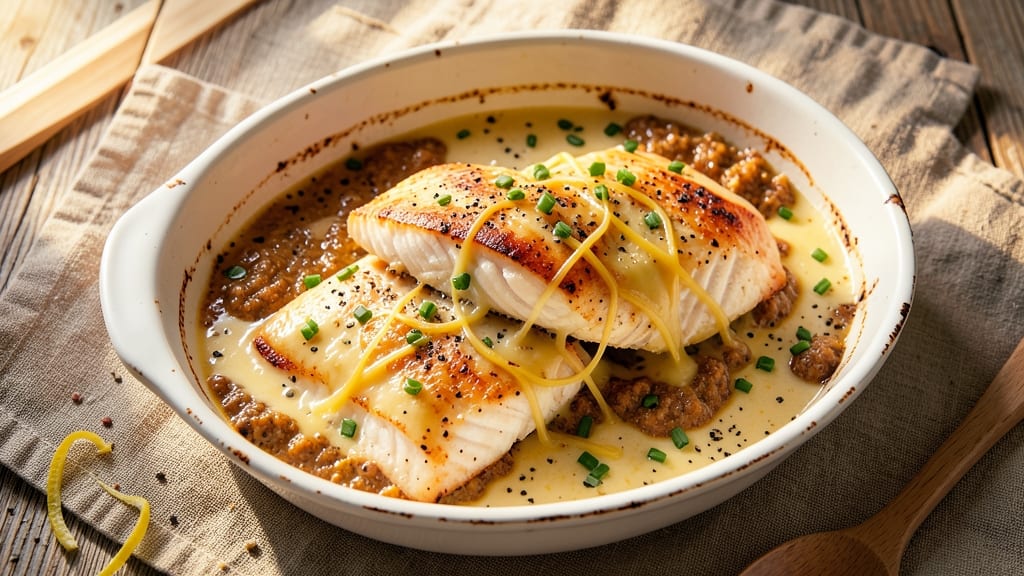
This baked fish in cheese sauce recipe delivers flaky perfection with a golden, buttery crust that melts into every tender bite. The secret lies in a velvety cheese sauce that bakes right onto the fish, creating a restaurant-quality dish you can make at home.
I developed this technique after years of perfecting the balance between crispy topping and melt-in-your-mouth texture.
The foundation starts with a simple yet foolproof cheese sauce made from cream cheese, cheddar, and a touch of mustard for depth. This sauce transforms ordinary fish fillets into something extraordinary when baked until bubbly and golden.
The key is using fresh, high-quality fish—like cod or halibut—that stays moist while the cheese develops that irresistible crust.
By the time it emerges from the oven, you'll have fish with a crispy cheese crust that gives way to perfectly flaky fillets underneath. The sauce clings to every bite, creating a rich, creamy finish that pairs beautifully with lemon wedges or fresh herbs.
This dish is elegant enough for dinner guests but simple enough for a weeknight.
Whether you're serving this as a main course or a special occasion dish, the results are consistently impressive. The technique works equally well with white fish or even tilapia, making it versatile for any seafood lover. Let's get started on creating this comforting, cheesy masterpiece.
Ingredients for baked fish in cheese sauce
Four flaky fillets, creamy cheese, and a golden crust—this is all you need for restaurant-worthy fish.
| Ingredient | Amount | Notes |
|---|---|---|
| White Fish Fillets 🐟 | 4 pieces | Cod, halibut, or tilapia preferred |
| Cream Cheese 🧈 | 8 oz | Full-fat for best texture |
| Sharp Cheddar Cheese 🧀 | 1 cup | Shredded, block preferred |
| Unsalted Butter 🧈 | ½ cup | Cold, cubed for even melting |
| All-Purpose Flour 🌾 | 2 tbsp | For sauce thickening |
| Dijon Mustard 🍯 | 1 tbsp | For depth of flavor |
| Milk 🥛 | ¼ cup | Whole milk for creaminess |
| Lemon Juice 🍋 | 1 tbsp | Freshly squeezed |
| Garlic Cloves 🧄 | 2 cloves | Minced for aromatic base |
| Fresh Parsley 🌿 | ¼ cup | Chopped, for garnish |
| Breadcrumbs 🍞 | ¼ cup | Panko for extra crunch |
| Salt 🧂 | ½ tsp | Kosher or sea salt |
| Black Pepper 🌶️ | ¼ tsp | Freshly ground preferred |
| Olive Oil 🫒 | 1 tbsp | For greasing baking dish |
The fish makes or breaks this dish. Cod or halibut are ideal—they stay moist while the cheese develops that irresistible crust. If you're using tilapia, pat it extra dry first. I grab mine from Whole Foods or the seafood counter at Trader Joe's—they keep it fresh and on ice. Look for fillets with a vibrant color and no fishy odor. For the cheese, block cheddar shreds better than pre-shredded (which gets clumpy), and full-fat cream cheese ensures that perfect melt. If you're feeling fancy, add a splash of white wine to the sauce—just 2 tablespoons—but it's not required.
No sharp cheddar? Gruyère or pepper jack work beautifully for a different flavor twist. Short on butter? Olive oil or avocado oil in the sauce keeps it rich. The breadcrumbs can be swapped for crushed crackers or almond flour if you're avoiding gluten. Fresh out of parsley? Dried dill at half the amount gives a similar vibe. The mustard is key—it cuts through the richness of the cheese, so don't skip it. If you're making this ahead, prep the sauce and keep it chilled until ready to bake—it tastes even better the next day.
This dish reheats beautifully—just 10 minutes at 350°F to restore that crispy crust. Store leftovers in an airtight container for up to 3 days in the fridge, though I rarely have any. The sauce freezes well for 3 months if you make extra—just thaw in the fridge overnight. For serving, I always add a squeeze of lemon right before eating. It brightens up the dish and cuts through the richness. Garnish with extra parsley if you've got it, but honestly, it's delicious even without.
Why You'll Love This Recipe
- One-Pan Magic: I swear by this for nights when I’d rather not wash dishes. Toss the fish and sauce on a sheet pan, pop it in the oven, and walk away—no pots, no pans, just golden edges and melty cheese waiting for you.
- Creamy Sharp Bite: That sharp cheddar and cream cheese combo? It’s the kind of tangy richness that makes you forget fish can be boring. The sauce clings to the flakes like a hug, and the butter just takes it to another level—simple, but so satisfying.
- Lunchbox Hero: Honestly, this is my go-to for meal prep. The sauce holds up for days, and the fish stays tender. Pack it in containers with crusty bread or crackers, and suddenly you’ve got a lunch that feels fancy but costs next to nothing.
- Budget-Friendly Feast: Between us, this recipe stretches a dollar further than takeout. A block of cheddar and a tub of cream cheese go a long way, and white fish fillets are cheaper than you’d think—especially when you’re feeding a crowd or just treating yourself.
Step-by-step instructions for baked fish in cheese sauce
Here's how to create that perfect buttery crust and creamy sauce over flaky fish fillets.
Prepare the Cheese Sauce Mixture
In a medium saucepan, melt the ½ cup unsalted butter over medium heat until it foams. Add the 2 tablespoons all-purpose flour and whisk vigorously for 1-2 minutes until smooth and bubbly. This creates your roux foundation - you'll see it thicken noticeably.
Reduce heat to low and gradually whisk in the ¼ cup milk and 1 tablespoon Dijon mustard. Stir constantly for 2-3 minutes until the mixture thickens to a creamy consistency. Here's the thing - you want it thick enough to coat the back of a spoon but still pourable. If it gets too thick, add a splash more milk.
Create the Cheese Crust Topping
In a separate bowl, combine the 8 oz cream cheese and 1 cup sharp cheddar cheese until smooth. Add the ½ teaspoon salt, ¼ teaspoon black pepper, and 1 tablespoon lemon juice. Mix until fully incorporated - the lemon juice prevents the cheese from becoming too heavy.
In another bowl, mix the ¼ cup breadcrumbs with the 2 minced garlic cloves. Fold in the cheese mixture until evenly distributed. This creates your golden crust that'll form on top during baking. I like to keep this mixture cold until ready to use - it helps maintain that perfect texture.
Assemble the Baked Fish
Preheat your oven to 375°F. Lightly grease a 9x13-inch baking dish with the 1 tablespoon olive oil. Arrange the 4 white fish fillets in a single layer in the dish, slightly overlapping if needed. Spoon the cheese sauce mixture evenly over the fish, spreading it to the edges.
Here's where it gets good - sprinkle the breadcrumb-cheese mixture evenly over the top. Press down gently but not too firmly - you want it to stick but still maintain some texture. The breadcrumbs will create that beautiful golden crust while keeping the fish moist underneath.
Bake to Perfect Flaky Perfection
Bake uncovered for 18-22 minutes until the top is deep golden brown and the fish flakes easily when tested with a fork. The edges should be bubbling while the center maintains its creamy texture. Don't overbake - you want the fish to be just cooked through, not dry.
When it's done, let the dish rest for 5 minutes before serving. This resting time allows the cheese to set slightly and makes slicing easier. Garnish with the ¼ cup chopped fresh parsley right before serving - it adds that fresh pop of color and flavor that ties everything together.
Pro Tips For Making Baked Fish In Cheese Sauce
- Dry the Fish First: Pat those fillets thoroughly with paper towels—wet skin means steam instead of a crispy top. I learned this the hard way when my cheese sauce pooled like soup instead of clinging to the fish.
- Melt Cheese Slowly: Warm the cream cheese and cheddar together over low heat, stirring constantly until fully melted. Rushing this step turns your sauce into a greasy mess—trust me, I’ve seen it happen.
- Don’t Overmix the Sauce: Once the flour-butter roux is made, just combine it with the melted cheese—no need to whip it like batter. Overworking it makes the sauce thin and gluey instead of velvety.
- Bake at 375°F, Not Hotter: That extra 25°F might seem like a good idea, but it’ll cook the fish unevenly and burn the cheese before the center’s done. Stick to 375°F and check at 12 minutes—fish cooks fast, and it won’t forgive impatience.
Best sauces and condiments for this baked fish in cheese sauce
Classic Cheese Sauce
This velvety cheese sauce is the heart of your dish, made with cream cheese, sharp cheddar, and a touch of Dijon mustard for depth. The key is creating a smooth base by melting the ½ cup unsalted butter and whisking in 2 tbsp flour to form a roux.
Gradually add ¼ cup milk and 1 tbsp mustard while stirring constantly to avoid lumps. The sauce should be thick enough to coat the back of a spoon but still pourable. 🧈
Creamy Garlic-Herb Variation
For a richer flavor, swap the milk for ½ cup heavy cream and add 1 tbsp minced garlic to the roux. Stir in 1 tbsp fresh parsley and 1 tsp dried dill for a bright, herby twist.
This version pairs beautifully with lemon zest on top. The extra cream makes the sauce even more luxurious, perfect for special occasions.
Spicy Pepper Jack Twist
Add some heat by replacing half the cheddar with ½ cup pepper jack cheese. For extra kick, mix in ½ tsp cayenne pepper or 1 tsp hot sauce into the sauce.
Top with chopped jalapeños or a sprinkle of smoked paprika before baking. This spicy version is a crowd-pleaser for those who love a little heat with their creamy fish.
White Wine Enhancement
Elevate your sauce with 2 tbsp dry white wine (like Sauvignon Blanc) added to the roux. The wine deglazes the pan, adding depth and a subtle acidity that balances the richness.
Reduce the wine by half before adding milk to concentrate the flavor. This refined touch makes the dish feel more sophisticated without extra effort.
Crispy Panko Topping
For an extra-crispy crust, mix ¼ cup panko breadcrumbs with 1 tbsp melted butter and 1 tsp dried parsley before sprinkling over the cheese sauce. The panko adds a satisfying crunch that contrasts beautifully with the creamy sauce underneath.
Press it gently to ensure it sticks, but don’t overdo it—you want texture, not a dense layer.
Lemon-Herb Garnish
Finish your dish with a bright lemon-herb garnish—zest 1 lemon and mix with 2 tbsp chopped parsley and 1 tbsp chopped chives. Sprinkle over the baked fish right before serving.
The citrus cuts through the richness, while the herbs add freshness. This simple step takes your dish from homemade to restaurant-worthy in seconds. ✨
Nutrition facts
Frequently asked questions
Can I use frozen fish for this recipe?
Yes, but thaw it completely first! Place frozen fillets in a sealed bag and submerge in cold water for 20-30 minutes, changing the water halfway. Or thaw overnight in the fridge. Never use partially thawed fish—it can make the texture uneven. Pat the fillets thoroughly dry before assembling to ensure the cheese sauce sticks properly.
What's the best way to keep the fish from drying out?
Don't overbake! The fish is done when it reaches 145°F internally and flakes easily. If your oven runs hot, reduce temperature to 350°F and check at 15 minutes. Also, spread the cheese sauce evenly to the edges—this creates a moisture barrier. For extra insurance, add 2 tablespoons milk to the sauce before baking.
Can I make this ahead of time?
Assemble the dish (without baking) up to 24 hours ahead and refrigerate uncovered. When ready to bake, add 5-7 minutes to the baking time. For make-ahead sauces, prepare the cheese mixture separately and refrigerate for up to 3 days. Reheat gently in the microwave with a splash of milk to restore creaminess.
What if my cheese sauce gets too thick?
Add 1-2 tablespoons milk or cream and stir until smooth. If it's already baked, try this trick: Sprinkle 1 tablespoon water over the top and broil for 1-2 minutes to melt it back into a creamy consistency. For future batches, whisk constantly when adding milk to prevent thickening.
Which fish works best for this recipe?
Look for firm, white fish like cod, halibut, or mahi-mahi—they stay moist while the cheese develops that perfect crust. Tilapia works too but needs slightly less baking time (15-18 minutes). Avoid delicate fish like sole or flounder—they can turn rubbery. Freshness matters most: Choose fillets with a clean, ocean-like smell and firm texture.