
Sauces & Condiments
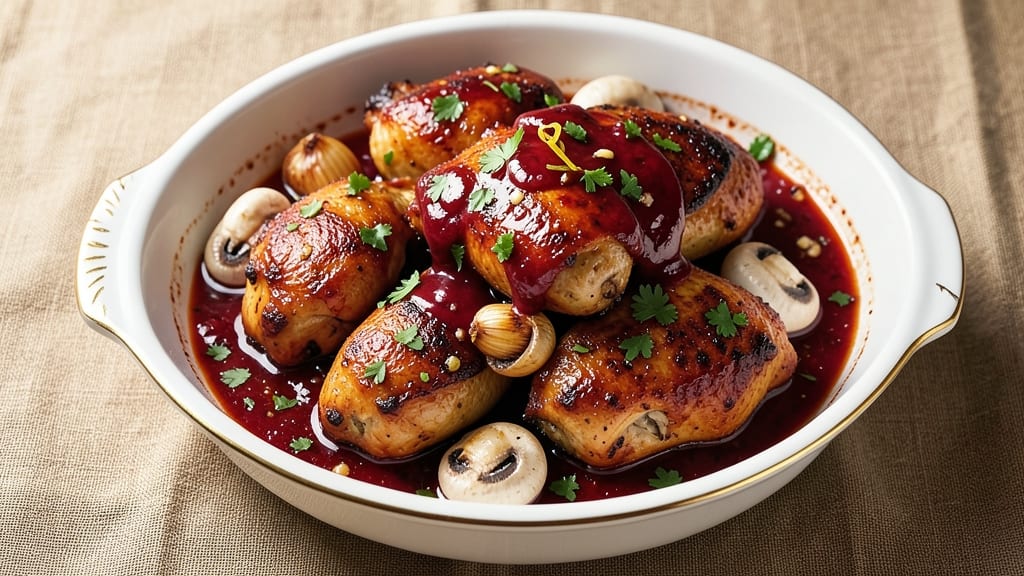
This baked chicken in wine sauce recipe transforms simple ingredients into a restaurant-worthy one-pan masterpiece. The secret lies in a slow-braised wine reduction that infuses the chicken with deep, complex flavors while keeping the process straightforward.
No fancy techniques—just a cast-iron skillet, a bottle of red wine, and patience for a sauce that tastes like it simmered all day.
The chicken develops a tender, juicy texture from the moist heat, while the wine sauce reduces to a velvety consistency that clings perfectly to every bite. Deglazing the pan with wine captures all the browned bits, creating a rich, aromatic base that builds into something extraordinary.
This method works equally well with thighs or breasts, ensuring foolproof results every time.
By the end, you'll have golden, succulent chicken swimming in a glossy wine sauce that's perfect for serving over polenta, mashed potatoes, or crusty bread. The sauce's depth comes from proper reduction—letting it simmer until thick and flavorful without overcooking the chicken.
It's the kind of dish that elevates a simple weeknight dinner into something memorable.
Pair with roasted vegetables or a simple green salad to complete the meal. The wine sauce's versatility means you can adjust the recipe for different occasions—whether it's a cozy family dinner or an impressive guest meal. Here's how to make it perfectly the first time.
Ingredients for baked chicken in wine sauce
Nine essential ingredients create this restaurant-worthy one-pan chicken with velvety wine sauce.
| Ingredient | Amount | Notes |
|---|---|---|
| Boneless, Skinless Chicken Thighs 🍗 | 1 ½ lb | Cut into even 6-8 pieces |
| Dry Red Wine 🍷 | 1 cup | Bold Cabernet Sauvignon preferred |
| Chicken Broth 💧 | 1 cup | Low-sodium preferred |
| All-Purpose Flour 🌾 | 2 tbsp | For dredging chicken |
| Unsalted Butter 🧈 | 3 tbsp | Cold, cubed |
| Garlic Cloves 🧄 | 4 cloves | Minced |
| Shallots 🧅 | 2 whole | Minced |
| Tomato Paste 🍅 | 2 tbsp | Smooth, not chunky |
| Fresh Thyme Leaves 🌿 | ½ tsp | Or 1/4 tsp dried |
| Fresh Rosemary 🌿 | 1 tbsp | Chopped |
| Salt 🧂 | 1 tsp | Kosher or sea salt |
| Black Pepper 🌶️ | ½ tsp | Freshly ground |
| Olive Oil 🫒 | 2 tbsp | For searing |
The chicken thighs are the star—look for bone-in, skin-on if you want extra flavor, but boneless works too. Trader Joe's or Costco often have great prices on family packs. For the wine, any bold red works—Cabernet Sauvignon or Merlot are classic choices, but whatever's open in your cabinet will do. The key is using a dry red (less than 14% sugar) to avoid a sweet sauce. If you're feeling fancy, grab a bottle of Pinot Noir for a lighter profile. The chicken broth should be low-sodium—you can always add more salt later.
No red wine? Dry white wine or chicken broth with 1 tbsp balsamic vinegar works in a pinch. Fresh herbs make a difference here, but dried thyme and rosemary (half the amount) will work if that's all you've got. The tomato paste can be squeeze-tube variety for convenience—just make sure it's smooth, not chunky. For the shallots, substitute 2 tbsp onion if needed, though shallots add a more delicate flavor. The butter should be cold when you cube it—this helps create a better roux later. If you're short on time, use 1 tbsp olive oil plus 2 tbsp butter instead.
This dish reheats beautifully—best served the next day when flavors meld completely. Store in an airtight container in the fridge for up to 4 days. For longer storage, freeze the sauce separately for up to 3 months. The chicken pieces can be prepped ahead and kept in the fridge for 2 days before baking. If making for a crowd, double the sauce—it's perfect over mashed potatoes or crusty bread. For leftovers, reheat gently on low to preserve the sauce's richness.
Why You'll Love This Recipe
- Here’s what sold me: that deep, savory wine sauce needs zero fancy techniques. Simmering the broth and wine reduces it to a velvety glaze that clings to the chicken like it’s been braising all day. (Spoiler: it’s not.)
- One-Pan Magic: I swear by this recipe for lazy nights—just toss the chicken thighs in flour, dump everything on a sheet pan, and walk away. The wine and butter caramelize into a glossy sauce while you’re still deciding whether to watch one more episode.
- Rich Without Effort: Here’s what sold me: that deep, savory wine sauce needs zero fancy techniques. Simmering the broth and wine reduces it to a velvety glaze that clings to the chicken like it’s been braising all day. (Spoiler: it’s not.)
- Weeknight to Dinner Party: Between us, this is my go-to for both Taco Tuesday and when Aunt Linda texts, "We’re coming over." The same simple method works for feeding two or six—just adjust the pan size. Bonus: the sauce tastes even better the next day.
Step-by-step instructions for baked chicken in wine sauce
Here's the method for a rich, one-pan braise where tender chicken absorbs deep wine flavors.
Prepare the Chicken and Sear for Depth
Pat the 1.5 lb boneless, skinless chicken thighs completely dry with paper towels—this ensures maximum browning. Cut each thigh into 6-8 even pieces and place them in a bowl. Add 2 tbsp all-purpose flour, 1 tsp salt, and 0.5 tsp black pepper, then toss gently until evenly coated.
Heat 2 tbsp olive oil in a large oven-safe skillet over medium-high heat. Once shimmering, add the chicken in a single layer, leaving space between pieces. Sear for 3-4 minutes per side until golden brown and cooked through to 165°F internally. Remove chicken and set aside—those crispy edges will infuse the sauce later.
Build the Aromatic Base
In the same skillet, reduce heat to medium and add 3 tbsp cold cubed unsalted butter. Let it melt completely, then add 2 whole minced shallots and 4 minced garlic cloves. Cook for 2-3 minutes until softened and fragrant—this prevents burning and develops flavor.
Stir in 2 tbsp tomato paste and cook for 1 minute until slightly darkened. Pour in 1 cup dry red wine, scraping up any browned bits from the bottom. Simmer for 3-4 minutes until reduced by half, intensifying the wine's richness. Here's where the magic happens: the alcohol evaporates, leaving behind concentrated flavor.
Braise with Herbs and Broth
Return the chicken to the skillet, spooning the reduced wine sauce over the top. Add 1 cup chicken broth, then sprinkle in 1 tbsp chopped fresh rosemary and 0.5 tsp fresh thyme leaves. The herbs will infuse the sauce with aromatic depth as it simmers.
Bring to a gentle simmer, then cover with a lid or foil. Transfer to a preheated 375°F oven and bake for 30-35 minutes until the chicken is fork-tender and the sauce has thickened to a velvety consistency. If the sauce reduces too quickly, add a splash of water or broth to maintain balance.
Finish and Serve
Remove the skillet from the oven and let it rest for 5 minutes—this allows the chicken to absorb the remaining sauce. Taste and adjust seasoning with additional salt or pepper if needed. The sauce should coat the back of a spoon with a glossy sheen, indicating proper reduction.
Serve immediately over mashed potatoes, crusty bread, or polenta to soak up every last drop of that luxurious wine-infused sauce. Each bite delivers tender chicken with a deep, complex flavor profile from the braising process. Leftovers reheat beautifully, making this a perfect meal-prep option.
Pro Tips For Making Baked Chicken In Wine Sauce
- SEAR FIRST, BAKE SECOND: I learned this the hard way—skipping the sear makes the sauce taste flat. Pat the chicken thighs very dry, then hit them with a hot pan and 1 tablespoon of butter until golden (about 3-4 minutes per side). The crust locks in flavor when it later braises in the wine.
- USE STALE FLOUR FOR DREDGING: Fresh flour clumps like a mess, but stale flour (or even day-old breadcrumbs) clings perfectly to the chicken. Toss the thighs in flour twice—once lightly, then again after shaking off excess—so every bite gets that buttery, wine-soaked crust.
- DEGLAZE THE PAN WITH BROTH: Don’t just pour wine into the baking dish—scrape up those browned bits from the seared chicken with a wooden spoon, then deglaze the pan with ¼ cup chicken broth. Stir it into your sauce later; those bits pack more flavor than you’d think.
- LOW AND SLOW IS YOUR FRIEND: After adding the wine and broth, cover the dish with foil tightly and bake at 350°F (175°C) for 30 minutes. The chicken needs time to tenderize, not steam. If the sauce reduces too fast, add a splash of broth—just don’t peek until the timer goes off.
Common mistakes when making perfect results
Over-Searing Chicken
Don't rush the searing step—burnt chicken means bitter flavors that ruin the delicate wine sauce. Sear at medium-high heat for 3-4 minutes per side until golden, not blackened. Remove chicken immediately when it reaches 165°F internally. Overcooked chicken will dry out during braising, leaving you with tough, flavorless bites. 🔥
Skipping Deglazing
Those browned bits on your skillet are flavor gold! After removing the chicken, never skip deglazing with wine—it captures all the caramelized goodness. Use 1 cup dry red wine and scrape vigorously with a wooden spoon.
This step builds the sauce's depth and complexity, making the difference between good and extraordinary. 🍷
Using Sweet Wine
Sweet wines like Moscato or Zinfandel will turn your sauce cloying rather than balanced. Stick to bold, dry reds like Cabernet Sauvignon or Merlot (less than 14% sugar).
If you must use white, choose a dry variety or add 1 tbsp balsamic vinegar to cut sweetness. The sauce should taste of wine, not fruit punch. 🚫
Under-Reducing the Sauce
Rushing the reduction means a thin, watery sauce that won't cling to the chicken. Simmer uncovered for 10-15 minutes until it coats the back of a spoon. If it reduces too quickly, add 1-2 tbsp broth—but don't overdo it. The goal is velvety thickness, not soup consistency. ✨
Ignoring Rest Time
Letting the chicken rest for 5 minutes after baking lets juices redistribute. Skipping this step means dry meat and a sauce that pools at the bottom. Tent with foil while resting to keep it warm. This simple step transforms good chicken into restaurant-quality perfection. 💫
Overcrowding the Pan
Piling chicken pieces too close together steams instead of sears, leading to pale, soggy results. Leave ½-inch gaps between pieces for proper browning. If needed, work in batches—this ensures maximum flavor development from the Maillard reaction. 🍗
Nutrition facts
Frequently asked questions
Can I use chicken breasts instead of thighs?
Yes, but with adjustments! Chicken breasts cook faster and can dry out during braising. Use 1.5 lb boneless breasts cut into 1-inch thick pieces and reduce oven time to 20-25 minutes. Sear them first to lock in juices, then cover with foil halfway through baking. For extra tenderness, pound breasts to ½-inch thickness before cooking.
What white wine works best if I don't have red?
Use dry white wines like Sauvignon Blanc or Chardonnay, but add 1 tbsp balsamic vinegar to mimic red wine's depth. For extra richness, substitute with 1 cup chicken broth + 1 tbsp soy sauce. Avoid sweet whites like Riesling—they'll make the sauce cloying. The key is acidity and umami balance.
How do I make this recipe gluten-free?
Skip the flour coating and season chicken with 1 tsp salt + 0.5 tsp pepper instead. For extra flavor, toss with 1 tbsp olive oil before searing. The sauce will still develop depth from the wine reduction and herbs. If using gluten-free breadcrumbs for serving, toast them separately to prevent sogginess.
Can I make this ahead of time?
This dish tastes even better the next day. Assemble completely, then refrigerate uncovered for 2-3 hours to thicken the sauce naturally. Reheat gently in a skillet over low heat with 1-2 tbsp broth to loosen the sauce. For make-ahead prep, cook chicken separately, then add to reduced sauce before serving.
What's the best way to reheat leftovers?
Reheat in the same skillet over low heat for 5-7 minutes, stirring occasionally with 1 tbsp broth to restore sauce consistency. Avoid microwaving—it makes the sauce watery. For crispy chicken, broil for 2-3 minutes on high after reheating. Store leftovers in an airtight container for up to 4 days**.