
Sauces & Condiments
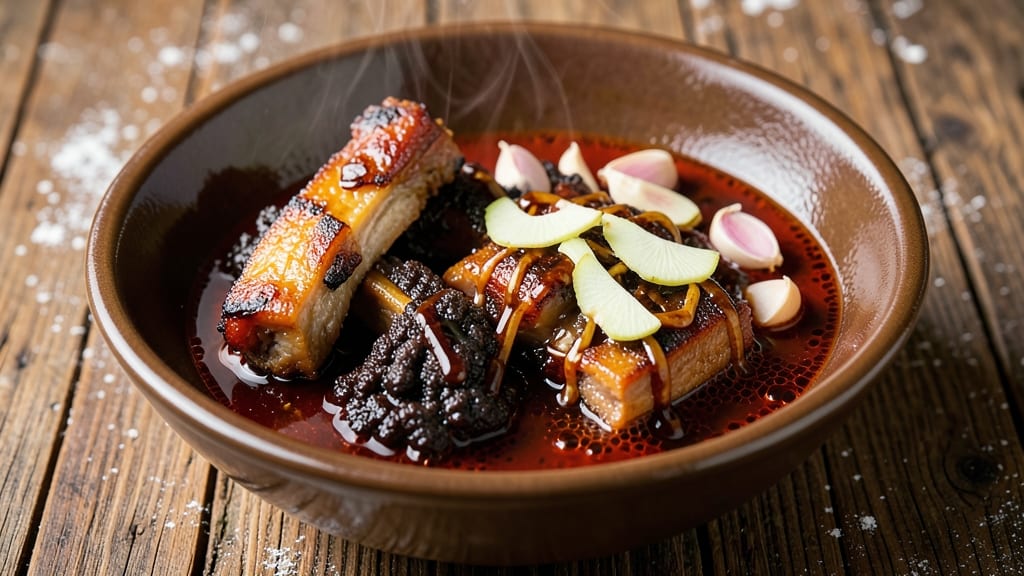
This bak kut teh sauce recipe transforms humble pork bones into a rich, aromatic symphony of fermented depth and slow-simmered spices. The secret lies in balancing tauco (fermented soybean paste) with star anise, cinnamon, and cloves—each spice unfurling its complexity over hours of gentle heat.
Unlike quick sauces, this one demands patience, rewarding you with layers of umami that cling to every strand of pork.
The foundation starts with a deep caramelized base from soy sauce and dark brown sugar, where garlic and ginger sizzle until fragrant. Adding tauco introduces that signature funky-sweet fermented note, while whole spices infuse without overpowering.
The sauce reduces slowly, thickening into a glossy, velvety consistency that coats meat perfectly—no thin, watery disappointment here.
What you’ll end up with is a bold, restaurant-quality sauce that transforms simple pork into a luxurious dish. The aroma alone—smoky, spiced, and deeply savory—will have your kitchen smelling like a bustling Malaysian eatery.
This isn’t just a sauce; it’s the heart of bak kut teh, where every spoonful carries the essence of tradition.
Best of all, it keeps beautifully in the fridge for up to a week, letting flavors deepen with each passing day.
Whether you’re slow-cooking a whole pig or simmering a small batch for leftovers, this sauce delivers unmatched depth—proof that slow cooking isn’t just a method, but an investment in flavor.
Ingredients for bak kut teh sauce
Twelve ingredients, hours of simmering, and layers of umami that transform simple pork into restaurant-quality richness.
| Ingredient | Amount | Notes |
|---|---|---|
| Pork Bones 🥩 | 2 lb | Marbled for flavor, cut into chunks |
| Tauco (Fermented Soybean Paste) 🍶 | ½ cup | Malaysian tauco for authentic funk |
| Dark Brown Sugar 🍚 | ½ cup | Packed, for deep caramelization |
| Soy Sauce 🥄 | ½ cup | Dark soy preferred for color |
| Garlic Cloves 🧄 | 6 whole | Minced, for aromatic base |
| Fresh Ginger 🌿 | ½ cup | Grated, skin-on for texture |
| Star Anise 🌟 | 2 whole | For signature anise aroma |
| Cinnamon Sticks 🌿 | 2 whole | For warm, woody depth |
| Cloves 🌶️ | 4 whole | Whole, for subtle heat |
| White Peppercorns 🌶️ | 1 tsp | Crushed, for balanced heat |
| Shaoxing Wine 🍷 | ¼ cup | For aromatic complexity |
| Water 💧 | 4 cups | For slow simmering |
| Sesame Oil 🫒 | 1 tbsp | Toasted, for nutty finish |
The pork bones are non-negotiable—they carry the deep, smoky essence of bak kut teh. Look for marbled cuts at Asian markets or the butcher counter, where the fat renders slowly for maximum flavor. Malaysian tauco is essential for that signature fermented funk; the red variety from Tang's or Lee Kum Kee works best, but don't substitute with regular soy paste. Star anise and cinnamon should be whole, not ground—Penzeys Spices carries excellent whole spices if your local store lacks them. Toast the spices lightly in a dry pan before adding to release their oils, but don't burn them—just warm until fragrant.
No tauco? Double the soy sauce and add 1 tsp miso paste for umami, though it won't replicate the funk. Running out of star anise? Swap for 1/4 tsp anise extract, but taste first—it's potent. The ginger needs to be fresh; powdered won't cut it here. For Shaoxing wine, Martini & Rossi is widely available, but any dry Chinese cooking wine works. If you're short on pork bones, pork shoulder chunks work in a pinch, but the sauce won't be as rich. The sesame oil should be toasted—heat it gently in a small pan until fragrant—to avoid that raw, medicinal taste.
This sauce gets better with time—3-4 days in the fridge lets flavors meld beautifully. Store in a sealed jar with a thin layer of oil on top to preserve freshness. Freezes for 3 months, though texture may separate slightly upon thawing. For leftovers, reheat gently on the stove, stirring in a splash of water if it thickens too much. The sauce thickens as it cools, so don't over-reduce—you want glossy, not gluey. A splash of water or broth can always rescue it if needed.
Why You'll Love This Recipe
- One-Pot Magic: I swear by this—just toss pork bones, tauco, and garlic into a pot, simmer, and walk away. No chopping, no fuss, just hands-off flavor.
- Umami Bomb: That tauco and dark brown sugar combo? It’s like a flavor explosion in your mouth. Rich, sweet-savory, with a depth that makes regular soy sauce taste boring.
- Weeknight Hero: Make a big batch on Sunday, and you’ve got sauce for stir-fries, noodles, or even dumplings all week. My freezer’s always stocked with this stuff—lazy but brilliant.
- Budget Goldmine: Pork bones are cheap, and this sauce stretches forever. A little goes a long way, and it tastes like you spent hours (but you didn’t). Win-win.
Step-by-step instructions for slow-simmered bak kut teh sauce
Here's how to build this complex, aromatic sauce layer by layer—each step unlocks deeper flavor.
Prepare the Pork Bones for Maximum Flavor Extraction
Rinse the 2 lb pork bones thoroughly under cold water to remove any surface impurities, then pat them completely dry with paper towels. This step is crucial—any moisture left on the bones will create steam instead of allowing that beautiful caramelized crust to form during searing.
Heat a large Dutch oven over medium-high heat and add the pork bones in a single layer. Let them sear undisturbed for 8-10 minutes until they develop a deep golden-brown crust. This crust, called the "fond," is packed with flavor compounds that will dissolve into the sauce. Flip the bones occasionally to ensure even browning on all sides. Once properly browned, remove them from the pot and set aside—we'll return them later.
Build the Aromatic Spice Base
In the same Dutch oven (no need to clean it—the browned bits are flavor gold), add 1 tablespoon sesame oil and heat over medium heat. Add the 6 whole garlic cloves and 0.5 cup fresh ginger (skin-on for texture), cooking for 2-3 minutes until the garlic turns golden and the ginger becomes fragrant. Be careful not to burn them—garlic has a narrow window between aromatic perfection and bitter charring.
Add the 2 whole star anise, 2 whole cinnamon sticks, 4 whole cloves, and 1 teaspoon crushed white peppercorns. Stir gently for 30 seconds to toast the spices—you'll notice their aroma intensify immediately. This is where the sauce gets its signature depth. Add the 0.25 cup Shaoxing wine and let it simmer for 1 minute until the alcohol burns off completely, leaving behind just the aromatic essence.
Layer the Fermented and Sweet Elements
Spoon in the 0.5 cup tauco (fermented soybean paste) and stir vigorously to combine with the spices. The tauco will darken the sauce immediately, adding its signature funky umami depth. Add the 0.5 cup dark brown sugar and 0.5 cup soy sauce, stirring until the sugar begins to caramelize slightly—this should take about 2 minutes over medium heat.
Here's the thing—don't rush this step. The sugar needs time to develop those complex caramel flavors that will carry through the entire sauce. You're looking for a syrupy consistency where the sugar has started to melt but hasn't burned. If it gets too dark too quickly, reduce the heat slightly and give it more time to develop properly.
Slow Simmer to Develop Deep Flavor
Return the seared pork bones to the pot and add 4 cups water. Bring everything to a gentle simmer over low heat, then immediately reduce to the lowest setting possible—you want just enough heat to maintain a bare simmer, not a rolling boil. This slow cook is where the magic happens.
Partially cover the pot with a lid (leave a small gap for steam to escape) and let it simmer gently for 2 hours. The sauce should reduce gradually, becoming richer and more concentrated. Skim off any foam or impurities that rise to the surface with a ladle—this keeps the sauce clean and prevents bitterness. After 2 hours, check the pork bones—they should be fork-tender and easily pull apart.
Finish with Balance and Texture
Remove the pork bones and set them aside (they'll be used later for serving). Strain the sauce through a fine-mesh sieve into a clean pot, pressing gently on the solids to extract maximum flavor. This step removes the spices but keeps all the infused oils and aromatics suspended in the sauce.
Return the strained sauce to the pot and simmer uncovered over medium-low heat for 10-15 minutes until it reaches your desired consistency. The sauce should coat the back of a spoon but still be pourable. Taste and adjust seasoning—add a splash more soy sauce if it needs more saltiness, or a touch of tauco for deeper umami. Finish with 1 tablespoon toasted sesame oil, swirling it through the sauce just before serving to add that final nutty aroma.
Pro Tips For Making Bak Kut Teh Sauce
- CHAR THE TAUCO LOW: Start with a gentle simmer—no boiling—when adding tauco to the pork bones. After burning through the raw smell (about 10 minutes), the paste will release its deep umami, but rush it and you’ll end up with a bitter, chalky mess instead of that rich, caramelized base.
- CRUSH GARLIC LIKE IT OWES YOU: Mince the garlic very finely—almost into a paste—before frying with the pork bones. Whole cloves hide and burn; crushed garlic blends smoothly into the sauce, giving it that signature aromatic punch without turning the broth into garlic-flavored water.
- SUGAR FIRST, NOT LAST: Add the dark brown sugar after the pork bones have rendered their fat and the tauco has darkened, not when you’re done. This lets it caramelize slowly with the sauce, creating layers of sweetness instead of just dissolving into a cloying syrup—think molasses depth, not candy.
- SIMMER UNTIL IT SHINES: The sauce is done when it coats the back of a spoon like thick syrup, not when it looks "reduced enough." Skim foam aggressively for the first 30 minutes, then let it bubble gently for at least 45 minutes—patience here turns a one-dimensional broth into a glossy, clingy masterpiece.
Perfect pairings for this recipe
Sauce-Based Side Dishes
Serve this rich bak kut teh sauce over steamed jasmine rice—the contrast of its sticky texture and fragrant aroma makes every bite irresistible. I like to spread about ½ cup sauce per bowl of rice, letting guests drizzle extra as they please.
For extra indulgence, top with crispy fried shallots and a sprinkle of toasted sesame seeds—the crunch cuts through the sauce's velvety richness beautifully. 🥢
Complementary Protein Pairings
This sauce shines with pork-based dishes like char siu or crispy pork belly, but it also elevates tofu-based meals. Pan-fry extra-firm tofu in sesame oil until golden, then simmer in the sauce for 10 minutes to absorb its flavors.
For a vegetarian twist, pair it with mushroom stir-fries—the umami in shiitake mushrooms mirrors the sauce's depth perfectly. 🍄
Beverage Pairings
A lightly chilled Chinese tea like jasmine or oolong balances the sauce's intensity without overpowering it. For something refreshing, try a sparkling lychee lemonade—the citrus notes cleanse your palate between rich bites.
If you prefer beer, a crisp lager like Asahi or Sapporo works best, while wine drinkers should opt for a dry Riesling to complement the sauce's sweet-savory profile. 🍶
Garnish and Finishing Touches
Fresh cilantro leaves and thinly sliced green onions add a bright, herbal contrast to the sauce's deep flavors. For heat, sprinkle with chili crisp or Sichuan peppercorns—just ½ teaspoon delivers a subtle kick.
A drizzle of toasted sesame oil right before serving amplifies the nutty aroma, making the dish feel even more restaurant-worthy. 🌿
Regional Adaptations
In Singapore, this sauce is often paired with kaya toast for breakfast—a sweet, coconutty spread that balances the savory depth. For a Malaysian twist, serve it with ketupat (rice cakes) or roti canai, where the sauce soaks into the flaky bread.
In China, it’s commonly used in hot pot broths, adding layers of complexity to the broth. 🗺️
Modern Twists
For a fusion approach, drizzle the sauce over grilled lobster tails or seared scallops—the briny sweetness of seafood pairs surprisingly well. I’ve also used it as a glaze for grilled chicken thighs, basting them with the sauce in the final 5 minutes of cooking.
Even vegetable spring rolls become irresistible when dipped in this sauce, making it a versatile condiment for any meal. 🦞
Nutrition facts
Frequently asked questions
Can I make this sauce without pork bones?
The pork bones are essential for authentic depth—they release collagen that thickens the sauce and adds rich, smoky flavor. For a vegetarian version, use mushroom stems or extra-firm tofu (cut into chunks) as a base, but expect a lighter texture. The sauce will still be flavorful but won't have the same velvety body.
How do I adjust the sweetness level?
The dark brown sugar provides natural caramelization, but you can tweak it based on preference. For less sweetness, reduce the sugar by 1 tablespoon and add 1 extra teaspoon of tauco for umami balance. If you love sweetness, add 1 more tablespoon of sugar and a pinch of cinnamon to enhance the flavor. Taste as you go!
Why does my sauce smell like alcohol?
The Shaoxing wine adds aromatic complexity, but if it smells too strong, the alcohol hasn't fully evaporated. Simmer uncovered for 5-10 extra minutes to burn off the alcohol—you'll notice the aroma shift from sharp to mellow. If needed, add a splash of water to help the process. Patience here is key!
Can I make this sauce in a slow cooker? Sear the pork bones first, then transfer everything to the slow cooker. Cook on low for 4-5 hours (instead of 2 hours on the stovetop) to achieve the same depth. The slow cooker excels at gentle, prolonged simmering—just
What if I don’t have tauco? Can I substitute?
Tauco is irreplaceable for that signature fermented funk, but you can approximate it with a mix of 2 tablespoons soy sauce + 1 teaspoon miso paste + ½ teaspoon fish sauce. For a vegetarian option, use 1 tablespoon soy sauce + 1 teaspoon mushroom powder. The sauce will lack depth but still taste savory.