
Sauces & Condiments
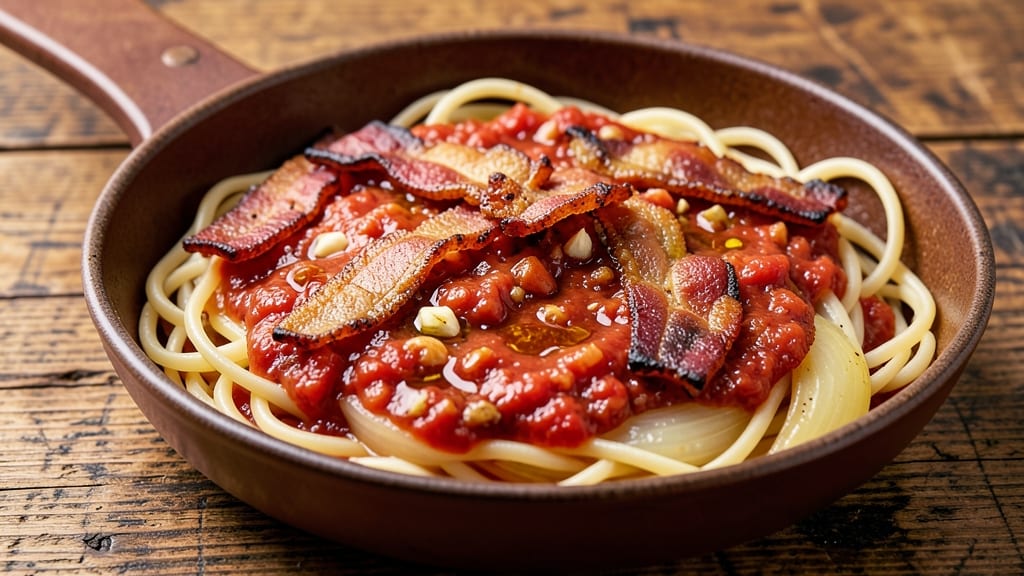
This bacon spaghetti sauce recipe transforms a classic Italian dish into a smoky, savory masterpiece that combines crispy bacon with rich tomato sauce—all in one pot.
The secret lies in rendering bacon until perfectly crisp, then using its rendered fat to deepen the sauce's flavor while simmering tomatoes, garlic, and herbs into a velvety base.
What makes this recipe stand out is how the bacon's smokiness cuts through the acidity of the tomatoes, creating a balanced, restaurant-quality sauce that clings to every strand of spaghetti.
The beauty of this method is its simplicity: no separate pots, no complicated techniques—just a single skillet where the bacon cooks down, the sauce develops, and the spaghetti finishes together.
The result is a dish that's hearty enough for a weeknight dinner but elegant enough for company, with layers of flavor that come from slow simmering and the perfect balance of sweet, smoky, and tangy notes.
You'll end up with al dente pasta tossed in a sauce so rich and flavorful, it tastes like it's been simmering for hours—even though it comes together in under 45 minutes.
What truly elevates this recipe is the versatility of the sauce. It starts as a simple tomato-bacon base but can be customized with cream for extra richness, cheese for a comforting finish, or fresh herbs for brightness.
The bacon adds a satisfying crunch and depth that turns ordinary spaghetti into a standout dish, proving that a few key ingredients and technique can make all the difference. Whether you're feeding a family or treating yourself to a cozy meal, this one-pot wonder delivers flavor without the fuss.
Serve it with a sprinkle of fresh parsley, a crack of black pepper, and a side of garlic bread to soak up every last bit of that smoky, tomato-infused goodness.
The sauce's depth of flavor means it tastes even better the next day, making it perfect for meal prep or leftovers. Let's get cooking—this is the kind of dish that turns a simple dinner into something memorable.
Ingredients for bacon spaghetti sauce
Crispy bacon, sweet tomatoes, and aromatic herbs—this sauce delivers smoky depth in one pot.
| Ingredient | Amount | Notes |
|---|---|---|
| Thick-Cut Bacon 🥓 | 8 oz | Thick-cut for crispy texture |
| Spaghetti 🍝 | 12 oz | Dry, al dente preferred |
| Canned San Marzano Tomatoes 🍅 | 2 cans | 28 oz each, crushed by hand |
| Garlic Cloves 🧄 | 4 cloves | Minced for aromatic depth |
| Yellow Onion 🧅 | 1 whole | Diced, sweet variety preferred |
| Extra-Virgin Olive Oil 🫒 | 2 tbsp | For sautéing vegetables |
| Dried Oregano 🌿 | 1 tsp | Italian blend preferred |
| Dried Basil 🌿 | 1 tsp | Or 2 tbsp fresh basil |
| Salt 🧂 | 1 ½ tsp | Kosher salt, adjust to taste |
| Black Pepper 🌶️ | ½ tsp | Freshly cracked for heat |
| Heavy Cream 🥛 | ¼ cup | Optional for richness |
| Parmesan Cheese 🧀 | ½ cup | Freshly grated, for serving |
| Fresh Parsley 🌿 | ¼ cup | Chopped, for garnish |
The bacon is non-negotiable here. Thick-cut from Oscar Mayer or Applewood-smoked at Whole Foods renders best—look for good marbling. San Marzano tomatoes are worth hunting down at Trader Joe's or Italian markets; their sweetness balances the smokiness perfectly. If you're short on time, Muir Glen crushed tomatoes work fine. The garlic and onion should be diced uniformly for even cooking—no big chunks. For extra flavor, toast the dried herbs in the bacon fat for 30 seconds before adding tomatoes.
No thick-cut bacon? Regular bacon cut into 1/2-inch pieces works, but it'll crisp faster. Short on San Marzano? Any good-quality crushed tomatoes (like Rao's) will do—just taste and adjust salt. The heavy cream is optional but adds a luxurious finish; half-and-half cuts richness if preferred. Fresh basil is ideal, but dried basil at 1/3 the amount gets you close. For a meatier texture, add 1/2 cup cooked ground beef with the bacon. The sauce thickens as it simmers, so if it's too thin, simmer uncovered for 5-10 more minutes.
This sauce tastes even better the next day—reheats beautifully in the microwave or stovetop. Store in an airtight container for 4-5 days in the fridge or 3 months frozen. For meal prep, portion into containers with a sprinkle of Parmesan on top to prevent sticking. The bacon fat solidifies when chilled, so reheat gently on low heat to restore its silky texture. Garnish with fresh parsley and extra Parmesan before serving.
Why You'll Love This Recipe
- No Chopping Chaos: The thick-cut bacon cooks down crispy in one pan—no fancy knife skills needed. I just dice the onion roughly while the bacon renders, and the San Marzano tomatoes handle the rest. (Yes, even when I’m scrolling through memes instead of prepping.)
- Salty-Sweet Magic: That crispy bacon fat caramelizes the onions into something rich, while the San Marzano tomatoes add a bright, tangy backbone. The garlic? Oh, it’s the star—frying until golden gives it a nutty depth that makes the whole sauce ridiculously good.
- Leftover Goldmine: This sauce tastes even better the next day—perfect for meal prep when you’re too tired to cook. I’ll make a big batch on Sunday, freeze half, and still have leftovers that disappear faster than my willpower on a Monday.
- Budget-Friendly Luxury: Thick-cut bacon and San Marzano tomatoes might sound fancy, but they stretch into a week’s worth of meals without breaking the bank. Honestly, it’s the kind of dish where you end up with seconds, so you’re really feeding a crowd for cheap.
Step-by-step instructions for bacon spaghetti sauce
This one-pot method delivers rich, smoky tomato sauce with crispy bacon—perfect for weeknight dinners.
Cook the Bacon Until Crispy
Place the 8 oz thick-cut bacon in a large, deep skillet over medium heat. Cook undisturbed for 5-6 minutes until the edges become golden brown and crisp. This initial crisping creates flavorful fat we'll use later. Once the bacon is halfway cooked, use tongs to flip pieces occasionally for even browning.
After about 8 minutes total, the bacon should be fully crispy with deep brown edges. Remove the bacon from the skillet with a slotted spoon and transfer to a paper towel-lined plate. Leave the rendered fat in the skillet—this is your flavor foundation. Drain all but 2 tablespoons of the bacon fat, leaving just enough to coat the bottom of the pan.
Sauté Onion and Garlic in Bacon Fat
Add the diced yellow onion to the skillet with the remaining bacon fat. Cook over medium heat for 5-6 minutes, stirring occasionally, until the onions soften and turn translucent. You'll notice the onions begin to caramelize slightly at the edges—that's when you know they're ready.
Reduce heat to medium-low and add the 4 minced garlic cloves. Stir for 30 seconds until fragrant—you'll smell that sweet garlic aroma filling your kitchen. Be careful not to let the garlic burn, as it can quickly turn bitter. Remove the skillet from heat briefly if needed to prevent burning while you prepare the next ingredients.
Build the Tomato Sauce Base
Return the skillet to medium heat and add the 2 tablespoons extra-virgin olive oil. Pour in the 2 cans of crushed San Marzano tomatoes, stirring to combine with the onion and garlic mixture. Sprinkle in the 1.5 teaspoons salt, 0.5 teaspoon black pepper, 1 teaspoon dried oregano, and 1 teaspoon dried basil.
Bring the sauce to a gentle simmer, then reduce heat to low. Let it cook uncovered for 15-20 minutes, stirring occasionally, until the sauce thickens slightly and the flavors meld together. You'll see the sauce reduce and concentrate, developing a deeper, richer color. This slow cooking process allows the flavors to develop fully.
Finish with Cream and Cook the Spaghetti
Add the 0.25 cup heavy cream to the simmering sauce and stir well to combine. The cream will create a velvety texture that balances the acidity of the tomatoes. Increase heat to medium and add the 12 oz spaghetti, breaking it in half to fit if needed. Stir to coat the pasta with the sauce and prevent sticking.
Cover the skillet and cook for 10-12 minutes, stirring occasionally, until the spaghetti is al dente. You'll know it's ready when it holds its shape but is still slightly firm to the bite. If the sauce becomes too thick, add 2-3 tablespoons of water to loosen it to your desired consistency. Remove from heat and let it sit covered for 2 minutes.
Serve with Crispy Bacon and Fresh Parsley
Crush the crispy bacon with your hands or a fork and sprinkle it back into the skillet. Toss everything together to distribute the bacon evenly throughout the sauce. The bacon will release its remaining fat, creating a glossy finish on the spaghetti.
Divide the spaghetti sauce among serving plates and garnish each portion with 1 tablespoon of the freshly grated Parmesan cheese and 1 tablespoon of the chopped fresh parsley. The parsley adds a bright contrast to the rich, smoky flavors. Serve immediately while hot, with additional Parmesan on the side if desired.
Pro Tips For Making Bacon Spaghetti Sauce
- CRISP THE BACON LOW: Thick-cut bacon takes forever at high heat—just like my first attempt. Turn the stove to medium-low and let it render slowly. You want crispy edges without burning the fat, or you’ll end up with a bitter sauce. Flip it once, then again when the bottoms darken, and resist the urge to rush.
- SMASH THE GARLIC: I used to chop garlic finely, but smashing it with the flat of a knife first makes all the difference. The cloves release more flavor and stay intact longer in the sauce. Hit them twice, then mince—no need to go tiny, just even. Overcrowding the pan later will still happen, but at least the garlic won’t turn to mush.
- SWEAT THE ONIONS FIRST: Skip the immediate bacon-on-heat rush and start with the onions on medium. Five minutes of gentle cooking softens them without browning, which is the foundation for the sauce’s depth. If you toss them in raw, they’ll burn before the bacon’s ready, and your sauce will taste like regret.
- STIR THE TOMATOES WELL: San Marzano tomatoes are amazing, but their juice and pulp separate when dumped in. Break up the crushed tomatoes with a wooden spoon first, then stir in the juices from the can. This keeps the sauce thick and flavorful—no watery, sad spaghetti drowning in tomato soup. (Yes, I’ve made that.)
Regional styles of bacon spaghetti sauce
Southern Smoky Twist
In the South, this dish gets a bold, smoky upgrade by adding 1 tablespoon smoked paprika to the tomato base and finishing with ½ cup cooked ground pork instead of bacon.
I like using Applewood-smoked bacon for extra depth, then folding in crumbled cheddar cheese at the end for a tangy kick. Serve with cornbread on the side—it soaks up the sauce beautifully. 🌶️
Italian-Inspired Creamy Version
For an Italian touch, replace the heavy cream with ¼ cup whole milk and stir in 1 tablespoon tomato paste at the start for a deeper flavor. Add ½ cup finely chopped pancetta instead of bacon, and finish with fresh basil and a sprinkle of Pecorino Romano instead of Parmesan.
This version keeps the richness but feels lighter and more authentic. 🍅
Chicago-Style Deep Dish Adaptation
Transform this into a Chicago deep dish by layering the sauce with 12 oz ricotta cheese and 12 oz mozzarella in a 9-inch cast-iron skillet. Top with 12 oz spaghetti arranged in a spiral, then bake at 375°F for 25-30 minutes until bubbly.
The bacon adds a smoky contrast to the creamy layers—perfect for a hearty meal. 🍕
Cajun Spicy Kick
Give it a Louisiana flair by adding 1 tablespoon Cajun seasoning (like Tony Chachere’s) with the tomatoes and finishing with ½ cup andouille sausage, sliced thin.
Serve over buttered spaghetti with a side of garlic toast. The heat from the sausage and Cajun spices balances the smokiness beautifully. 🔥
New York-Style Garlic Bread Pairing
In New York, this dish is often paired with garlic bread made from sourdough loaves brushed with garlic-infused olive oil and toasted until crispy. For extra flavor, fold ½ cup sautéed mushrooms into the sauce before adding the spaghetti.
The contrast of the crispy bread and creamy sauce is pure comfort food. 🥖
Midwest Hearty Comfort
The Midwest loves this dish with a twist: add ½ cup diced potatoes to the sauce and simmer until tender. Finish with ½ cup shredded cheddar and ½ cup crispy fried onions for texture.
This version feels like a one-pot meal—perfect for cold nights. The bacon and potatoes make it feel extra hearty. 🥔
Nutrition facts
Frequently asked questions
Can I use regular bacon instead of thick-cut?
Yes, but you'll need to adjust the cooking time. Regular bacon crisps faster, so cook it for 4-5 minutes total instead of 8 minutes—just until golden brown. Cut it into ½-inch pieces first to ensure even cooking. The key is removing it when the edges are crispy, not waiting for full doneness.
How do I make this sauce less acidic?
Add a pinch of sugar (½ teaspoon) when you combine the tomatoes to balance the acidity. For extra richness, stir in ¼ cup heavy cream at the end or add 1 tablespoon tomato paste at the start. Simmering uncovered for 5 extra minutes also helps reduce acidity by letting the sauce concentrate.
Can I make this sauce ahead of time?
This sauce tastes even better the next day. Store it in an airtight container in the fridge for 4-5 days or freeze for 3 months. Reheat gently on the stove with a splash of water to restore its silky texture. The flavors meld beautifully overnight, making it perfect for meal prep.
What if my sauce gets too thick?
Simply add 2-3 tablespoons of water or pasta water while stirring. If the sauce is still too thick after cooking the spaghetti, add another ¼ cup of water and simmer for 2-3 minutes to loosen it. The sauce should coat the back of a spoon but still be pourable.
Can I use ground beef instead of bacon?
Yes, but the flavor will be different. Use ½ cup cooked ground beef (80/20 blend) instead of bacon, and add 1 teaspoon smoked paprika to mimic the smokiness. Brown the beef first in the skillet, then proceed with the recipe. The beef adds heartiness but lacks bacon's crispy texture and fat for sautéing.