
Sauces & Condiments
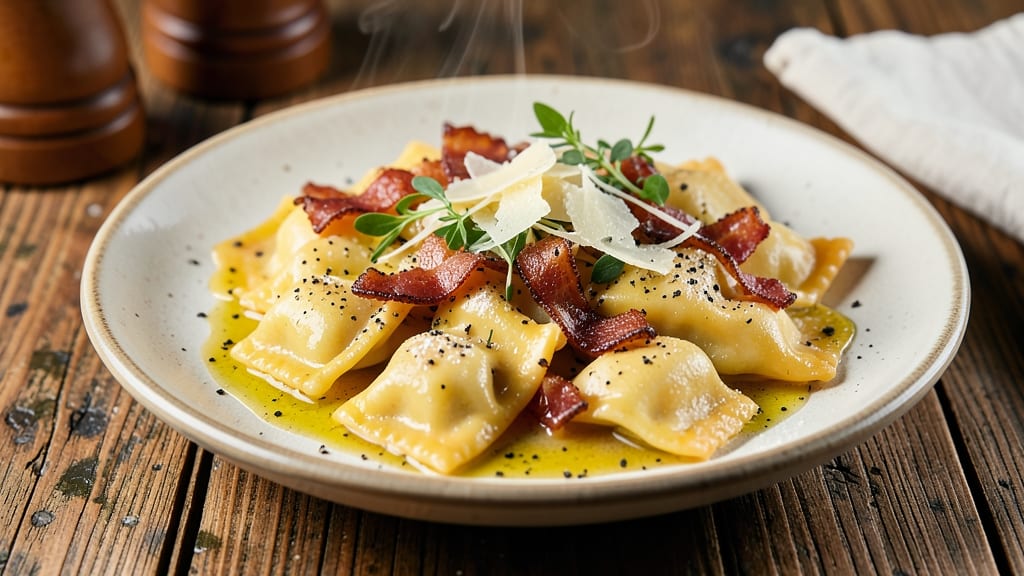
This bacon carbonara ravioli sauce delivers the perfect balance of crispy pancetta crunch and velvety egg-cheese silk—no curdling, no guesswork. The secret lies in tempering the eggs with starchy pasta water while keeping the heat low, creating a sauce that clings to every ravioli like a luxurious embrace.
I've perfected this technique over countless batches, ensuring the pancetta stays perfectly crispy while the sauce remains rich and emulsified.
What sets this sauce apart is the crispy texture contrast—the crunch of pancetta against the creamy, eggy base creates a sensory experience that's hard to resist. Unlike traditional carbonara, this version uses pancetta instead of bacon for a more delicate, slightly sweet flavor that pairs beautifully with ravioli's tender pockets.
The sauce is built in stages: first, the pancetta renders its fat, then the eggs are tempered with pasta water to create a smooth, silky consistency.
By the time you're done, you'll have a sauce that's restaurant-quality—creamy, rich, and packed with flavor—ready to coat al dente ravioli or even spaghetti. The key is working quickly but methodically, ensuring the eggs don't scramble while the pancetta achieves that perfect crispy finish.
This sauce reheats beautifully, making it ideal for meal prep or serving leftovers the next day.
The beauty of this recipe is its versatility—it works just as well with fresh ravioli as it does with dried pasta, and the leftovers taste even better the next day.
Whether you're serving it as a main course or a side, this bacon carbonara sauce will elevate any Italian-inspired meal. Let's get started!
Ingredients for bacon carbonara ravioli sauce
Eight ingredients transform into restaurant-quality sauce for ravioli—crispy pancetta meets velvety egg-cheese perfection.
| Ingredient | Amount | Notes |
|---|---|---|
| Pancetta 🥓 | 6 oz | Diced into 1/4-inch pieces |
| Large Egg Yolks 🥚 | 4 whole | Fresh, room temperature |
| Pecorino Romano Cheese 🧀 | ¾ cup | Freshly grated, fine texture |
| Pasta Water 💧 | ½ cup | Reserved from cooked ravioli |
| Extra-Virgin Olive Oil 🫒 | 1 tbsp | Light, fruity variety |
| Freshly Ground Black Pepper 🌶️ | ½ tsp | Coarsely cracked |
| Diamond Crystal Kosher Salt 🧂 | ¼ tsp | For seasoning pancetta |
| Freshly Grated Nutmeg 🌿 | ⅛ tsp | Pinch for depth |
Pancetta is the star here—look for thick-cut slices from the deli counter. Trader Joe's or Whole Foods carry good quality, but any reputable butcher will have it. Dice it yourself for maximum crispiness (no pre-chopped stuff). The eggs need to be fresh—check the carton date. Pecorino Romano should be aged at least 8 months for that sharp, salty punch. If you can't find it, Parmigiano-Reggiano works in a pinch, but it's less tangy. Nutmeg is non-negotiable—it's what gives carbonara its signature depth. Grab the whole nutmeg and grate it fresh (the pre-ground stuff tastes like sawdust).
No pancetta? Thin-cut bacon works, but it's smokier and less delicate. Egg substitutes? Duck eggs add richness, but chicken eggs are fine. For a dairy-free version, swap the cheese for nutritional yeast plus vegan Parmesan. Short on pasta water? Reserve some while cooking your ravioli—it's the secret to that silky texture. The olive oil should be light and fruity—none of that heavy, bitter stuff. And if you're worried about curdling, temper those eggs with pasta water like the intro says—it's the only way to get that perfect emulsion.
Pancetta keeps crispy for 3 days in the fridge—store it in a sealed container. The sauce itself reheats beautifully—just warm gently on low heat, stirring constantly. Portion into ramekins for individual servings if you're prepping ahead. Leftovers? Even better the next day—if that's possible. Freeze for up to 1 month in an airtight container, but thaw slowly in the fridge to preserve that crispy texture. Trust me, the first bite after reheating is worth the wait.
Why You'll Love This Recipe
- No Fuss, Big Payoff: Honestly, this sauce comes together while you boil water. Pancetta renders in minutes, yolks and pecorino blend in seconds—no whisking marathons or tempering stress. I’ve made it while chatting on the phone, and it still tastes like I slaved over it.
- Umami Bomb: That crispy pancetta crunch against silky yolks? Chef’s kiss. The pecorino’s sharp bite cuts through the richness, and a splash of pasta water ties it all into a sauce so addictive, my husband now asks for it on Tuesdays. (Yes, even on a Tuesday night.)
- Weeknight to Dinner Party: Same sauce, endless uses. Toss it with ravioli for a 20-minute meal, drizzle it over roasted veggies for a fancy side, or even slather it on grilled chicken. I’ve served it to guests who swore it was restaurant-quality—no one ever guessed how little effort it took.
- Leftovers That Don’t Suck: Between us, most carbonara leftovers turn into glue. Not this one. The olive oil keeps it from drying out, and the pancetta stays crispy when reheated. I’ve packed this for lunches all week—it’s my secret weapon for avoiding sad, greasy pasta the next day.
Step-by-step instructions for bacon carbonara ravioli sauce
Here's how to make a rich, crispy bacon carbonara sauce that brings ravioli to life.
Cook the Pancetta Until Crispy
Heat a large skillet over medium heat and add the 6 oz pancetta, diced into ¼-inch pieces. Cook undisturbed for 5-6 minutes until the pancetta renders fat and becomes golden brown and crispy along the edges. This is crucial—don't move it around too soon, or it won't develop that perfect crunch.
Once the pancetta is crispy, use a slotted spoon to transfer it to a paper towel-lined plate, leaving the rendered fat in the skillet. You should have about ¼ cup of golden fat remaining. If the pancetta isn't crispy enough, return it to the skillet for another minute or two. The fat is the foundation of your sauce, so don't drain it—it's packed with flavor.
Prepare the Egg and Cheese Mixture
While the pancetta cooks, whisk together the 4 whole large egg yolks, 0.75 cup freshly grated Pecorino Romano cheese, 0.5 tsp freshly ground black pepper, 0.25 tsp Diamond Crystal kosher salt, and 0.125 tsp freshly grated nutmeg in a bowl. The mixture should be thick and pale yellow, almost like a custard. I like to use a fork for this step—it helps incorporate air and creates a lighter sauce.
Here's the thing—this mixture needs to be at room temperature. If the yolks are cold, the sauce will turn grainy when it hits the hot skillet. If they're chilled, let them sit for 10-15 minutes before mixing. The cheese should be finely grated so it melts smoothly into the sauce. If you're using pre-grated cheese, pulse it in a food processor to break up any clumps.
Combine Everything Off Heat
Return the skillet with the pancetta fat to the stove over low heat. Add the 1 tablespoon extra-virgin olive oil and let it warm through for 30 seconds. This step is all about gentle heat—you want to warm the fat without letting it smoke. Now, add the cooked pancetta back to the skillet and toss to combine with the fat.
Here's where it gets fun—remove the skillet from heat completely. Add the egg-cheese mixture in a slow, steady stream while whisking vigorously with a wooden spoon. The residual heat from the skillet will gently cook the eggs into a silky sauce. If the sauce starts to thicken too much, add 1-2 tablespoons of the reserved 0.5 cup pasta water to loosen it. Keep whisking until the sauce is smooth and creamy, about 1-2 minutes.
Finish with Pasta Water and Serve
Return the skillet to low heat and add the remaining 0.5 cup pasta water all at once. Stir gently for 30-60 seconds until the sauce is glossy and coats the back of a spoon. The sauce should be thick enough to cling to the ravioli but still silky, not gluey. If it's too thick, add a splash more pasta water.
Toss the sauce with the cooked ravioli in a large bowl, making sure each piece is well coated. The pancetta should be distributed evenly throughout. Serve immediately while the sauce is still warm and creamy. The contrast of crispy pancetta against the silky egg sauce is what makes this dish so special. Don't wait too long—carbonara sauce thickens as it cools, and you want that perfect, restaurant-quality texture.
Pro Tips For Making Bacon Carbonara Ravioli Sauce
- Render Pancetta Low: Pancetta burns faster than bacon—keep the heat at a steady medium-low and resist the urge to rush. I learned this the hard way after watching my first batch turn into crispy black bits instead of golden, fatty shards. A splash of pasta water later, and you’ve got a sauce fix, but it’s not ideal.
- Grate Pecorino Fresh: Pre-grated cheese is packed with anti-caking agents that turn your sauce grainy. Use a microplane or fine grater right before mixing it into the yolks—it dissolves smoother and adds a sharper, creamier bite. (Yes, even if you’re impatient like me.)
- Temper Yolks Gradually: Dumping hot pasta water into cold yolks scrambles them faster than a bad breakup. Instead, whisk the yolks first, then slowly drizzle in half the pasta water while stirring constantly—this keeps the sauce silky, not lumpy. The rest of the water goes to the ravioli, not the sauce.
- Reserve Starchy Water: Don’t pour out that pasta water—save at least ½ cup of the last bit, which is packed with starch. It’s the glue that binds the sauce to the ravioli, preventing a dry, crumbly mess. (Your future self will thank you.)
Flavor customization for this bacon carbonara ravioli sauce
Spicy Kick
Add ½ teaspoon red pepper flakes or 1 teaspoon Calabrian chili paste to the pancetta fat while cooking. For heat lovers, finish with a drizzle of hot honey (mix ¼ cup honey with 1 teaspoon cayenne pepper, simmered for 5 minutes).
This balances the richness beautifully while keeping the sauce creamy. 🌶️
Smoky Depth
Swap ½ teaspoon smoked paprika for some of the black pepper in the egg-cheese mixture. For extra smokiness, cook the pancetta with 1 chopped chipotle pepper in adobo (remove before adding eggs). This works especially well with ravioli—smoky flavors complement the tender pasta perfectly.
Herbaceous Twist
Stir in 1 tablespoon fresh parsley and 1 teaspoon fresh thyme leaves into the finished sauce. For a brighter variation, add ½ teaspoon lemon zest to the egg-cheese mixture. This keeps the sauce light while adding fresh, vibrant notes that cut through the richness.
Creamy Upgrade
For a richer texture, replace 2 tablespoons pasta water with 2 tablespoons heavy cream when finishing the sauce. Alternatively, add 1 ounce mascarpone cheese to the egg-cheese mixture for a luxurious, velvety finish. This works especially well for serving as a side sauce or over pasta dishes.
Umami Boost
Add 1 teaspoon fish sauce or ½ teaspoon soy sauce to the pancetta fat while cooking. For a vegetarian option, use 1 teaspoon mushroom powder in the egg-cheese mixture. This deepens the savory profile without overpowering the delicate pancetta flavor.
Sweet-Savory Balance
Finish the sauce with 1 teaspoon maple syrup or ½ teaspoon balsamic glaze to add a subtle sweetness. This pairs beautifully with the salty pancetta and tangy cheese, creating a well-rounded flavor profile that's both comforting and sophisticated. 💫
Nutrition facts
Frequently asked questions
Can I use bacon instead of pancetta in this sauce?
Yes, but expect a slightly different flavor profile. Regular bacon has a smokier, saltier taste compared to pancetta's delicate sweetness. For best results, use thin-cut bacon (not thick-cut) and reduce the salt in the recipe since bacon is already heavily seasoned.
Why does my carbonara sauce get grainy or curdle?
This usually happens from either too much heat or cold eggs. Always use room-temperature eggs and work off the heat when combining them with the pancetta fat. Stir constantly and add pasta water gradually to keep the sauce silky. If it starts to curdle, whisk in 1 tablespoon cold water to reset the emulsion.
How do I make this sauce ahead of time?
Prepare the sauce up to the point where you've combined all ingredients off the heat, then refrigerate it in an airtight container for up to 1 day. Reheat gently over low heat, stirring constantly with a splash of pasta water to restore creaminess. For longer storage, freeze portions for up to 1 month—thaw overnight in the fridge before reheating.
What's the best pasta to use with this sauce?
While this sauce was designed for ravioli, it works beautifully with spaghetti, fettuccine, or even rigatoni. For maximum flavor, use fresh pasta which has a lighter texture that absorbs the sauce differently. If using dried pasta, cook it 1 minute less than package instructions for al dente results.
Can I make this sauce vegetarian?
Replace the pancetta with smoked tofu cubes (pressed and pan-fried) or mushroom duxelles for umami depth. Use vegan Parmesan plus nutritional yeast instead of Pecorino, and ensure your eggs are vegan (like tofu-based or chickpea flour eggs). The technique remains identical—just adjust the fat content accordingly.