
Sauces & Condiments
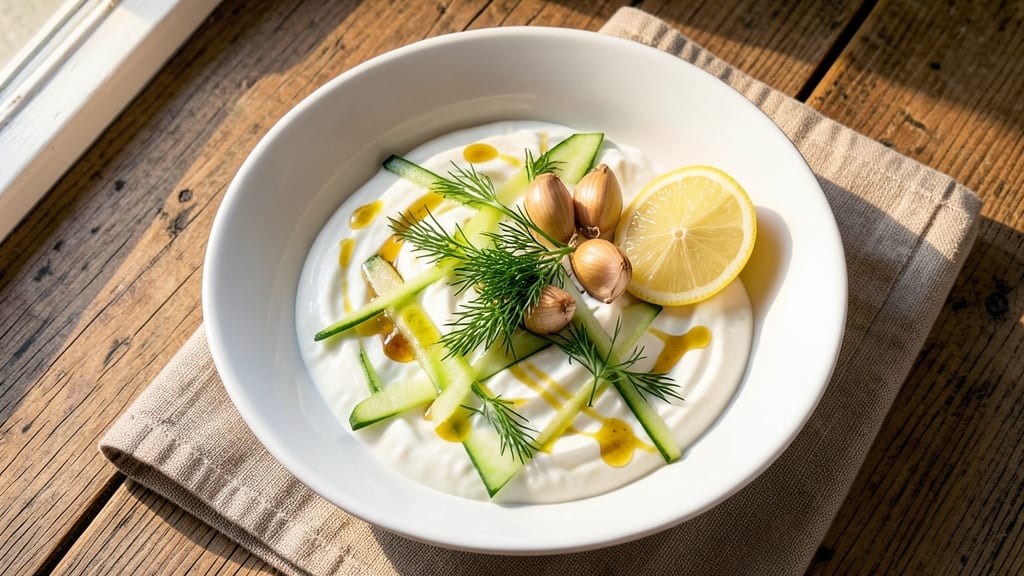
This authentic tzatziki sauce recipe transforms simple ingredients into the creamy, herby dip that elevates every gyro. The secret lies in using thick Greek yogurt, freshly grated cucumber, and a touch of garlic—all balanced with bright lemon and aromatic dill.
I’ve perfected this version over years of testing, ensuring the texture stays smooth without separating and the flavor remains vibrant, not sour or overly garlicky.
The key to authentic tzatziki is proper preparation: straining the cucumber to remove excess moisture, whisking the yogurt until silky, and letting the sauce rest before serving.
This method guarantees a sauce that’s rich, cooling, and packed with Mediterranean freshness—ideal for dipping pita, drizzling over grilled meats, or serving with fresh vegetables. The garlic and dill infuse slowly, creating layers of flavor that develop with time.
What makes this recipe stand out is its foolproof consistency—no lumps, no wateriness, just a velvety spread that clings perfectly to gyro meat or wraps. The lemon juice brightens the yogurt’s tang, while the olive oil adds a subtle richness.
Store it in an airtight container in the fridge for up to 5 days, where the flavors deepen slightly with each passing hour.
This isn’t just a sauce; it’s the foundation of a memorable gyro experience. Whether you’re serving it at a backyard barbecue or a casual dinner, the balance of creamy, crunchy, and herby notes will make it your go-to dip. Let’s make it—your taste buds will thank you.
Ingredients for authentic tzatziki sauce recipe for gyros
Eight ingredients. Three key techniques. The perfect balance of creamy, fresh, and herby.
| Ingredient | Amount | Notes |
|---|---|---|
| Thick Greek Yogurt 🧀 | 2 cups | Plain, full-fat preferred |
| English Cucumber 🥒 | 1 whole | Seeded and grated fine |
| Garlic Cloves 🧄 | 3 cloves | Fresh, minced finely |
| Fresh Dill 🌿 | ⅓ cup | Chopped stems and all |
| Extra-Virgin Olive Oil 🫒 | ¼ cup | Light, fruity variety |
| Lemon Juice 🍋 | 2 tbsp | Freshly squeezed |
| Salt 🧂 | 1 tsp | Diamond Crystal preferred |
| White Vinegar 💧 | 1 tbsp | For acidity balance |
The Greek yogurt is non-negotiable—Fage 5% or Chobani plain are my go-tos, but any thick, full-fat yogurt works. Avoid flavored or low-fat versions; they thin the sauce. For the cucumber, English cucumbers (the long, ridged kind) are ideal—they’re seedless and less watery. If you can only find regular cucumbers, remove all seeds and pat dry with paper towels. The garlic and dill should be freshly minced—no pre-minced jars here. For dill, use the stems too; they pack more flavor. I always grab mine from the Mediterranean aisle at Whole Foods or a Greek market if available.
No thick Greek yogurt? Plain vegan yogurt works in a pinch, but the texture will be slightly lighter. Substituting cucumber? Zucchini or avocado can work, but they alter the classic taste. Short on dill? Fresh parsley at half the amount adds brightness, though it won’t replicate that Mediterranean aroma. The lemon juice is critical—bottled won’t cut it. If you’re avoiding vinegar, extra lemon juice (1 tbsp more) balances the acidity. For a smoother texture, strain the cucumber mixture through a cheesecloth-lined sieve before mixing.
This sauce keeps beautifully—5 days in the fridge, sealed airtight with a thin layer of olive oil on top to preserve freshness. For best flavor, let it sit at least 1 hour before serving; the garlic and dill infuse deeper over time. Portion into small jars for easy dipping at parties. Freezes for up to 3 months if you add an extra tablespoon of lemon juice before freezing to prevent separation. Always bring to room temperature before serving for that authentic restaurant texture.
Why You'll Love This Recipe
- No-Yogurt-Worry Prep: I swear by this method—just salt the cucumber, let it drain for 10 minutes, then squeeze out the excess water. No blending, no straining like I used to do. The texture stays just right: cool, creamy, and never watery.
- Garlic-Dill Magic: That first bite of gyro with this sauce? The garlic hits like a bright punch, but the dill softens it into something irresistible. Honestly, I’ve tried store-bought tzatziki, and this is the only version that actually tastes like it came from a Greek taverna.
- Gyros or Go Home: This isn’t just for pita—slather it on grilled chicken, drizzle it over falafel, or even toss it with chopped veggies for a quick salad. (Yes, even on a Tuesday night.) The olive oil finish makes it work everywhere, no fuss.
- Leftovers That Last: Between us, I make a big batch every Sunday and it’s still fresh by Friday. The yogurt keeps it rich, and the cucumber stays crisp if you store it right. No sad, watery sauce here—just pure, reliable flavor waiting for your next meal.
Step-by-step instructions for authentic tzatziki sauce
This method delivers restaurant-quality tzatziki with perfect balance—creamy yet tangy, herby yet fresh.
Prepare the Cucumber Base
Peel the English cucumber using a vegetable peeler, removing only the outer skin to preserve texture. Cut it in half lengthwise, then scoop out and discard the seeds using a spoon. This step prevents excess moisture that would make your sauce watery.
Grate the cucumber flesh using the large holes of a box grater or food processor. Immediately transfer the grated cucumber to a clean kitchen towel and squeeze out every last drop of liquid. The key to authentic tzatziki lies in this drainage—don't skip it. The cucumber should yield about 1 cup of drained pulp after squeezing. This concentrated base forms the perfect vehicle for the yogurt and herbs.
Combine Yogurt and Seasonings
In a medium mixing bowl, combine the 2 cups of thick Greek yogurt with the drained cucumber pulp. Using a wooden spoon, gently fold the ingredients together until fully incorporated. Avoid overmixing at this stage—you want to maintain some texture rather than creating a completely smooth sauce.
Add the 3 minced garlic cloves, 0.33 cup chopped fresh dill (including stems), 1 tsp salt, and 1 tbsp white vinegar. Mix thoroughly but gently, ensuring the garlic and dill are evenly distributed throughout the yogurt mixture. The vinegar serves as a subtle acidity balancer that enhances the yogurt's natural tang without overpowering it. Let the mixture sit at room temperature for 10 minutes while you prepare the next components.
Incorporate the Olive Oil and Acid
Slowly drizzle in the 0.25 cup extra-virgin olive oil while continuously stirring with a silicone spatula. The olive oil should be added gradually to prevent breaking the yogurt's texture. Stir until the sauce reaches a velvety consistency, with the oil fully emulsified but still visible as delicate strands throughout.
Add the 2 tbsp freshly squeezed lemon juice and mix gently. The lemon juice brightens the flavors and prevents the garlic from becoming too overpowering. Taste the mixture and adjust seasoning if needed—you may need to add a pinch more salt or lemon juice to achieve the perfect balance of tangy, herby, and creamy flavors. The sauce should be thick but still spreadable, with a pleasant sheen from the olive oil.
Rest and Chill for Maximum Freshness
Cover the tzatziki with plastic wrap and refrigerate for at least 2 hours, preferably 4 hours before serving. This chilling period allows the flavors to meld together and the texture to set properly. The longer it rests, the more pronounced the dill and garlic flavors become, creating that authentic Mediterranean character.
When ready to serve, give the tzatziki one final stir to redistribute any settled ingredients. The sauce should be thick enough to cling to gyros meat without being heavy, with visible dill flecks and a glossy finish from the olive oil. Serve immediately with warm pita bread, grilled meats, or fresh vegetables for the perfect Mediterranean pairing.
Pro Tips For Making Authentic Tzatziki Sauce Recipe For Gyros
- Drain the Cucumber Properly: Skip the paper towel trick—it’s messy and doesn’t work well. Instead, slice the cucumber, sprinkle with a pinch of salt, and let it sit in a colander for 10 minutes. Then, squeeze out the excess water with your hands (yes, get your fingers wet). This removes the bitterness and keeps the sauce from turning watery.
- Use Cold Yogurt: Straight from the fridge is best—no need to thaw it. Cold yogurt thickens the sauce naturally and balances the garlic’s sharpness. If you’re in a hurry, pop the bowl in the freezer for 15 minutes while you prep the rest.
- Mince the Garlic Fine: No need for a press—it makes the sauce grainy. Use a knife to mince the garlic into a paste-like consistency. This blends smoothly and prevents that "garlicky texture" you sometimes get. (Trust me, you’ll notice the difference.)
- Strain the Dill: Roughly chop the dill, then strain it through a fine-mesh sieve before mixing. This keeps the sauce silky and prevents clumps. If you’re lazy, just tear the dill leaves with your hands—it still works, but the texture won’t be as refined.
Regional styles of this dish
Greek Taverna Style
In Greek tavernas, tzatziki is often served as a cooling accompaniment to grilled meats like lamb or chicken. The sauce is typically thicker than Western versions, with a stronger garlic presence—some recipes even add a pinch of ground coriander for depth.
I’ve seen it drizzled generously over souvlaki or used as a dip for warm pita triangles. The key difference? No vinegar in some traditional versions—just lemon and extra salt to balance the yogurt’s tang. 🌿
Turkish Cacık Twist
Across the border in Turkey, this sauce becomes cacık, a lighter, more refreshing version. The Turks often skip the cucumber entirely and use grated green pepper instead, giving it a slightly sweet, crunchy texture. They also add minced mint alongside the dill, creating a bright, herbaceous profile.
For a hybrid approach, I sometimes blend ½ cucumber and ½ green pepper—it’s a game-changer for summer dishes. The garlic is often roasted for a mellower flavor, which pairs beautifully with kebabs.
Balkan Variations
The Balkans put their own spin on tzatziki, often incorporating sour plums or quince paste for a sweet-tangy contrast. In Bulgaria, you’ll find versions with crumbled feta mixed into the yogurt, adding a salty, briny depth.
Meanwhile, Romania sometimes uses sour cream instead of yogurt for a richer, slightly heavier texture. I’ve experimented with adding 1 oz of crumbled feta to this recipe—it adds a luxurious finish without overpowering the fresh herbs. 🧀
Modern Fusion Takes
For a spicy kick, add 1 tsp of smoked paprika or ½ tsp of cayenne to the sauce—this works surprisingly well with smoked meats like pulled pork or brisket. Another fun twist? Swap half the yogurt for labneh (strained yogurt) for a thicker, more intense flavor.
I’ve also seen avocado-infused tzatziki (blend in ½ avocado) for a creamy, vegan-friendly version that’s perfect for dipping grilled veggies. The possibilities are endless, but always keep the lemon and dill as the anchor flavors. 🌶️
Middle Eastern Adaptations
In Lebanon and Syria, tzatziki often includes sumac for a tart, citrusy zing and sometimes pomegranate molasses for a sweet-tart balance. For a nutty crunch, top with toasted pine nuts or crushed walnuts.
I love adding 1 tsp of sumac to this recipe—it brightens the sauce and pairs perfectly with shawarma or falafel. The Middle Eastern versions are bolder in flavor but still maintain that cooling, creamy base that makes tzatziki so universally loved. ✨
Vegetarian-Friendly Versions
For a fully plant-based take, use thick coconut yogurt (like So Delicious brand) and avocado for creaminess. Add 1 tbsp of apple cider vinegar to mimic the tang of lemon. I’ve also seen cashew-based tzatziki—blend ½ cup soaked cashews with the cucumber and herbs for a rich, dairy-free alternative.
The texture is slightly different but still refreshing and herby. This version works amazingly well with grilled halloumi or falafel. 🥑
Nutrition facts
Frequently asked questions
Why does my tzatziki sauce get watery?
The most common cause is excess moisture from cucumbers. Always peel and seed English cucumbers, then squeeze the grated pulp in a towel to remove all liquid. For extra insurance, strain the cucumber mixture through a fine-mesh sieve before mixing with yogurt.
Can I make tzatziki without cucumber?
Yes! For a lighter version, use ½ cup grated green bell pepper instead—it adds sweetness and crunch. Or try ¼ cup finely grated zucchini, but reduce the olive oil to 2 tbsp to maintain balance. The texture will be slightly different but still delicious with grilled meats.
How do I prevent garlic from overpowering the sauce?
Roast the garlic first for a milder flavor. Wrap 3 cloves in foil, roast at 400°F for 10 minutes, then cool and mince. Alternatively, use 2 cloves fresh instead of 3. The white vinegar also helps balance garlic's intensity by adding subtle acidity. Taste as you go!
What's the best way to store leftover tzatziki?
Keep it in an airtight container with a thin layer of olive oil on top to preserve freshness. It lasts 5 days in the fridge. For long-term storage, freeze for up to 3 months—add 1 extra tbsp lemon juice before freezing to prevent separation. Always bring to room temp before serving.
Can I make tzatziki ahead of time for a party?
Make it 1 day ahead for deeper flavor development. Store in the fridge, then give it a final stir before serving. For parties, portion into small jars—this keeps the sauce fresh and ready to serve without separating. The longer it rests, the more vibrant the dill and garlic flavors become.