
Sauces & Condiments
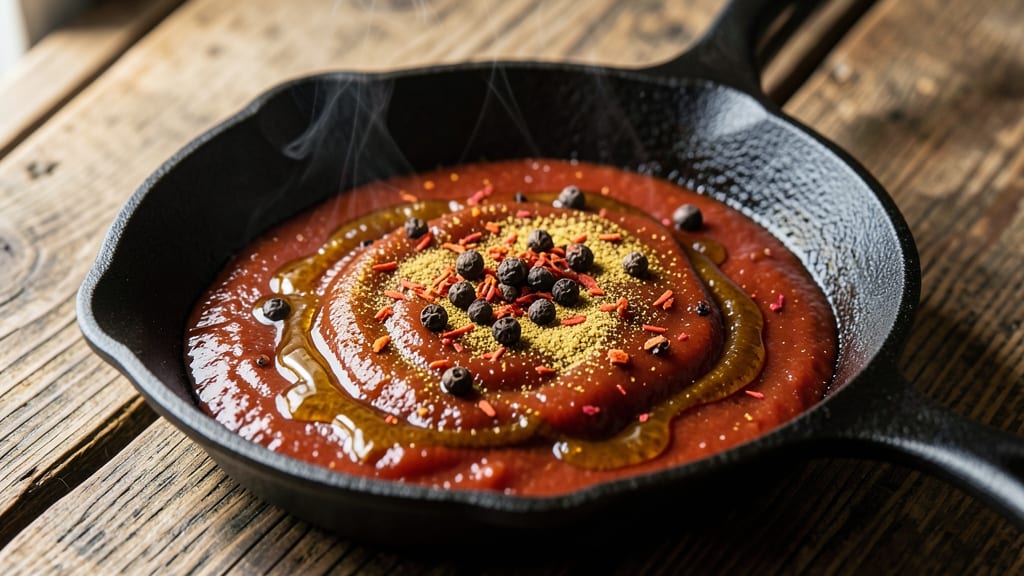
This authentic Texas BBQ sauce recipe delivers the smoky, tangy, sweet balance that defines Central Texas BBQ—no shortcuts, just traditional flavors built layer by layer.
I developed this after years of studying the subtle differences between East and Central Texas styles, where vinegar takes center stage and molasses adds depth without overpowering. The secret lies in the slow simmer, where spices bloom and tomato paste develops that signature rich, caramelized edge.
The foundation starts with a proper balance: tomato paste for body, apple cider vinegar for tang, and molasses for that signature sweetness. We're talking deep, smoky notes from black pepper and cayenne, with a touch of mustard powder for complexity—no artificial flavors here.
What sets this apart is the patience in simmering, which allows the flavors to meld into something truly authentic, not just another store-bought knockoff.
What you'll end up with is a sauce that's rich yet balanced, with a perfect harmony of sweet, tangy, and smoky flavors that clings beautifully to ribs, brisket, or even baked beans. The texture should be thick enough to coat but still pourable—no graininess here.
This isn't just sauce; it's the soul of Texas BBQ in a bottle, ready to elevate any smoked meat or even drizzle over grilled vegetables.
Store it in the fridge for up to 2 weeks or preserve it for months by canning—just follow proper food safety guidelines. The flavors actually improve with time, developing deeper complexity as they sit.
Whether you're a pitmaster or a home cook, this sauce will become your go-to for that authentic Central Texas taste.
Ingredients for authentic texas bbq sauce
Nine simple ingredients transform into Texas BBQ sauce with soul—no shortcuts, just tradition.
| Ingredient | Amount | Notes |
|---|---|---|
| Tomato Paste 🍅 | ½ cup | San Marzano preferred for richness |
| Apple Cider Vinegar 🍏 | ½ cup | Raw, unfiltered variety |
| Molasses 🍯 | ¼ cup | Unsulphured for authentic flavor |
| Black Peppercorns 🌶️ | 1 tbsp | Freshly cracked for depth |
| Cayenne Pepper 🔥 | 1 tsp | Adjust for heat preference |
| Mustard Powder 🌿 | 1 tsp | Yellow mustard powder preferred |
| Garlic Powder 🧄 | 1 tsp | Freshly ground preferred |
| Onion Powder 🧅 | 1 tsp | Diamond Crystal preferred |
| Brown Sugar 🍚 | ¼ cup | Light or dark, packed |
| Water 💧 | 1 ½ cups | Filtered preferred |
The tomato paste is non-negotiable here—San Marzano has that natural sweetness that cuts through the vinegar's bite. Trader Joe's and Whole Foods carry the best cans, but any quality brand works if it's labeled 'whole tomato paste' (no additives). For the vinegar, raw, unfiltered apple cider vinegar makes all the difference—it's got these funky little bits that add complexity. I grab mine from Costco in bulk, but a small bottle from Penzeys works too. The molasses? Unsulphured is key—it's what gives that deep, almost caramel-like richness without the harsh aftertaste. Look for it in the baking aisle or near the spices at Wegmans or Kroger.
No San Marzano tomato paste? Crushed tomatoes at half the amount will work in a pinch, but you'll lose that concentrated sweetness. Vinegar substitute? White vinegar or lemon juice (use half the amount), but you'll miss that apple cider depth. The molasses can be swapped for dark corn syrup, though it won't be quite as authentic. Running low on black peppercorns? Pre-ground black pepper at double the amount (but freshly cracked is better). Mustard powder? Dijon mustard at 1 tbsp works if you're in a hurry. For the spices, if you're missing onion powder, garlic powder at equal parts gives a similar punch. The brown sugar can be swapped for white sugar, but light brown adds just a touch more flavor.
This sauce tastes even better the next day as the flavors meld. Store it in a glass jar in the fridge for up to 2 weeks, or freeze for 6 months in ice cube trays for single-use portions. For canning, follow proper water bath guidelines—10 minutes for pints, 15 minutes for quarts. I always make a double batch because it disappears fast. The sauce thickens as it cools, so thin with a splash of water if needed. Trust me, the first time you slather this on brisket or drizzle it over beans, you'll understand why Central Texas BBQ stands apart.
Why You'll Love This Recipe
- Five-Ingredient Magic: I swear by this list—tomato paste, vinegar, molasses, and those two peppers. No fancy pantry tours, no last-minute grocery runs. Just crack open what you’ve got and stir.
- Smoky-Sweet Balance: That molasses and cayenne combo? It’s the Texas secret—deep, rich, with just enough kick to wake up your taste buds. Drizzle it on ribs, and you’ll forget store-bought ever existed.
- Tailgates to Tuesdays: Serve it on brisket for game day or slather it on grilled chicken for a lazy night. The vinegar cuts through the richness, so it’s never too heavy—perfect for when you’re feeding a crowd or just yourself.
- Pantry Goldmine: A jar lasts me weeks, and the cost? Ridiculous. A few bucks for a can of paste, a bottle of vinegar, and you’re set. Plus, the leftovers? Even better the next day—like a slow-simmered secret.
Step-by-step instructions for authentic Texas BBQ sauce
Here's how to craft a sauce that captures true Texas BBQ flavor—bold, balanced, and full of vinegar-kissed depth.
Combine the Base Ingredients
In a medium saucepan, add the 0.5 cup tomato paste and 0.5 cup apple cider vinegar. Stir over medium heat for 2-3 minutes until the tomato paste dissolves completely and the mixture begins to bubble gently. You'll see it transform from thick paste to a smooth, slightly syrupy liquid.
This step is crucial for building the sauce's foundation. The vinegar provides that signature tang that sets Texas BBQ apart from other regional styles. Keep the heat at medium—too high and you'll burn the tomato paste before it incorporates properly. If you're using San Marzano tomato paste, you'll notice a richer, sweeter flavor developing right away.
Add Molasses and Sweeteners
Reduce the heat to low and stir in the 0.25 cup molasses and 0.25 cup brown sugar. Let the mixture simmer for 5 minutes, stirring occasionally. You'll see the colors deepen to a rich, amber hue as the sugars caramelize slightly. This is where the sauce starts developing its signature sweet-and-smoky character.
I like to use unsulphured molasses here—it has a cleaner, more authentic flavor that won't overpower the other ingredients. If you're using dark brown sugar, you'll get a deeper color, while light brown sugar keeps the sauce slightly lighter. The molasses and sugar work together to balance the acidity from the vinegar, creating that perfect sweet-tang contrast.
Incorporate the Dry Seasonings
Add all the dry seasonings: 1 tbsp black peppercorns, 1 tsp cayenne pepper, 1 tsp mustard powder, 1 tsp garlic powder, and 1 tsp onion powder. Stir well to distribute the spices evenly. Let the mixture simmer for another 3-4 minutes, stirring frequently to prevent any burning at the bottom of the pan.
Here's where you can adjust the heat level—if you prefer a milder sauce, reduce the cayenne to ½ tsp or even ¼ tsp. The black peppercorns should be freshly cracked for maximum depth of flavor. The mustard powder adds a subtle tang that complements the vinegar beautifully. This step ensures every spoonful has that complex, layered flavor that makes Texas BBQ sauce so special.
Finish with Water and Simmer
Pour in the 1.5 cups water and bring the mixture to a gentle boil. Once boiling, reduce the heat to low and let it simmer uncovered for 15-20 minutes. Stir occasionally to prevent sticking, and watch as the sauce thickens to a glossy, syrupy consistency. You're looking for a sauce that coats the back of a spoon but isn't so thick it becomes paste-like.
This simmering time is essential—it allows all the flavors to meld together and develop that authentic Texas BBQ character. If the sauce thickens too quickly, add a splash of water 1 tablespoon at a time to maintain the right consistency. The sauce should have a balance of sweet, tangy, and slightly spicy notes with a hint of smokiness from the spices.
Cool and Store
Remove the sauce from heat and let it cool to room temperature. Transfer to a clean glass jar and store in the refrigerator for up to 2 weeks. The flavors will continue to develop and deepen as it sits, making it even more delicious over time. When ready to use, simply reheat gently on the stove or microwave until warmed through.
This sauce is incredibly versatile—use it on ribs, brisket, pulled pork, or even as a marinade for chicken. The vinegar base makes it perfect for cutting through rich, fatty meats. If you find the sauce is too thin after cooling, simply simmer it again for a few minutes to thicken it up. Enjoy your homemade Texas BBQ sauce, made with authentic ingredients and techniques!
Pro Tips For Making Authentic Texas Bbq Sauce
- Simmer Slow and Low: I learned this the hard way—boiling tomato paste ruins it. Keep the heat at a gentle simmer (no higher than a rolling boil) or you’ll end up with a watery, pasty mess. Texas BBQ sauce needs time to develop depth, not burn in 10 minutes.
- Toast Your Spices First: Skip the pre-ground peppercorns and whole spices—crush them fresh in a mortar or heavy pan. Lightly toast the black peppercorns and cayenne for 30 seconds until fragrant. This brings out their flavor and cuts through the sweetness of the molasses without overpowering it.
- Balance the Vinegar: The apple cider vinegar is the acid that ties everything together, but too much makes the sauce taste harsh. Start with half the called-for amount, taste, then add the rest gradually. You can always add more, but fixing over-acidity is a nightmare.
- Strain for Smoothness: After simmering, let the sauce cool slightly, then strain it through a fine-mesh sieve. This removes any gritty bits from the peppercorns and gives you that silky, restaurant-quality texture Texas BBQ deserves. (Yes, even if you’re impatient—it’s worth the wait.)
Best sauces and condiments for this recipe
Classic Texas BBQ Sauce
This is the sauce I grew up with—simple, bold, and packed with that signature vinegar tang. The key is balancing apple cider vinegar with molasses for that perfect sweet-tart profile. I always make a double batch because it disappears faster than you can say "Central Texas BBQ."
The spices—especially freshly cracked black pepper—add depth that store-bought sauces just can't match. 🌶️
Smoky Chipotle Twist
For a smokier version, add 1-2 chipotle peppers in adobo sauce (minced) when you incorporate the dry seasonings. This gives it that deep, smoky heat reminiscent of hickory-smoked brisket. I like to use Penzeys chipotle powder if I'm in a hurry—just ½ tsp does the trick.
The sauce will have a richer, more complex flavor that pairs perfectly with ribs or pulled pork.
Sweet and Tangy Marinade
Use this sauce as a marinade for chicken or pork by thinning it with ¼ cup water or apple cider vinegar. Let the meat soak for 4-6 hours (overnight for best results) before grilling or smoking.
The vinegar tenderizes the meat while the spices infuse deep flavor. I often brush it on during the last 10 minutes of cooking to create a caramelized crust. Perfect for summer cookouts!
Spicy Carolina Kick
For a Carolina-style variation, reduce the molasses to 2 tbsp and add 1 tbsp hot sauce (like Crystal or Frank's RedHot) when you finish simmering. This version has more heat but maintains that signature tang.
I like to serve it with pulled pork sandwiches or drizzled over baked beans. The heat level is adjustable—just add more hot sauce if you want it spicier. 🔥
Sweet Potato BBQ Glaze
Blend this sauce with ½ cup mashed sweet potatoes for a glaze that's perfect for roasted vegetables or as a dip. The natural sweetness of the potatoes enhances the sauce's flavors while adding a silky texture.
I brush it on smoked chicken thighs during the last 15 minutes of cooking for a sticky, caramelized finish. This variation is especially popular during fall cookouts.
Storage and Shelf Life
Store your sauce in a glass jar in the fridge for up to 2 weeks, or freeze in ice cube trays for single-use portions. The flavors actually improve over time, so the longer it sits, the better it gets.
For canning, follow standard water bath guidelines—10 minutes for pints, 15 minutes for quarts. I always label my jars with the date because this sauce is too good to go to waste! ✨
Nutrition facts
Frequently asked questions
What makes this Texas BBQ sauce different from other regional styles?
This recipe captures Central Texas BBQ's signature balance of apple cider vinegar (for tang), molasses (for depth), and black pepper (for smokiness). Unlike East Texas sauces (which are sweeter) or Carolina sauces (which are spicier), this version keeps the heat mild while emphasizing that classic vinegar-forward profile. The slow simmer develops complex flavors that store-bought versions can't match.
Can I make this sauce without molasses?
Yes, but you'll lose some authentic depth. Substitute with dark corn syrup (equal amount) or white sugar (reduce by 1 tbsp since it's less sweet). For a vinegar-heavy alternative, add 1 extra tbsp apple cider vinegar to compensate. The sauce will still work, but the molasses gives that signature caramel-like richness that defines Texas BBQ.
How do I adjust the heat level?
Start with the full 1 tsp cayenne pepper for medium heat. For milder sauce, reduce to ½ tsp or ¼ tsp. Want more kick? Add ½ tsp cayenne or 1 tsp hot sauce (like Crystal) at the end. Remember, spices intensify as the sauce cools—taste as it simmers to adjust. The black peppercorns also contribute subtle heat, so crack them coarser for less intensity.
Can I use this sauce as a marinade?
Thin with ¼ cup water or extra vinegar to create a marinade. Let chicken or pork soak for 4-6 hours (overnight for best results). The vinegar tenderizes meat while the spices infuse flavor. Brush on during the last 10 minutes of cooking for a caramelized crust. Perfect for grilled chicken or smoked ribs! For extra safety, marinate in the fridge.
Why does my sauce get too thick after cooling?
This happens when the sauce reduces too much during simmering. To fix it, stir in 1 tbsp water at a time while reheating gently. For prevention, simmer uncovered and add a splash of water if it thickens too quickly. The ideal consistency coats the back of a spoon but remains pourable. If storing, the sauce will thicken further—just reheat and thin as needed.