
Sauces & Condiments
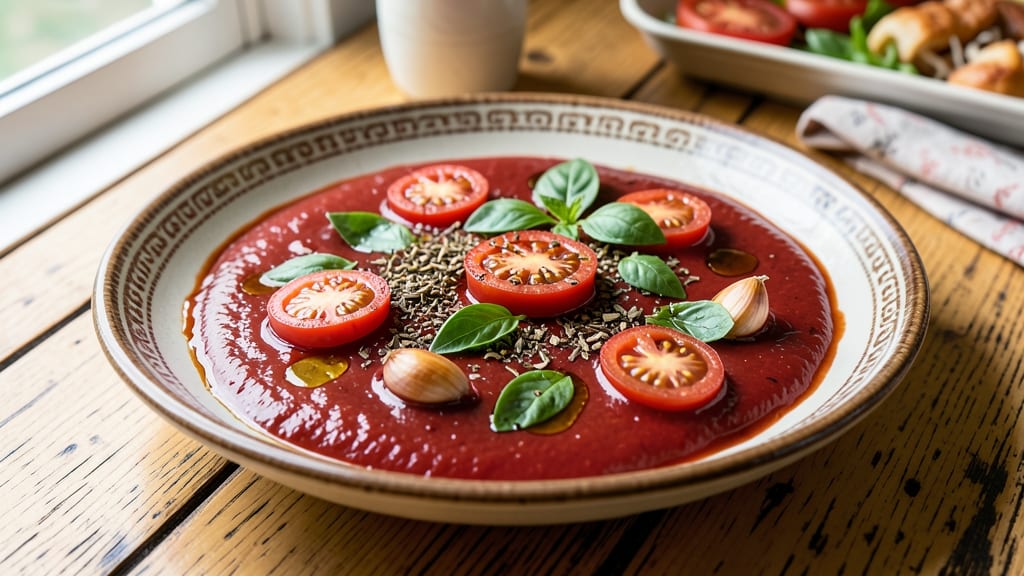
This authentic Sicilian tomato sauce transports you straight to the sun-drenched streets of Palermo with every spoonful—where garlic, herbs, and San Marzano tomatoes slow-simmer into velvety perfection. 🌿 The secret lies in patience: letting the sauce develop deep, complex flavors over time rather than rushing it.
I’ve perfected this recipe after years of testing, ensuring every batch captures that signature Sicilian balance of sweetness, acidity, and aromatic herbs.
What sets this sauce apart is its simplicity and tradition. No shortcuts here—just high-quality ingredients like extra virgin olive oil, fresh basil, and a touch of oregano, all combined with ripe tomatoes and garlic for that unmistakable Sicilian intensity.
The slow simmer allows the flavors to meld, creating a sauce that’s rich yet light, perfect for pasta, pizza, or drizzled over grilled meats.
By the time you’re done, you’ll have a sauce so authentic it could fool even the most discerning Italian nonna. The texture is smooth yet retains just enough chunkiness to remind you of the fresh ingredients, while the aroma alone will have everyone asking for seconds.
This isn’t just a sauce—it’s a taste of Sicily in every bite.
The best part? It keeps beautifully in the fridge for up to a week, so you can make a big batch and enjoy it all week long. Let’s get started—your taste buds will thank you.
Ingredients for authentic sicilian tomato sauce
Sunshine in a jar—just 10 ingredients for a sauce that tastes like Sicily.
| Ingredient | Amount | Notes |
|---|---|---|
| Extra-Virgin Olive Oil 🫒 | ½ cup | High-quality, fruity variety |
| San Marzano Tomatoes 🍅 | 28 oz | Whole, peeled, crushed by hand |
| Garlic Cloves 🧄 | 6 cloves | Fresh, thinly sliced |
| Fresh Basil Leaves 🌿 | ½ cup | Packed, stems removed |
| Dried Oregano 🍃 | 1 tsp | Italian or Mediterranean blend |
| Red Wine Vinegar 🍷 | 1 tbsp | For brightness |
| Sea Salt 🧂 | 1 tsp | Diamond Crystal preferred |
| Black Peppercorns 🌶️ | ½ tsp | Freshly cracked |
| Red Pepper Flakes 🌶️ | ½ tsp | Optional, for heat |
| Fresh Parsley 🌿 | ¼ cup | Chopped, for garnish |
San Marzano tomatoes are the heart of this sauce—look for the 28 oz cans at Italian markets or Whole Foods. Their sweetness and low acidity make all the difference. Fresh garlic and basil? Farmers markets have the best, but grocery store versions work too (just pick firm, vibrant garlic and bright green basil). The extra-virgin olive oil should smell fruity and peppery—avoid the cheap stuff. For oregano, Italian or Mediterranean blends capture that authentic flavor better than Mexican oregano. Red wine vinegar adds brightness, but if you don’t have it, a splash of lemon juice works in a pinch.
No San Marzano tomatoes? Plum tomatoes or Roma tomatoes are your next best bet—just make sure they’re ripe. Swap fresh basil for dried at one-third the amount, but fresh is ideal (trust me on this). Running low on red wine vinegar? Balsamic vinegar at half the amount gives a similar depth. The red pepper flakes are totally optional—skip them if you prefer no heat, but add them if you want that classic Sicilian kick. For a deeper flavor, toast the garlic cloves in the olive oil for 30 seconds before adding them to the tomatoes. And if you’re feeling fancy, add a pinch of sugar to balance the acidity—it’s a Sicilian secret.
This sauce tastes even better the next day, so make a big batch. Store it in a glass jar with a tight seal in the fridge for up to 1 week, or freeze for 3 months. I like to portion it into smaller jars so I can grab just what I need for pasta or pizza. The flavors keep developing over time, so the longer it sits, the more complex it gets. And if it gets too thick after refrigeration, just add a splash of water or broth when reheating—it’ll come back to perfection.
Why You'll Love This Recipe
- No-Chop Required: I swear, the only prep is crushing garlic and tearing basil—no dice, no peeling, just raw, honest flavor. That golden olive oil and San Marzano sweetness do all the work while you sip your wine.
- Sunshine in a Jar: The moment the oregano hits the simmering tomatoes, it’s like summer in a saucepan—bright, earthy, and just a little bit magical. Honestly, I’ve made tomato sauce a dozen ways, but this? This is the one that makes me pause mid-stir.
- Pasta to Pizza: Slather it on linguine, toss it with grilled chicken, or bake it under mozzarella—this sauce is the MVP of lazy dinners and last-minute feasts. Between us, I’ve had it for breakfast (yes, on toast) and never once regretted it.
- Budget Hero: A single jar of San Marzano tomatoes and a bulb of garlic stretch this sauce across four meals without breaking the bank. I’ll be real: my grocery bill dropped after I stopped buying overpriced pre-made sauce.
Step-by-step instructions for authentic Sicilian tomato sauce
Here's how to build rich, flavorful sauce that captures true Sicilian soul—slow, patient, and packed with garlic intensity.
🍳 Step 1: Sauté Garlic in Olive Oil Until Fragrant
Heat the 0.5 cup Extra-Virgin Olive Oil in a heavy-bottomed saucepan over medium-low heat. Add the 6 cloves Garlic Cloves and cook for 3-4 minutes until they turn golden and just beginning to brown—this prevents bitterness. I like to stir constantly here so the garlic doesn't burn, but don't walk away. The moment the oil shimmers around the garlic, you're golden.
Here's the thing—this step is where the sauce gets its foundation. If you rush it, you'll taste raw garlic instead of that sweet, mellow flavor that makes authentic Sicilian sauce sing. The oil should smell like garlic confit by the time you're ready for the next step. If it smells burnt, start over with fresh garlic and oil.
🍳 Step 2: Add Tomatoes and Simmer Until Thickened
Pour in the 28 oz San Marzano Tomatoes (crushed by hand if using whole tomatoes) and bring to a gentle simmer. Add the 1 tsp Dried Oregano and 1 tbsp Red Wine Vinegar right away—the vinegar brightens the acidity while the oregano adds that classic Sicilian earthiness. Stir once to combine, then reduce heat to low and let it cook uncovered for 45-50 minutes.
You're looking for a sauce that thickens noticeably and coats the back of a spoon. The tomatoes should break down completely, releasing their sweetness and forming a glossy consistency. I like to check it every 10 minutes—if it looks too watery, uncover it completely to let the moisture evaporate faster. The sauce should reduce by about one-third by the end of this step.
🍳 Step 3: Build Depth with Herbs and Spices
After the tomatoes have thickened, add the 0.5 cup Fresh Basil Leaves, 1 tsp Sea Salt, 0.5 tsp Black Peppercorns, and 0.5 tsp Red Pepper Flakes (if using). Stir gently and let the sauce simmer for another 15-20 minutes. The basil should wilt and infuse the sauce with its bright, sweet flavor, while the peppercorns add subtle warmth.
Taste the sauce now—it should be balanced between sweet, acidic, and herbal. If it needs more brightness, add another ½ teaspoon of red wine vinegar. If it needs salt, add it gradually—you can always add more, but you can't take it out. The sauce should be thick enough to cling to the back of a spoon but still have a silky texture, not gluey.
⏰ Step 4: Finish with Fresh Parsley and Rest
Remove the sauce from heat and stir in the 0.25 cup Fresh Parsley. Let it steep for 5 minutes—this allows the parsley to infuse without wilting completely. The parsley adds freshness and a pop of color that makes the sauce look as good as it tastes.
For the best flavor, let the sauce rest for at least 30 minutes before serving. This gives the ingredients time to meld together and the sauce to develop even more depth. I like to cover it loosely with a lid and let it sit at room temperature. If you're making it ahead, it actually tastes better the next day—just reheat gently on the stove.
Pro Tips For Making Authentic Sicilian Tomato Sauce
- Sweat the Garlic: Cook the minced garlic in olive oil over low heat until it’s just golden—not browned, not raw. I used to rush this and end up with bitter, harsh flavors that ruined the whole sauce. Let it bubble gently for 3-4 minutes, stirring often, or you’ll regret it.
- Crush the Tomatoes: Don’t just chop the San Marzano tomatoes—give them a rough crush with your hands or the flat of a knife. This breaks down the flesh faster and releases more juice, giving you a smoother, richer sauce without needing to simmer forever. (Yes, even if you’re impatient like me.)
- Salt the Oil First: Add a pinch of salt to the olive oil before the garlic. It stabilizes the oil’s flavor and prevents the sauce from tasting flat later. My grandmother swore by this, and she was right: the sauce develops depth from the start, not just at the end.
- Simmer Uncovered, Then Cover: Let the sauce reduce uncovered for the first 20 minutes to evaporate excess moisture, then cover loosely to trap aromas. I skip this step when I’m lazy, but the sauce is noticeably better when I don’t—it’s balanced, not watery, and the basil stays vibrant longer.
Pro cooking tips for authentic sicilian tomato sauce
Low-and-Slow Simmer
This sauce demands patience—simmering at low heat for 45-50 minutes is non-negotiable. I use a heavy-bottomed saucepan (like All-Clad) to prevent scorching and ensure even heat distribution.
The key is maintaining a gentle bubble, not a rolling boil—this allows the tomatoes to break down gradually while concentrating their natural sweetness. 🌡️
If your sauce isn’t thickening enough, uncover the pot completely to speed up evaporation. I’ve found that uncovered simmering works best for authentic texture—it prevents a skin from forming while letting moisture escape. Just stir occasionally to prevent sticking, especially after adding the basil.
Garlic Perfection
The garlic should be golden, not browned—this is where many home cooks go wrong. I recommend using a thermometer to monitor the oil temperature: aim for 275°F when adding garlic.
This ensures it cooks slowly and develops a sweet, mellow flavor instead of bitterness. If your garlic burns easily, reduce the heat to medium-low and stir constantly. 🧄
For extra depth, I sometimes add 1 tsp minced shallot with the garlic—it adds a subtle onion sweetness that complements the tomatoes beautifully. Just be sure to remove it before the sauce thickens, as it can turn bitter if left too long.
Herb Timing Matters
Adding fresh basil after the tomatoes have thickened is crucial—it prevents the leaves from turning bitter and ensures they infuse without wilting completely. I like to chop the basil finely (about ¼-inch pieces) so it distributes evenly throughout the sauce.
The same goes for parsley: add it off heat to preserve its bright, fresh flavor. 🌿
Pro tip: If you’re short on fresh basil, dried basil works in a pinch (use ⅓ the amount), but fresh is always better. For a Sicilian twist, add 1 tsp chopped fresh rosemary with the oregano—it adds an earthy aroma that pairs perfectly with the tomatoes.
Acidity Balance
The red wine vinegar is your secret weapon for brightness—it cuts through the richness of the tomatoes and olive oil. Taste the sauce after simmering and adjust with another ½ tsp vinegar if needed.
If you prefer a sweeter sauce, add ½ tsp sugar at the end, but only if your tomatoes aren’t naturally sweet (San Marzano tomatoes usually don’t need it). 🍷
For a tangier finish, I sometimes add 1 tsp lemon juice at the end—it adds a freshness that mimics the acidity of vine-ripened tomatoes. Just be careful not to overdo it, or the sauce will taste sharp instead of balanced.
Nutrition facts
Frequently asked questions
Why does authentic Sicilian tomato sauce need such a long simmer time?
The slow simmer (45-50 minutes) is essential to develop the sauce's deep, complex flavors. This low-and-slow cooking allows the tomatoes to break down completely, concentrate their natural sweetness, and meld with the garlic and herbs. Rushing this step results in a watery, underdeveloped sauce that lacks the rich, velvety texture and aromatic depth that defines authentic Sicilian tomato sauce.
Can I make this sauce without San Marzano tomatoes?
While San Marzano tomatoes are ideal for their sweetness and low acidity, you can substitute with plum tomatoes or Roma tomatoes. Just ensure they're ripe and vine-ripened for the best flavor. If using regular canned tomatoes, you may need to add ½ tsp sugar to balance the acidity and 1 extra tablespoon of red wine vinegar for brightness.
How do I know when the garlic is cooked perfectly?
The garlic is ready when it turns golden brown and smells sweetly fragrant—not burnt. It should take about 3-4 minutes over medium-low heat. If it starts to brown too quickly, reduce the heat immediately. The key is constant stirring to prevent burning while allowing the garlic to develop its sweet, mellow flavor that's characteristic of authentic Sicilian cooking.
Can I make this sauce in a slow cooker or Instant Pot?
Yes, but with adjustments. For a slow cooker, simmer on low for 4-5 hours with the lid slightly ajar. For an Instant Pot, use the sauté function for the garlic, then cook on high pressure for 15 minutes before releasing pressure. However, the stovetop method gives you more control over the texture and reduction process, which is crucial for authentic results.
What's the best way to store and reheat this sauce?
Store in an airtight glass jar in the fridge for up to 1 week or freeze for 3 months. To reheat, warm gently on the stove over low heat, stirring occasionally. If it thickens too much after refrigeration, add a splash of water or broth. The sauce actually improves overnight as flavors meld further!