
Sauces & Condiments
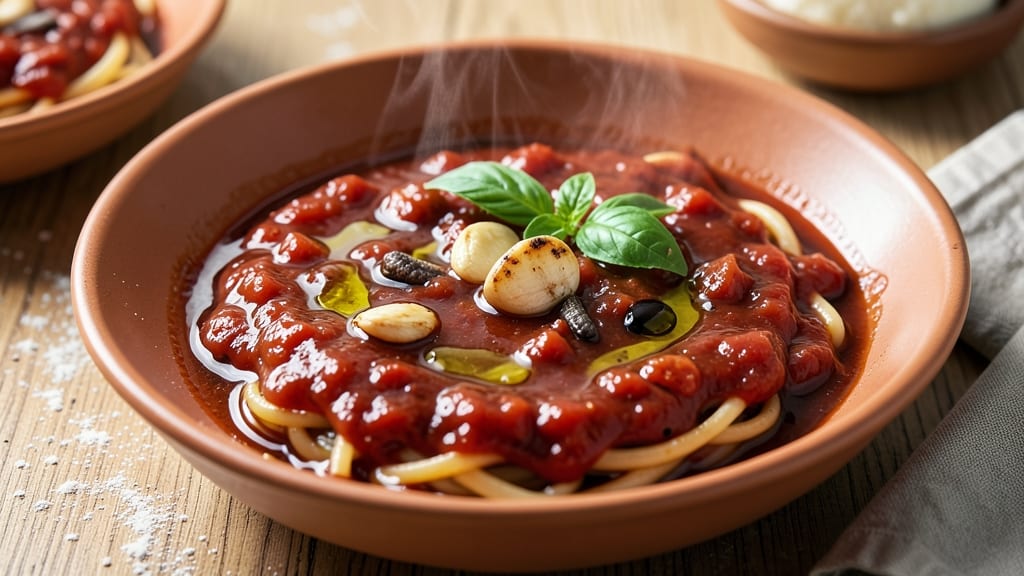
This authentic Sicilian spaghetti sauce delivers the deep, sun-ripened tomato flavor that defines Sicilian cooking—slow-simmered with garlic, olive oil, and fresh herbs until it reaches that perfect balance of richness and acidity. 🌿 The secret lies in using high-quality San Marzano tomatoes and cooking them low and slow, allowing their natural sugars to caramelize while developing layers of umami from garlic and anchovies (a traditional Sicilian touch).
Unlike quick sauces, this one builds complexity over time, transforming simple ingredients into something truly extraordinary.
The recipe stays true to Sicilian tradition by avoiding excess water, which would dilute the sauce's intensity. Instead, we rely on the natural juices from the tomatoes and a splash of red wine to deepen the flavor.
Fresh basil and oregano are added at the end to preserve their bright, aromatic qualities—no wilting or bitterness here. For texture, optional breadcrumbs toasted in olive oil add a subtle crunch that elevates every spoonful, just like you’d find in a rustic Sicilian trattoria.
What makes this sauce special is its versatility—it’s perfect for tossing with spaghetti, rigatini, or even drizzled over grilled fish or crusty bread.
The slow simmer ensures it develops a velvety consistency without losing its vibrant tomato color, and the flavors only improve with time, making it ideal for meal prep. Whether you're serving it at a family dinner or a casual gathering, this sauce brings the soul of Sicily to your table.
Store it in an airtight container in the refrigerator for up to 5 days, or freeze for months—its depth of flavor only intensifies over time.
Pair it with fresh pasta for the full experience, and don’t forget a sprinkle of flaky sea salt and a drizzle of extra virgin olive oil before serving. This is the kind of sauce that turns a simple plate of pasta into a memorable meal.
Ingredients for authentic sicilian spaghetti sauce
San Marzano tomatoes, olive oil, and fresh herbs—these are the stars of Sicily's most beloved sauce.
| Ingredient | Amount | Notes |
|---|---|---|
| San Marzano Tomato Paste 🍅 | 2 tbsp | High-quality, no sugar added |
| Extra-Virgin Olive Oil 🫒 | ½ cup | Italian preferred for authentic flavor |
| Garlic Cloves 🧄 | 6 cloves | Fresh, minced finely |
| Anchovy Fillets 🐟 | 2 whole | Traditional umami base |
| Red Wine 🍷 | ¼ cup | Bold, dry variety like Chianti |
| Crushed Tomatoes 🍅 | 2 cups | San Marzano preferred |
| Fresh Basil Leaves 🌿 | ¼ cup | Packed, stems removed |
| Fresh Oregano Leaves 🍃 | 1 tbsp | Or 1 tsp dried oregano |
| Flaky Sea Salt 🧂 | 1 tsp | For finishing |
| Breadcrumbs 🍞 | ¼ cup | Optional for texture |
The San Marzano tomatoes are non-negotiable here—look for the official DOP label at Italian markets or specialty stores like Eataly. For the anchovies, Colavita brand is widely available and authentic. The olive oil should be Italian, preferably from Sicily—Carruba or Frantoio varieties add that extra depth. If you can't find fresh oregano, Mexican oregano from the Latin aisle has a completely different (and better) flavor than regular dried oregano. The breadcrumbs? Toast them in olive oil until golden for that perfect crunch.
No San Marzano tomatoes? Crushed tomatoes in a high-quality jar work in a pinch—just skip the paste. Anchovies too intense? Substitute with 1 tbsp fish sauce or extra mushrooms. Fresh basil wilting? Dried basil at half the amount keeps the flavor, though it won't be as bright. The red wine can be swapped for tomato paste + 1 tsp balsamic vinegar if you're avoiding alcohol. For a meatier flavor, add 1/4 cup finely chopped pancetta (cook it first to render fat).
This sauce only gets better with time—3-4 days in the fridge lets flavors meld perfectly. Freeze for up to 6 months in airtight containers. I like to portion it into 1-cup servings so I can grab exactly what I need. For serving, a drizzle of extra-virgin olive oil and sprinkle of flaky sea salt makes all the difference. The breadcrumbs? Toast them fresh before serving—they lose crunch when stored.
Why You'll Love This Recipe
- Here’s what sold me: this tastes like a restaurant dish but costs pennies per serving. The anchovies might seem fancy, but a few fillets stretch across multiple batches, and the San Marzano paste—worth every penny—makes it feel special without breaking the bank. It’s my go-to for feeding a crowd or treating myself after a long week. No guilt, all flavor.
- No-Fuss Weeknight Win: I swear by this sauce because it’s the kind of thing you can start while you’re still debating what to eat. Five ingredients, one pot—no chopping, no peeling, just a quick sauté of garlic in olive oil until it smells like heaven’s kitchen. The anchovies melt in, the wine deglazes with zero effort, and by the time you’re stirring in that San Marzano paste, dinner’s already halfway there.
- Umami Bomb: That first spoonful? It’s like Sicily packed every ounce of flavor into a single bite. The anchovies bring this deep, salty richness, the wine adds brightness, and the San Marzano paste—oh, that paste—carries all the sweet, jammy goodness without tasting like a can. It’s the kind of sauce that makes you pause mid-bite, close your eyes, and think, “Damn, that’s good.”
- Leftovers That Lie: Between us, this sauce only gets better after a day or two. Reheat it, and the flavors meld into this perfect balance of tangy, savory, and just a hint of smoky depth. I make a double batch on Sundays because by Wednesday, I’m sneaking it into sandwiches or tossing it with eggs—no one ever suspects how versatile it is. (Yes, even on a Tuesday night.)
Step-by-step instructions for authentic Sicilian spaghetti sauce
This sauce delivers the deep, umami-rich flavors of Sicily—slow-cooked just like Nonna would make it.
🍳 Step 1: Build the Flavor Base with Olive Oil and Anchovies
Heat the 0.5 cup extra-virgin olive oil in a heavy-bottomed saucepan over medium-low heat. Add the 2 whole anchovy fillets and let them dissolve completely—this creates the sauce's signature umami foundation. Stir occasionally for 3-4 minutes until the anchovies melt into the oil without browning.
Here's the thing—don't rush this step. The anchovies should dissolve smoothly, not crisp or burn. If you smell anything fishy, you've gone too far. This is where the authentic Sicilian flavor starts building, so take your time.
🍳 Step 2: Sauté Garlic Until Golden (Not Brown!)
Add the 6 cloves minced garlic to the anchovy-infused oil and cook for 2-3 minutes until the garlic becomes golden and fragrant but doesn't brown. Browned garlic adds bitterness, and we want pure, sweet garlic flavor here.
I like to stir constantly during this step—it prevents burning while helping the garlic release its aromatic oils. You'll know it's ready when the kitchen smells like a Sicilian summer garden. This is your signal to move to the next ingredient.
🍳 Step 3: Deglaze with Wine and Tomato Paste
Pour in the 0.25 cup red wine and stir vigorously to scrape up all the browned bits from the bottom of the pan. This deglazing step captures all the flavor you've built so far. Let the wine simmer for 2-3 minutes until it reduces by half and the alcohol cooks off.
Now add the 2 tbsp San Marzano tomato paste and stir for 1 minute to distribute it evenly. The paste will darken slightly as it melts into the oil. This creates a rich, concentrated base that prevents the sauce from becoming watery later.
🥘 Step 4: Simmer with Tomatoes and Herbs
Add the 2 cups crushed tomatoes and bring the mixture to a gentle simmer. Partially cover the pan and cook for 30-40 minutes over low heat, stirring occasionally. You're looking for a sauce that thickens naturally and develops deep, complex flavors.
After 20 minutes, stir in the 0.25 cup fresh basil leaves and 1 tbsp fresh oregano leaves. The herbs should wilt into the sauce, releasing their bright, aromatic flavors. Taste and adjust seasoning with flaky sea salt—you might need ½ tsp at this point to balance the acidity.
🔪 Step 5: Finish with Breadcrumbs for Texture (Optional)
For that authentic Sicilian texture, stir in the 0.25 cup breadcrumbs during the final 5 minutes of cooking. They'll toast slightly and add a subtle crunch that contrasts beautifully with the silky sauce. If you prefer a smoother texture, skip this step entirely.
Remove from heat and let the sauce rest for 5-10 minutes before serving. This resting period allows the flavors to meld completely. The sauce should coat the back of a spoon with a velvety consistency—if it's too thick, whisk in 1-2 tablespoons water to reach your desired texture.
Pro Tips For Making Authentic Sicilian Spaghetti Sauce
- Bloom the Garlic Slow: After crushing those garlic cloves, let them sit in the olive oil for 5 full minutes before adding anything else—just watch them turn golden without burning. I used to rush this, and the sauce always tasted raw; now it’s the base flavor that sings.
- Anchovies First, Always: Toss those anchovy fillets into the oil before the garlic—let them dissolve completely into the fat, then pull the pan off the heat for 30 seconds. This prevents the anchovies from curdling and gives the sauce that deep, umami backbone Sicilian cooks swear by.
- Deglaze with Wine Heat: Pour that red wine into the pan off the heat, then return it to medium-low and let it bubble gently—no splattering, no boiling off the alcohol. I learned this the hard way when my sauce tasted like vinegar instead of wine.
- Stir the Tomato Paste: Once the wine’s reduced, whisk the San Marzano paste into the oil in thin ribbons, not a clump—this ensures it melts smoothly and coats the garlic evenly. My grandmother called it “the marriage,” and she wasn’t wrong.
Troubleshooting perfect results
Sauce Too Thin?
If your sauce ends up too thin after simmering, resist the urge to add more tomatoes or water—this will dilute the hard-earned depth of flavor. Instead, simmer uncovered for an additional 10-15 minutes to let excess moisture evaporate.
For a quicker fix, whisk in 1 tbsp tomato paste or 1 tsp cornstarch mixed with 1 tbsp water to thicken without altering the flavor profile.
I’ve found that using a heavy-bottomed saucepan (like a Le Creuset Dutch oven) helps prevent sticking and allows for better heat control during evaporation. If you’re still struggling, try adding ½ cup diced pancetta cooked until crispy—it absorbs excess liquid while adding smoky richness. 🔥
Sauce Too Thick?
Overly thick sauce happens when tomatoes reduce too much or when you forget to stir occasionally. If this occurs, whisk in 1-2 tbsp water or pasta water gradually until you reach a silky consistency.
Avoid adding too much at once—start with 1 tsp and adjust as needed. The goal is a sauce that clings lightly to pasta without being gluey.
For a more authentic fix, stir in 1 tbsp reserved pasta water (if you’ve cooked pasta) or a splash of red wine to loosen the sauce naturally. This maintains the balance of acidity and depth.
I’ve also had success adding 1 tbsp heavy cream for a velvety finish, though this is more of a modern twist than traditional.
Anchovies Overpowering?
Anchovies are the secret to authentic Sicilian flavor, but their intensity can be overwhelming if not balanced properly. If your sauce tastes too fishy, add 1 tbsp lemon juice or balsamic vinegar to cut through the richness.
A pinch of sugar (½ tsp) also helps mellow the flavor while enhancing the tomato’s natural sweetness.
For a more subtle approach, reduce the anchovies to 1 fillet or replace them with 1 tbsp fish sauce (like Red Boat brand). If you’re using dried anchovies, soak them in 1 tbsp warm water for 5 minutes before adding to the sauce to soften their impact.
The key is to let the tomatoes and garlic shine.
Herbs Wilting Too Fast?
Fresh basil and oregano should add brightness, not bitterness. If they wilt too quickly, add them later in the cooking process—during the final 5 minutes of simmering—or stir them in just before serving.
For extra protection, blanch the herbs in boiling water for 10 seconds before adding them to the sauce.
If you’re using dried herbs, reduce the amount by half (e.g., ½ tsp dried oregano instead of 1 tbsp fresh) and add them earlier in the cooking process. I’ve also had luck using freeze-dried basil, which holds up better during long simmers while still delivering vibrant flavor. 🌿
Sauce Tasting Bland?
Blandness usually means the sauce lacks acidity or umami. Boost flavor by adding 1 tbsp red wine vinegar or lemon juice to brighten the tomatoes. For umami depth, stir in 1 tsp soy sauce or ½ tsp fish sauce—these add complexity without overpowering.
A pinch of smoked paprika or crushed red pepper flakes can also wake up the flavors.
If your sauce still tastes flat, try simmering it uncovered for an additional 10 minutes to concentrate the flavors. For a quick fix, finish with a splash of high-quality balsamic vinegar or a drizzle of aged balsamic glaze.
The acidity will cut through any dullness and elevate the dish. Trust me, this works like magic.
Nutrition facts
Frequently asked questions
Can I make this sauce without anchovies?
While anchovies provide authentic umami depth, you can substitute with 1 tbsp fish sauce or ½ cup finely chopped mushrooms cooked until tender. For a vegetarian option, use 1 tbsp soy sauce or 1 tsp nutritional yeast—just add these with the tomatoes during simmering to avoid overpowering the flavor.
How long does this sauce keep in the fridge?
This sauce tastes even better after resting! Store it in an airtight container in the refrigerator for up to 5 days. The flavors deepen over time, making it perfect for meal prep. For longer storage, freeze in 1-cup portions for up to 6 months—thaw overnight in the fridge before reheating.
What's the best pasta to pair with this sauce?
Sicilian cooks traditionally serve this sauce with rigatoni or bucatini—their ridges and hollows trap the sauce beautifully. For a lighter option, try spaghetti or linguine. Avoid delicate pastas like angel hair, as they can get overwhelmed by the sauce's richness. Pro tip: Toss the sauce with 1 tbsp pasta water before serving for extra cling.
Why does the recipe call for red wine?
The wine adds acidity and depth that balances the tomatoes' sweetness while cooking off the alcohol. Use a bold, dry red like Chianti or Sangiovese. For a non-alcoholic version, substitute with tomato paste + 1 tsp balsamic vinegar—the acidity remains while maintaining authenticity. The wine reduces quickly (just 2-3 minutes), so don't worry about strong flavors.
Can I use regular canned tomatoes instead of San Marzano?
While San Marzano tomatoes are ideal for their sweetness and low acidity, you can use high-quality crushed tomatoes in a pinch. Look for brands with minimal additives. For better results, add ½ tsp sugar to balance any tartness and simmer the sauce 5 minutes longer to develop deeper flavor. The texture won't be identical, but it'll still be delicious!