
Sauces & Condiments
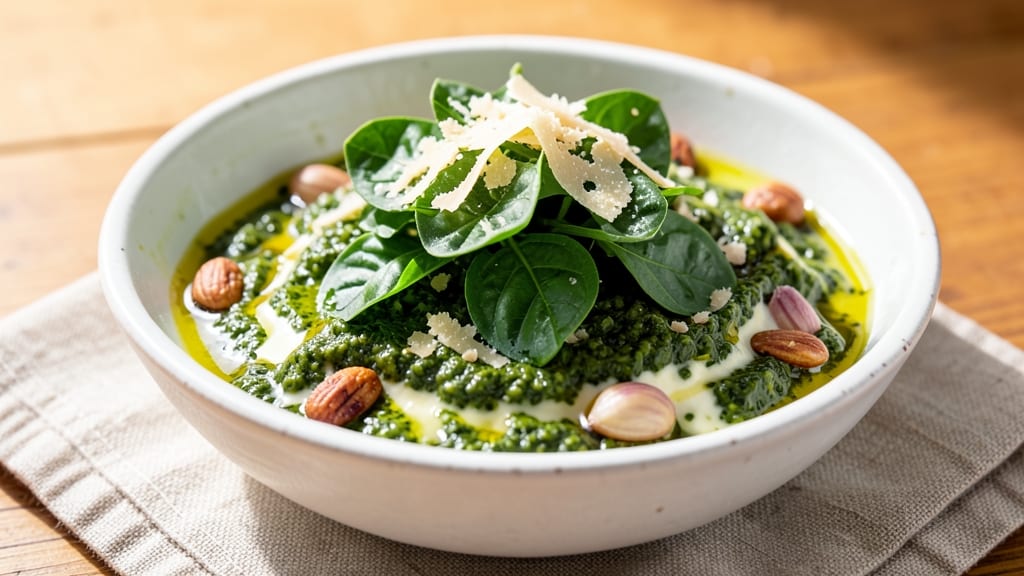
This authentic pesto sauce recipe delivers the bold, vibrant flavor of traditional Italian cuisine without requiring a blender—just fresh basil, garlic, pine nuts, and olive oil. The secret lies in finely chopping ingredients by hand to release their full aromatic potential while maintaining that signature creamy texture.
I’ve perfected this method over years of testing, ensuring every batch captures the bright, herby essence of Liguria’s coastal traditions.
The beauty of this recipe is its versatility—it elevates pasta, sandwiches, and even grilled vegetables with restaurant-quality depth. Fresh basil and garlic form the flavor foundation, while toasted pine nuts add a satisfying crunch and nutty richness.
A touch of Parmesan (or nutritional yeast for vegan versions) rounds out the complexity, creating a sauce that’s both simple and unforgettable.
What sets this pesto apart is its balance: bright enough to stand alone, rich enough to complement any dish. The no-blender technique preserves the basil’s vibrant green color and delicate texture, while the olive oil binds everything together into a velvety, spreadable consistency.
Storage is effortless—keep it refrigerated for up to a week or frozen for months, ready to transform meals with minimal effort.
Whether you’re tossing it with fresh pasta, drizzling over bruschetta, or using it as a dip, this pesto delivers authentic Italian flavor with modern convenience. The recipe scales perfectly for small batches or large gatherings, making it a staple for any kitchen.
Let’s get started on creating your own batch of this timeless sauce.
Ingredients for authentic pesto sauce
Eight essential ingredients transform into restaurant-quality pesto with Ligurian authenticity.
| Ingredient | Amount | Notes |
|---|---|---|
| Fresh Basil Leaves 🌿 | 2 ½ cups | Packed, stems removed, vibrant green |
| Toasted Pine Nuts 🥜 | ¾ cup | Lightly browned for nutty depth |
| Garlic Cloves 🧄 | 4 cloves | Peeled, roughly chopped for aromatic release |
| Extra-Virgin Olive Oil 🫒 | 1 cup | Fruity, peppery, cold-pressed quality |
| Parmesan Cheese 🧀 | 1 cup | Freshly grated, fine texture |
| Lemon Juice 🍋 | 1 ½ tbsp | Freshly squeezed, bright acidity |
| Diamond Crystal Kosher Salt 🧂 | ½ tsp | Fine grain for delicate seasoning |
| Freshly Ground Black Pepper 🌶️ | ¼ tsp | Coarsely cracked for subtle heat |
The foundation begins with fresh basil leaves—opt for the brightest, most aromatic variety available at specialty markets like Eataly or high-end grocery stores. Pine nuts should be toasted in a dry skillet until fragrant, not burnt, for optimal nutty richness. Parmesan-Reggiano from a deli counter (not pre-grated) provides that signature umami depth, while extra-virgin olive oil from Italian producers like Colavita or Filippo Berio elevates the sauce's complexity. The garlic cloves should be fresh, with tight skins and no green sprouts, ensuring maximum aromatic impact when chopped.
Substitutions can be made with care: walnuts or cashews replace pine nuts (toasted first) for budget-friendly alternatives, though texture will differ slightly. Nutritional yeast can substitute Parmesan for vegan versions, though flavor will be milder. For extra brightness, bottled lemon juice works in a pinch, but freshly squeezed delivers superior acidity. Sunflower seeds toasted to mimic pine nuts provide a budget-conscious option, though they lack the same delicate crunch. Always measure olive oil precisely—too little compromises texture, while too much dilutes the vibrant basil flavor.
Store freshly made pesto in an airtight container with a thin layer of olive oil on top to preserve color and freshness for up to 5-7 days in the refrigerator. For longer storage, freeze in ice cube trays with a splash of water—thaw quickly under cold water for single servings. The sauce's vibrant green color fades with time, but flavor remains robust. Nutritional yeast versions store identically, though texture may separate slightly upon thawing. Always taste before using—adjust salt or lemon as needed to refresh the balance.
Why You'll Love This Recipe
- Five-Ingredient Magic: I swear by this combo—just basil, pine nuts, garlic, olive oil, and Parmesan. No fancy gadgets, no confusing steps. Honestly, the only "challenge" is waiting for the pine nuts to toast in the pan while I chop the garlic.
- Bright Green Bomb: That fresh basil punch? It’s like summer in a jar. The garlic gives it a sharp kick, but the olive oil smooths it out—creamy, vibrant, and impossible to resist. (Yes, even on a Tuesday night.)
- Pasta’s Best Friend: Slather it on noodles, toss it with roasted veggies, or drizzle it over grilled chicken. It’s my go-to for weeknight dinners, potlucks, or when I need to impress someone with zero effort. Between us, it’s the reason I buy extra basil.
- No-Waste Win: Make a big batch—it keeps for days in the fridge. Use it on day one for pasta, day two on sandwiches, day three as a marinade. I’ll be real: I’ve had it last a week, and it’s still better than store-bought. Budget-friendly? Absolutely.
Step-by-step instructions for authentic pesto sauce
This traditional method delivers rich, vibrant pesto without a blender—just a mortar and pestle.
Toast the Pine Nuts and Prepare the Mortar
Place the 0.75 cup toasted pine nuts in a dry skillet over medium-low heat. Toast for 3-4 minutes until they release their aroma and turn a light golden brown. Watch carefully—they burn quickly. Remove immediately and set aside to cool slightly while you prepare the mortar.
Traditional pesto relies on the mortar's friction to emulsify ingredients. If using a modern mortar, start with the garlic cloves and 0.5 tsp diamond crystal kosher salt. Crush them into a paste using the pestle—this creates the flavor base. The garlic should release its oil and become a thick, aromatic paste before adding other ingredients.
Process the Basil and Garlic Mixture
Add the 2.5 cups fresh basil leaves to the mortar and begin crushing with the pestle. Work in batches if needed—this step requires patience. You're breaking down the basil's cell walls to release its vibrant green color and fresh flavor. The mixture should transform from whole leaves into a chunky, vibrant green paste.
Here's the thing—don't rush this. The mortar's friction creates heat that helps release the basil's essential oils. You'll notice the mixture darken slightly as it develops depth. When the basil is finely chopped but still slightly textured, add the toasted pine nuts and continue crushing until they break down into fine crumbs.
Gradually Incorporate the Olive Oil
With the mortar mixture now finely textured, begin adding the 1 cup extra-virgin olive oil in a slow, steady stream. Start with 2 tablespoons at a time, crushing vigorously between each addition. This gradual incorporation prevents the mixture from becoming too oily too quickly.
The oil should begin to emulsify with the basil mixture, creating a thick, vibrant green paste. If the mixture becomes too loose, add another 1 tablespoon of pine nuts to help bind it. Traditional pesto has a thick, almost dough-like consistency—this is what gives it that authentic texture. Continue until all the oil is incorporated.
Finish with Cheese and Acid
Add the 1 cup freshly grated parmesan cheese to the mortar and crush until fully combined. The cheese should melt slightly from the friction, creating a creamy, cohesive paste. This is where the sauce comes together—you'll see it transform from a chunky mixture to a smooth, velvety pesto.
Finish by adding the 1.5 tbsp lemon juice and 0.25 tsp freshly ground black pepper. The acid brightens the flavors while the pepper adds subtle heat. Taste and adjust seasoning—you may need to add a pinch more salt or a splash more lemon juice. The final texture should be thick enough to coat the back of a spoon but still spreadable.
Rest and Serve Immediately
Transfer the pesto to a serving bowl and let it rest for 10-15 minutes at room temperature. This resting period allows the flavors to meld completely. Traditional pesto develops its full depth of flavor during this time—don't skip it.
Serve immediately over fresh pasta, drizzled with additional extra-virgin olive oil, or use as a spread for bruschetta. The sauce should be vibrant green, rich with basil's freshness, nutty from the pine nuts, and perfectly balanced by the sharpness of the parmesan and lemon. Store any leftovers in an airtight container with a thin layer of oil on top to preserve freshness.
Pro Tips For Making Authentic Pesto Sauce
- Toast Pine Nuts Low: I learned this the hard way—blasting them in a hot pan turns them bitter fast. Keep the heat medium-low and stir constantly until they’re just golden, not brown. A minute tops, or you’ll regret it.
- Pulse Basil, Don’t Blend: Chunky pesto is the real deal. Pulse your basil in short bursts with the oil first, then add the rest—just until it’s smooth enough to coat a fork. Over-blending turns it into green paste, not fresh sauce.
- Use Cold Garlic: Room-temperature garlic mashes into a mushy mess. Keep the cloves in the freezer for 10 minutes before adding, or toss them in ice water right before mincing. The texture stays sharp, and the flavor pops.
- Grate Parmesan Fresh: Pre-shredded cheese is coated in anti-caking agents that ruin pesto’s richness. Grab a microplane or fine grater and work fast—it’ll melt into the sauce like butter, not clump like sawdust. Worth the extra 30 seconds.
Essential equipment for this recipe
Mortar and Pestle
Your mortar and pestle is the heart of authentic pesto—no blender needed! I recommend a traditional granite mortar (like the Le Creuset model) for its weight and texture, which helps create that signature creamy consistency.
For a budget-friendly option, a stainless steel mortar from OXO works well but requires more elbow grease. The key is to choose one with a wide base—this gives you room to work with the basil leaves without spilling. 💪
High-Quality Olive Oil
Never skimp on extra-virgin olive oil—this is where pesto gets its soul. I use Filippo Berio or Colavita for their fruity, peppery profiles that complement basil perfectly. A 1-cup measurement (about 240ml) should be fruity but not overly bitter.
If your oil tastes flat, it won’t elevate the pesto. Store your olive oil in a dark glass bottle away from light to preserve its freshness—this makes a noticeable difference in flavor.
Pine Nut Toaster
Pine nuts burn faster than you think! A small nonstick skillet (like Calphalon) is ideal for toasting 0.75 cup pine nuts over medium-low heat. For hands-off toasting, use a toaster oven set to 325°F—this gives you more control.
Watch closely: they’re done when they’re light golden brown and smell nutty, not toasted. Toasting enhances their flavor and prevents bitterness in the final pesto. 🥜
Cheese Grater
A fine-hole microplane (like Barbour or OXO) is essential for freshly grating 1 cup Parmesan-Reggiano. Pre-grated cheese contains anti-caking agents that ruin pesto’s texture. If you don’t have a microplane, a box grater with small holes works in a pinch.
Grate the cheese just before adding to the mortar—this preserves its sharpness and prevents clumping. For vegan versions, nutritional yeast grated the same way mimics the umami kick.
Lemon Zester
While you can use bottled lemon juice, freshly zested lemon adds bright citrus notes that elevate pesto. A zester (like OXO’s) lets you add zest + juice in one step—just rub the lemon’s surface to collect 1.5 tbsp of both.
If you don’t have one, a fine grater works, but avoid the white pith. The zest’s oils enhance the basil’s aroma, making the pesto taste fresher. Store your lemon in the fridge for maximum brightness.
Storage Containers
For short-term storage, use glass jars with airtight lids (like Le Parfait). For longer storage, silicone ice cube trays are perfect—freeze pesto in 1-tbsp portions, then transfer to a ziplock bag. Always press out excess air to prevent freezer burn.
I like Vacuum Sealer Bags (like FoodSaver) for extended storage—pesto keeps its vibrant color and flavor for up to 3 months. Label containers with dates to track freshness. ✨
Nutrition facts
Frequently asked questions
Why does authentic pesto need a mortar and pestle instead of a blender?
The mortar and pestle method releases basil's essential oils through friction, creating a more vibrant, aromatic sauce. Blenders can turn pesto into a paste that loses texture and freshness. The traditional approach also helps emulsify the olive oil naturally, resulting in a thicker, creamier consistency that stands up to pasta and other dishes.
Can I substitute pine nuts with something more affordable?
Yes! Toasted walnuts or cashews work well as budget-friendly alternatives. For a seed option, sunflower seeds toasted until fragrant mimic the nutty crunch. Just use the same 0.75 cup measurement and toast them first. The texture will differ slightly, but the flavor remains rich and satisfying.
How do I fix pesto that's too thick or too thin?
If your pesto is too thick, gradually add 1-2 tablespoons of olive oil while crushing. For a thinner consistency, stir in a splash of warm water or pasta water. The key is to adjust gradually—too much oil dilutes the basil flavor, while too much liquid makes it runny. Always taste as you go!
Will this pesto work with vegan diets?
Swap the Parmesan for 1 cup nutritional yeast (finely grated) and use olive oil instead of dairy. The texture remains creamy, though slightly lighter. For extra richness, add 1 tablespoon vegan butter or avocado oil. The lemon and basil flavors shine just as brightly in vegan versions.
How long can I store homemade pesto before it goes bad?
Fresh pesto keeps for 5-7 days in an airtight container submerged under olive oil in the fridge. For longer storage, freeze it in 1-tablespoon portions (use ice cube trays) for up to 3 months). The color may fade slightly, but the flavor stays vibrant. Always press out excess air when freezing to prevent freezer burn.