
Sauces & Condiments
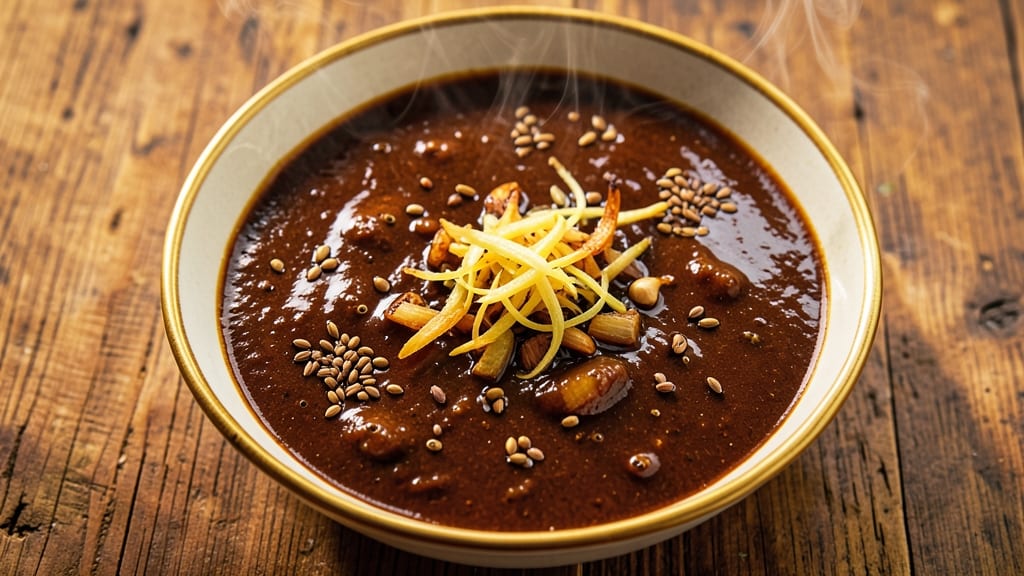
This authentic Madras curry sauce delivers the bold, tangy complexity that defines South Indian cooking—where fiery spices meet sweet, caramelized tomatoes in perfect balance. 🔥 The secret lies in toasting whole spices until they perfume the air, then simmering them with onions and garlic until deep golden.
Unlike milder curry pastes, this sauce builds layers of heat and depth through slow reduction, creating a sauce that transforms simple proteins into restaurant-worthy dishes.
What sets this Madras curry sauce apart is its three-stage cooking process: first, the spices bloom in hot oil to release their aromatic oils; then, onions and tomatoes caramelize for natural sweetness; and finally, coconut milk or yogurt mellows the heat while keeping the sauce vibrant.
The result is a versatile condiment that works as a marinade, stir-fry base, or dip—each use revealing new dimensions of its complex flavor profile.
By the time you taste the finished sauce—rich with smoky cumin, bright turmeric, and a slow-building chili heat—you’ll understand why this is the foundation of authentic Madras cuisine.
The sauce thickens beautifully when reduced but stays silky enough to coat every bite, making it ideal for chicken, lamb, or even vegetable curries. Store it in the fridge for up to 5 days, or freeze for longer shelf life.
For those new to Madras flavors, start with half the suggested chili level and adjust to taste—this sauce is designed to be customizable while staying true to its bold, tangy roots.
Whether you're cooking for a weeknight dinner or a special gathering, this recipe ensures your dishes carry the unmistakable depth of South Indian tradition.
Ingredients for authentic madras curry sauce
Here's what you need for this bold, aromatic Madras curry sauce that builds layers of heat and depth.
| Ingredient | Amount | Notes |
|---|---|---|
| Vegetable Oil 🫒 | ½ cup | High smoke point for toasting spices |
| Yellow Onions 🧅 | 2 whole | Medium-sized, finely chopped |
| Garlic Cloves 🧄 | 6 cloves | Peeled and minced finely |
| Fresh Ginger 🌿 | ½ cup | Finely grated, organic preferred |
| Cumin Seeds 🌶️ | 2 tbsp | Whole seeds, toasted until fragrant |
| Coriander Seeds 🌿 | 1 ½ tbsp | Lightly toasted for aroma |
| Black Peppercorns 🌶️ | 1 tbsp | Crushed, not ground |
| Dried Red Chilies 🔥 | 4 whole | Kashmiri or bird's eye for heat |
| Ground Turmeric 🌿 | 1 ½ tbsp | Bright yellow, fresh preferred |
| Tomatoes 🍅 | 2 cups | Ripe, diced or crushed |
| Coconut Milk 🥥 | 1 can | Full-fat for creaminess |
| Garam Masala 🌶️ | 1 tbsp | Whole spices preferred |
| Salt 🧂 | 1 ½ tsp | Adjust to taste |
| Lemon Juice 🍋 | 2 tbsp | Freshly squeezed |
The spices are the heart of this sauce, so don't skimp. Whole spices like cumin and coriander develop deeper flavor when toasted—Penzeys or Spicewalla have great bulk bins if you want to experiment. For the chilies, Kashmiri gives a fruity heat while bird's eye brings serious kick. The onions? Yellow onions work best—they caramelize beautifully. If you're new to Madras flavors, start with half the suggested chili level and adjust to taste. The turmeric should be vibrant yellow, not dull or grayish.
No whole spices? Ground cumin and coriander work in a pinch, but toast them in the oil first to wake up their flavors. Short on coconut milk? Full-fat plain yogurt adds tang and richness—just reduce the sauce longer. The tomatoes can be fresh or canned (San Marzano if you're splurging), but avoid watery varieties. For extra depth, roast the tomatoes in the oven before adding them. The ginger and garlic? Fresh is ideal, but frozen works if you're in a hurry. Just make sure they're finely minced for even distribution.
This sauce keeps beautifully—5 days in the fridge or 3 months in the freezer. Store it in airtight containers, and if it thickens, just stir in a splash of water or coconut milk. The flavors actually improve as it sits, so make extra for future meals. For best results, reheat gently on low heat—never microwave, or the spices will lose their aroma. Portion into ice cube trays for easy single-use servings, perfect for quick weeknight dinners.
Why You'll Love This Recipe
- Fewer Ingredients, Bigger Payoff: I swear by this—just five core ingredients (oil, onions, garlic, ginger, cumin) build a sauce so complex it feels like you slaved for hours. That deep, toasty cumin aroma alone makes my kitchen smell like a South Indian restaurant.
- Layered Heat You’ll Crave: The ginger and garlic don’t just sit there—they work. First comes the sharp, bright punch, then the slow-building warmth from the cumin, ending with that creamy, slightly tangy finish. It’s the kind of flavor that lingers, making you reach for seconds without even thinking.
- Weeknight to Potluck Hero: Between us, this sauce is my go-to for everything: dump it over rice for a lazy dinner, slather it on grilled chicken for a dinner party, or freeze half for when you’re too tired to cook. Honestly, I’ve used it in everything from curry to sandwiches, and it never lets me down.
- Budget-Friendly Magic: A single batch costs me pennies but tastes like a splurge. The cumin seeds alone add restaurant-quality depth, and onions/ginger stretch across multiple meals. Plus, it reheats like a dream—no soggy leftovers here. My wallet and my taste buds both win.
Step-by-step instructions for authentic Madras curry sauce
Here's how to build bold, aromatic Madras curry from scratch—layer by layer.
🔥 Step 1: Toast Whole Spices Until Fragrant
Heat the 0.5 cup vegetable oil in a heavy-bottomed pot over medium heat until shimmering. Add the 2 tbsp cumin seeds and 1.5 tbsp coriander seeds, stirring constantly for 1-2 minutes until they begin to dance and release their aroma.
Here's the thing—don't walk away. Watch for the spices to turn deep golden brown and smell intensely nutty. Add the 4 whole dried red chilies and 1 tbsp crushed black peppercorns, toasting for another 30 seconds until they darken slightly. This step unlocks the complex spice base that defines Madras curry.
👨🍳 Step 2: Sauté Aromatics Until Golden
Reduce heat to medium-low and add the 2 whole yellow onions, stirring frequently for 8-10 minutes until they soften and turn deep golden brown. You want them caramelized—not burnt—so keep an eye on them.
Add the 6 cloves minced garlic and 0.5 cup finely grated ginger, cooking for 1-2 minutes until the raw aroma disappears and they turn light golden. This is where the sauce's depth of flavor begins to develop. If it smells like garlic is burning, reduce heat immediately—it happens fast.
🍳 Step 3: Build the Spice Base with Tomatoes
Stir in the 1.5 tbsp ground turmeric and cook for 30 seconds until the raw earthy smell dissipates. Add the 2 cups tomatoes and 1.5 tsp salt, stirring well to combine. Increase heat to medium-high and simmer uncovered for 15-20 minutes until the mixture reduces by half and becomes thick and glossy.
This reduction is crucial—it concentrates the flavors and removes excess moisture. You'll know it's ready when the sauce coats the back of a spoon and the oil begins to separate on top. The tomatoes should be completely broken down with no chunks remaining.
🥘 Step 4: Finish with Coconut Milk and Balance
Pour in the 1 can coconut milk and stir gently to combine. Add the 1 tbsp garam masala and simmer for 5 minutes on medium-low heat. The sauce should be thick but still pourable—like heavy cream.
Taste and adjust seasoning. I usually add a pinch more salt and a splash of water if it's too thick. Then stir in the 2 tbsp lemon juice—this brightens the sauce and cuts through the richness. The final sauce should be vibrant red with a glossy sheen and carry the complex aroma of all the spices you toasted.
⏰ Step 5: Rest and Serve Warm
Remove from heat and let the sauce rest for 10 minutes. This allows the flavors to meld completely. Madras curry tastes even better the next day, but it's best served warm over rice or with grilled meats.
For extra authenticity, garnish with fresh cilantro and a drizzle of cream. The sauce should be bold, slightly tangy, and packed with spice layers—each bite should deliver heat, depth, and complexity. This is the sauce that makes Madras curry unforgettable.
Pro Tips For Making Authentic Madras Curry Sauce
- TOAST THE CUMIN DRY: Madras curry needs that deep, nutty cumin flavor, and rushing this step ruins it. Heat the oil on medium-low until it shimmers—about 5 minutes—then add the cumin seeds. If you skip this, they’ll just stew in the oil and taste bitter. (Yes, even if you’re impatient like me.)
- GRATE GINGER FINE: I used to chop ginger roughly, thinking it didn’t matter. Wrong. For Madras, you need a paste-like consistency so it blends smoothly and infuses the sauce. Use the smallest holes on a box grater or pulse in a food processor until it’s almost liquid. No, it won’t look pretty—but it’ll taste like the real deal.
- LOW AND SLOW FOR ONIONS: Madras curry sauce relies on caramelized onions for depth, but high heat burns them before they soften. Cook them over the lowest possible heat, stirring often, until they’re golden-brown and jammy—this can take 20-30 minutes. Trust me, the extra time makes the sauce sing.
- BLOOM THE SPICES SEPARATELY: Dumping all your spices at once muddies the flavor. Instead, toast cumin seeds first, then add onions, then garlic and ginger. Finally, stir in the rest of the spices (like coriander, turmeric, etc.) for 30 seconds—this layers the flavors so they don’t compete. (Your future self will notice the difference.)
Essential equipment for this recipe
Heavy-Bottomed Pot
This is your workhorse for Madras curry sauce—I swear by a 10-inch stainless steel pot like the All-Clad Stainless or Le Creuset Dutch oven. The thick base prevents scorching during the 15-20 minute tomato reduction, and stainless steel won’t react with the acidity in tomatoes or coconut milk.
If you’re on a budget, a Calphalon nonstick works too, but avoid cheap aluminum—it warps and ruins flavor. 🔥
Immersion Blender
For ultra-smooth Madras curry sauce, an immersion blender (like Ninja or KitchenAid) is a game-changer. After simmering the tomatoes, blend directly in the pot for 15-20 seconds to break down any remaining chunks while keeping the sauce’s rich texture.
No blender? A high-speed blender works, but strain the sauce afterward through a fine-mesh sieve to remove seeds and skins. Pro tip: Let the sauce cool slightly before blending to avoid splattering. 💫
Fine-Mesh Sieve
A stainless steel sieve (like OXO Good Grips) is essential if you’re straining your sauce for a silky finish. After blending, press the sauce through the sieve to remove fibrous tomato skins and any whole spices that didn’t toast properly.
This step elevates the sauce from rustic to restaurant-quality. For extra smoothness, press with a wooden spoon—plastic can melt from the heat. 🌶️
Spice Toaster
While you can toast spices in a dry pan, a spice toaster (like Spicewalla’s Spice Toaster) gives you precise, even toasting without risking burnt spices. Toast your cumin, coriander, and chilies until they’re fragrant but not burnt—this is the soul of Madras curry.
If you don’t own one, use a small dry skillet on medium-low heat, stirring constantly for 1-2 minutes until aromatic. Never walk away; burnt spices taste bitter. ⚡
Measuring Spoons
Precision matters with spices! Invest in stainless steel measuring spoons (like OXO’s set) for accurate measurements of turmeric, garam masala, and salt. A ½-teaspoon too much chili can overpower the dish, while ¼-teaspoon less turmeric will make your sauce pale and lack depth.
For whole spices, use a small ladle to portion cumin and coriander seeds evenly. Trust me, your taste buds will thank you. 💡
Air-Tight Containers
Store your finished sauce in glass airtight containers (like Le Parfait or Pyrex) to preserve freshness and prevent freezer burn. For fridge storage (up to 5 days), leave 1 inch of headspace—the sauce thickens as it cools.
For freezing (up to 3 months), portion into ice cube trays for single-use servings, then transfer to a freezer bag. Label with the date to track freshness. Pro move: Add a splash of coconut milk before freezing to maintain creaminess. ✨
Nutrition facts
Frequently asked questions
Can I make this Madras curry sauce without coconut milk?
For a tangier version, replace the coconut milk with 1 cup plain yogurt—just reduce the sauce longer to achieve the same thickness. If you prefer a richer texture without dairy, use ½ cup heavy cream instead. The yogurt version works beautifully for marinades, while cream adds depth for creamy curries.
How do I adjust the spice level for sensitive palates?
Start by reducing the dried chilies to 2 whole chilies instead of 4. For extra mildness, remove the seeds and membranes before adding them. If you still find it too spicy, stir in 1-2 tbsp sugar or 1 tbsp tomato paste—this balances the heat while keeping the authentic Madras flavor profile.
What's the best way to use leftover Madras curry sauce?
This versatile sauce works as a marinade for chicken, lamb, or shrimp—coat protein for 2-4 hours before grilling or pan-searing. For quick meals, stir it into rice or use as a base for stir-fries. It also makes an incredible dip for naan or a glaze for roasted vegetables. The sauce freezes beautifully, so portion into ice cube trays for single-use servings.
Why does my Madras curry sauce taste bitter?
Bitterness usually comes from over-toasted spices or reduced tomatoes too long. To fix it, stir in 1 tbsp sugar or 1 tbsp lemon juice to balance flavors. For prevention, toast spices just until fragrant (not burnt) and remove the sauce from heat once it coats the back of a spoon—don't let it reduce further.
Can I make this sauce in a slow cooker or Instant Pot?
Yes! For the slow cooker, sauté spices and aromatics first, then add everything else and cook on low for 4-5 hours with the lid slightly ajar. In an Instant Pot, sauté spices normally, then add remaining ingredients, seal, and cook on high pressure for 10 minutes. Release pressure naturally, then adjust thickness with water or coconut milk as needed.