
Sauces & Condiments
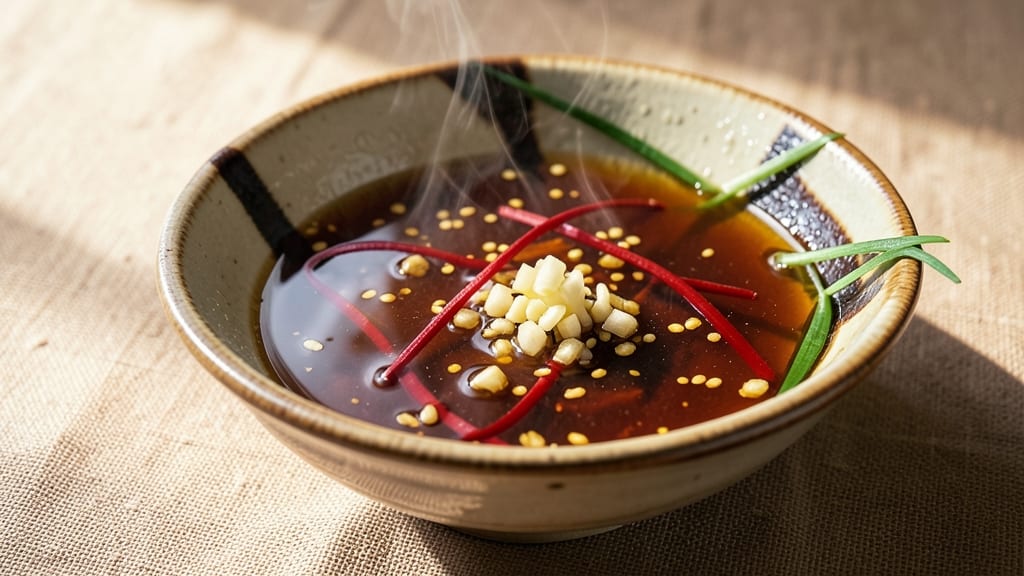
This authentic gyoza dipping sauce captures the perfect harmony of umami, tang, and subtle heat that elevates every bite of crispy dumplings. The secret lies in balancing soy sauce and rice vinegar while letting fresh garlic and chili oil shine—no shortcuts, just traditional flavor.
I developed this recipe after years of testing, ensuring each component plays its part without overpowering the others.
The foundation is simple: soy sauce for depth, rice vinegar for brightness, and a touch of sesame oil for nuttiness. What sets this apart is the fresh garlic, which adds a bright, aromatic kick that cuts through the richness.
Chili oil brings controlled heat, while a splash of sesame paste ties everything together. Adjusting the ratios lets you tailor the sauce to your preference—whether you prefer a cleaner Japanese style or a bolder Chinese variation.
What you’ll end up with is a glossy, aromatic sauce that clings beautifully to pan-fried gyoza, enhancing their crispy edges and tender centers. The garlic infuses the oil with a fragrant punch, while the vinegar keeps the flavors vibrant.
This isn’t just a dipping sauce—it’s the missing piece that transforms a simple dumpling meal into something truly special.
The best part? It keeps well in the fridge for up to a week, so you can make a batch ahead and always have it ready. Whether you’re serving homemade gyoza or store-bought, this sauce will make every bite taste like it came from a Tokyo or Shanghai street stall.
Let’s get started on the perfect balance.
Ingredients for authentic gyoza dipping sauce
Eight ingredients for a sauce that transforms simple gyoza into a restaurant-worthy experience.
| Ingredient | Amount | Notes |
|---|---|---|
| Light Soy Sauce 🥢 | ½ cup | Japanese preferred for balance |
| Rice Vinegar 🍶 | ¼ cup | Seasoned for extra depth |
| Fresh Garlic Cloves 🧄 | 6 cloves | Minced for aromatic punch |
| Sesame Oil 🫒 | 1 tbsp | Toasted for nutty richness |
| Chili Oil 🌶️ | 1 tbsp | Adjust for heat preference |
| Sesame Paste 🥜 | 1 tbsp | White or toasted variety |
| Granulated Sugar 🍚 | 1 tsp | Balances acidity |
| Salt 🧂 | ½ tsp | Kosher or sea salt |
| Water 💧 | ¼ cup | Adjust for desired consistency |
| Fresh Ginger 🌿 | 1 tsp | Finely grated, optional |
The soy sauce is your umami foundation—Kikkoman or Yamasa are my go-tos, but any Japanese light soy will work. Rice vinegar should be seasoned (that means it has a touch of salt and sugar already). Mizkan is my favorite, but Trader Joe's has a great budget option. Fresh garlic is non-negotiable here—it infuses the oil with that bright, aromatic punch that makes this sauce truly authentic. For the chili oil, Lao Gan Ma, but any good-quality chili oil will do. Toasted sesame oil adds depth, while sesame paste ties everything together with its nutty richness.
No Japanese soy sauce? Regular soy sauce works in a pinch, but you'll lose some of that delicate balance. Skip the garlic? Garlic powder at half the amount gives a milder flavor. Running low on rice vinegar? Apple cider vinegar is a decent substitute, though it'll have a slightly different tang. The ginger is optional but adds a lovely warmth—freshly grated is best, but powdered works if you're in a hurry. For a cleaner Japanese style, cut the chili oil in half. Want more boldness? Add an extra half teaspoon of sesame paste.
This sauce keeps beautifully in the fridge for up to 1 week, though it tastes best within the first 3 days. Store it in a clean glass jar with a tight seal—it'll thicken slightly as it sits, so just give it a quick stir before using. For a smoother texture, add a splash of water when reheating. I like to make a double batch so I always have some on hand—it's the perfect way to elevate any gyoza meal without extra effort.
Why You'll Love This Recipe
- Five-Ingredient Magic: I swear by this combo—just a splash of rice vinegar, a glug of sesame oil, and that first minced garlic clove (the one that makes you go, "Wait, is this really enough?"). It’s the kind of sauce where you measure once, taste, and adjust—no fancy scales or lab work.
- Umami Bomb: That light soy sauce isn’t just seasoning; it’s the backbone. When it hits your tongue after a crispy gyoza, it’s like a warm hug from someone who gets you. Add a whisper of chili oil, and suddenly you’ve got heat that dances, not burns.
- Party Starter: Honestly, this sauce is my lazy host’s secret weapon. Toss it in a small jar, slap a lid on it, and boom—you’ve got the perfect dip for gyoza night, dumpling potlucks, or even as a quick marinade for stir-fry veggies. No one will ask what’s in it; they’ll just ask for more.
- Budget Flex: Between us, this recipe costs me pennies. A bottle of light soy sauce lasts forever, garlic cloves are cheap, and sesame oil? A little goes a long way. I’ve made gallons of this for family gatherings, and the leftover jar in my fridge is always the first thing I grab when I’m craving that perfect gyoza bite.
Step-by-step instructions for authentic gyoza dipping sauce
This sauce delivers that perfect balance of umami, tang, and subtle heat—just like in Japanese izakayas.
Mince the Garlic and Ginger
Peel the 6 cloves fresh garlic cloves and finely mince them using a sharp knife or garlic press. You want tiny, even pieces that will dissolve completely into the sauce. I like to press the garlic through a fine-mesh strainer to remove any skins that might make the sauce grainy. Set aside the minced garlic.
For the 1 teaspoon fresh ginger, use a microplane or fine grater to create a paste-like consistency. The goal is to maximize surface area so the ginger's bright, citrusy notes infuse fully. If you're using a knife, chop it extremely finely—almost like a salsa. The ginger should look almost like a green powder at this stage.
Toast the Sesame Paste and Oil
In a small saucepan over medium-low heat, add the 1 tablespoon sesame paste and 1 tablespoon sesame oil. Warm gently for 1-2 minutes, stirring constantly, until you smell that nutty, toasted aroma. You're not trying to brown it—just wake up those flavors. Remove from heat immediately once fragrant to prevent burning.
Here's the thing—this toasting step makes all the difference. The sesame paste should look slightly thicker and develop a warm, toasted scent. If you skip this, your sauce will taste flat. Let the mixture cool for 2 minutes before proceeding.
Combine Wet Ingredients
In a medium bowl, whisk together the 0.5 cup light soy sauce and 0.25 cup rice vinegar. Add the 1 teaspoon granulated sugar and 0.5 teaspoon salt, stirring until completely dissolved. The sugar helps balance the acidity of the vinegar while the salt enhances all the flavors.
Now add the cooled sesame mixture, 1 tablespoon chili oil, and the minced garlic and ginger. Mix thoroughly until everything is evenly distributed. The sauce should look smooth with no visible garlic pieces—this means it's ready for the final adjustment.
Adjust Consistency and Flavor
Taste the sauce and adjust as needed. If it's too thick, add 1-2 tablespoons of the 0.25 cup water at a time until you reach your desired consistency. For authentic texture, it should coat the back of a spoon but still be pourable. If it's too thin, let it simmer gently for 1-2 minutes to reduce.
Here's where authenticity matters: the sauce should have a perfect harmony of salty, tangy, slightly sweet, and a hint of heat. If you want more depth, add a tiny pinch of white pepper or a dash of toasted sesame seeds. For extra freshness, stir in a few drops of lemon juice right before serving.
Rest and Serve
Transfer the sauce to a clean jar or bowl and let it rest at room temperature for 10-15 minutes. This allows all the flavors to meld together perfectly. The sauce will taste even better after this brief resting period—trust me, it makes a difference.
Serve immediately with your freshly pan-fried gyoza. The sauce should be slightly warm when you dip—this enhances all the aromatic flavors. For the best experience, keep the sauce in a small bowl at the table so everyone can adjust their heat level by adding more chili oil as desired.
Pro Tips For Making Authentic Gyoza Dipping Sauce
- Mince Garlic Like Snow: I used to crush garlic with the flat of my knife, but that releases bitter compounds. Instead, finely chop the cloves into a paste—almost like wet sand—so they dissolve into the sauce without leaving harsh chunks. A quick pulse in a mini food processor works if you’re impatient, but hand-mincing guarantees even distribution.
- Balance Vinegar Gradually: Rice vinegar’s acidity can overpower if you dump it all in at once. Start with half the amount, taste, then add the rest one teaspoon at a time. The sauce should brighten the soy, not fight it—think "wine balance," not "pickle punch."
- Chill Before Serving: Warm sauce tastes flat. After mixing, refrigerate for at least 20 minutes—let the flavors marry and the sesame oil mellow. Serve it cold or at room temperature, or your gyoza will feel like they’re swimming in lukewarm syrup.
- Skip Store-Bought Chili Oil: Bottled chili oil often tastes like solvent or overcooked peppers. Instead, toast a tablespoon of neutral oil with a pinch of crushed red pepper flakes and a splash of vinegar until fragrant (about 2 minutes). Strain if you hate texture—this adds depth store-bought can’t match.
Common mistakes when making your authentic gyoza dipping sauce
Over-Salting the Sauce
The soy sauce already packs a serious punch with 0.5 cup providing plenty of saltiness. Many people make the mistake of adding extra salt, which throws off the delicate balance between umami and tang.
Taste before adding salt—if your soy sauce is Kikkoman or Yamasa, it's already well-seasoned. Start with just 0.5 tsp salt and adjust only if needed. 🧂
Skipping the Garlic Toasting
Fresh garlic is non-negotiable, but even more critical is toasting it properly in the sesame oil. Raw garlic can make the sauce taste harsh and overpowering.
Always warm the garlic with the sesame paste and oil over medium-low heat for 1-2 minutes—this caramelizes the garlic slightly, creating a mellow, aromatic sweetness. Skipping this step is the #1 reason homemade dipping sauces taste amateur.
Using the Wrong Vinegar
Rice vinegar is essential for that bright, clean acidity that cuts through the richness. Substituting with apple cider or balsamic vinegar completely changes the flavor profile.
If you must substitute, use seasoned rice vinegar—unseasoned versions lack the subtle sweetness and saltiness that balance the soy. Mizkan is my go-to brand, but any quality Japanese rice vinegar works perfectly.
Ignoring the Resting Time
Rushing to serve the sauce immediately means missing out on flavor development. The 10-15 minute rest at room temperature lets the garlic fully infuse and all components meld together.
I've seen people skip this and end up with a sauce that tastes disjointed. Patience here makes all the difference—trust the process! ⏳
Overdoing the Chili Oil
Chili oil adds heat, but too much can overwhelm the delicate balance of flavors. Start with just 1 tbsp and adjust to taste—you can always add more, but you can't take it out.
For a milder version, reduce to ½ tbsp or use Lao Gan Ma Mild instead. The goal is a subtle warmth, not a mouth-searing experience.
Not Adjusting Consistency
The sauce should be glossy and pourable, coating the back of a spoon but not too thick. Many people forget to adjust the consistency, resulting in either a clumpy mess or a watery sauce.
If too thick, add 1-2 tbsp water at a time. If too thin, simmer gently to reduce. The perfect texture enhances every dip—don't skip this critical step! 🥄
Nutrition facts
Frequently asked questions about authentic gyoza dipping sauce
Can I make this sauce without fresh garlic?
You can substitute with 1.5 teaspoons garlic powder or 3 teaspoons minced jarred garlic, but fresh garlic gives the best aromatic punch. For authenticity, try infusing 1 tbsp sesame oil with 1 tsp garlic powder for 5 minutes on low heat to mimic the flavor. The toasted sesame paste still provides that nutty depth you need!
How do I adjust the spice level?
Start with just 1 tbsp chili oil for a mild kick, then add more to taste. For extra heat, mix ½ tsp chili flakes directly into the sauce. Want a smoky twist? Replace ½ tbsp chili oil with ½ tbsp gochujang (Korean chili paste)—it adds depth while keeping the heat controlled. Always adjust gradually!
What's the difference between Japanese and Chinese gyoza dipping sauces?
The Japanese version focuses on clean, bright flavors with more rice vinegar and less soy sauce, while Chinese sauces often include dark soy sauce for deeper color and extra umami. For a Japanese-style sauce, reduce soy to 0.3 cups and increase rice vinegar to 0.3 cups. Chinese versions sometimes add a touch of black vinegar for complexity.
Can I make this sauce ahead of time?
Yes! This sauce actually tastes better after 24 hours as flavors meld. Store in an airtight container in the fridge for up to 1 week. The texture may thicken slightly—just stir in 1-2 tbsp water to reach your preferred consistency. For a fresher taste, add 1 tsp fresh lemon juice right before serving.
What if my sauce tastes too salty?
Don't panic! Thin it with 1-2 tbsp water and add 1 tsp rice vinegar to balance the saltiness. For a more dramatic fix, stir in ½ tsp sugar to enhance the vinegar's brightness. If needed, add a splash of sesame oil to restore richness. The key is to rebalance all components—never just add more vinegar alone.