
Sauces & Condiments
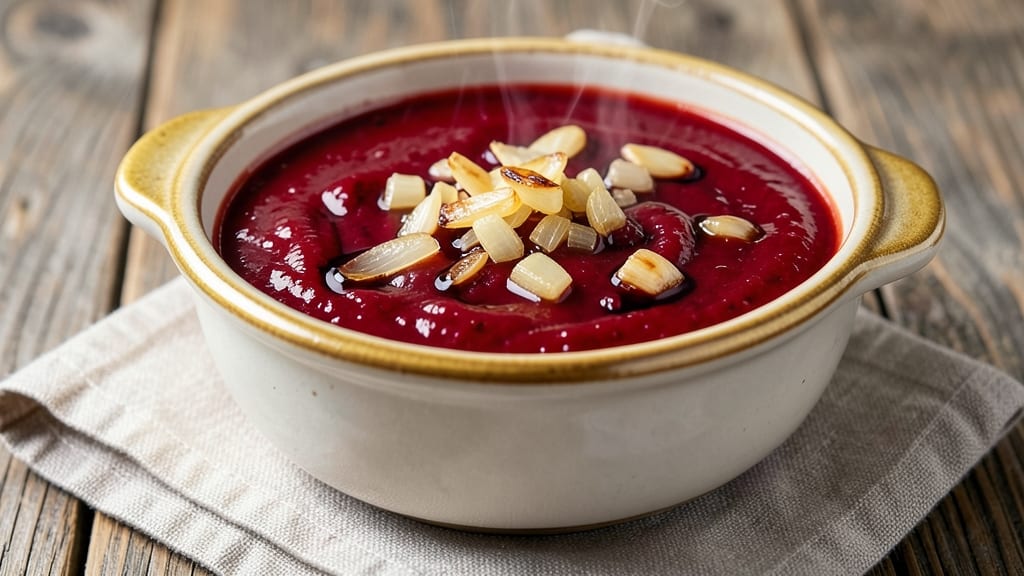
This au jus dipping sauce recipe transforms simple pan drippings into a rich, umami-packed sauce that elevates every bite.
The secret lies in reducing beef drippings with aromatic vegetables and a touch of wine, creating a velvety sauce with deep, savory notes that cling perfectly to roasted meats or crispy appetizers. What starts as a humble pan residue becomes something extraordinary with just a few minutes of attention.
What sets this sauce apart is its simplicity and versatility—no fancy ingredients, just beef drippings, onions, garlic, and a splash of red wine. The reduction process concentrates the flavors, turning them into a glossy, aromatic sauce that’s perfect for dipping steak fries, grilled meats, or even fried chicken.
It’s the kind of sauce that makes ordinary meals feel like a special occasion.
The result is a sauce with a perfect balance of richness and acidity, where the beefy depth is rounded out by the bright, tangy notes of the wine. It’s smooth enough to coat every bite but still carries that unmistakable umami punch that makes it irresistible.
This isn’t just a dipping sauce—it’s a flavor enhancer that turns simple dishes into something extraordinary.
Best of all, it keeps well in the refrigerator for up to a week, making it a great make-ahead option for game day or dinner parties. A little goes a long way, so you’ll want to make extra—trust me, it disappears quickly. Here’s how to make it.
Ingredients for au jus dipping sauce
Nine ingredients transform humble beef drippings into a velvety, umami-packed sauce worth making extra.
| Ingredient | Amount | Notes |
|---|---|---|
| Beef Drippings 🥩 | 1 cup | From roasted beef or steak |
| Yellow Onion 🧅 | 1 whole | Diced small, about 1 cup |
| Garlic Cloves 🧄 | 4 cloves | Minced finely for depth |
| Red Wine 🍷 | ½ cup | Bold dry variety like Cabernet |
| Beef Broth 💧 | 1 cup | Low-sodium preferred |
| Tomato Paste 🍅 | 1 tbsp | Smooth texture preferred |
| Worcestershire Sauce 🍶 | 1 tbsp | For umami depth |
| Black Peppercorns 🌶️ | 10 whole | Crushed for freshness |
| Fresh Thyme 🌿 | 2 sprigs | Or 1 tsp dried thyme |
| Salt 🧂 | 1 tsp | To taste, preferably kosher |
The beef drippings are non-negotiable here—this is where the magic happens. Costco or your local butcher often have pre-roasted beef bones for drippings if you're not cooking a whole roast. The onion and garlic should be finely minced for a smooth sauce, but don't stress about precision. For the wine, Cabernet Sauvignon or Merlot work perfectly—whatever's open in your rack. If you're avoiding alcohol, beef broth with a splash of balsamic mimics that tangy depth beautifully. The tomato paste is key for richness, so grab the smooth kind from Trader Joe's—it's less gritty than canned versions.
No Worcestershire sauce? Soy sauce at half the amount gives similar umami punch, though it'll be slightly saltier. Fresh thyme is ideal, but dried thyme at one-third the amount works in a pinch. The peppercorns should be crushed just before adding for maximum freshness—no need to buy pre-ground. If you're making this ahead, the sauce actually improves overnight as flavors meld. For a quicker version, skip the thyme and double the Worcestershire. The sauce thickens as it cools, so if it's too thick after chilling, just whisk in a splash of warm water.
This sauce keeps beautifully in the fridge for up to 1 week—it actually tastes better the next day. For long-term storage, freeze in ice cube trays for perfect single-use portions. Reheat gently on the stove, stirring constantly to prevent scorching. I always make a double batch because it disappears faster than you'd think—perfect for game day, steak night, or whenever you need that restaurant-quality touch. The leftovers? Even better for dipping crispy fries or roasted potatoes.
Why You'll Love This Recipe
- Uses Leftovers Brilliantly: I swear by this sauce for turning yesterday’s roast beef into tonight’s star—just warm the drippings, add a splash of broth, and you’ve got instant flavor without extra shopping.
- Game for Any Occasion: Slather it on steak fries, drizzle over grilled burgers, or serve it in a bowl for fancy dinners. The red wine and garlic give it that just-right sophistication without the fuss.
- One-Pot Magic: Honestly, it’s the kind of recipe where you barely lift a finger: sauté onions, deglaze the pan with wine, simmer. That’s it. No straining, no peeling, no mess—just rich, savory goodness.
- Budget-Friendly Luxury: Between us, this tastes like a $20 steakhouse sauce but costs pennies. Beef drippings and broth stretch forever, and a cheap bottle of red wine makes it sing—no splurges needed.
Step-by-step instructions for rich au jus dipping sauce
Transform simple pantry staples into a velvety, umami-packed sauce that elevates every bite.
Sauté Onions Until Translucent and Sweet
Heat the 1 cup Beef Drippings in a medium saucepan over medium heat. Add the 1 whole Yellow Onion (diced small) and cook for 5-6 minutes, stirring occasionally. You're looking for onions that soften and turn golden and translucent—this builds the flavor foundation.
Don't rush this step. Sweet, caramelized onions create depth that separates this sauce from basic gravy. If the drippings start to smoke, reduce the heat slightly. The onions should sizzle gently, not burn. Here's where the magic begins—those browned bits sticking to the pan will dissolve into the sauce later, adding incredible richness.
Add Garlic and Tomato Paste for Depth
Push the onions to one side of the pan and add the 4 cloves Garlic Cloves (minced finely). Stir for 30 seconds until fragrant—you'll smell that irresistible garlic aroma. Then add the 1 tbsp Tomato Paste and stir to combine completely with the onions.
Cook for another 1-2 minutes until the tomato paste darkens slightly and coats the onions evenly. This step develops the sauce's complexity. The tomato paste adds a subtle sweetness that balances the beefy flavors, while the garlic infuses its aromatic punch. Don't let the paste burn—keep the heat at medium throughout this process.
Deglaze with Wine and Simmer
Pour in the 0.5 cup Red Wine and scrape up all those browned bits from the bottom of the pan with a wooden spoon. This deglazing step captures all the concentrated beef flavor that would otherwise go to waste. Let the wine simmer for 3-4 minutes until reduced by half—you'll see the liquid visibly decrease and the alcohol cook off.
This reduction is crucial. It intensifies the wine's flavors and creates a smoother sauce. You'll know it's ready when the mixture coats the back of a spoon and has a syrupy consistency. If you taste it now, you'll notice the wine's bold character starting to emerge alongside the beefy notes from the drippings.
Build the Sauce with Broth and Seasonings
Add the 1 cup Beef Broth, 1 tbsp Worcestershire Sauce, 10 whole Black Peppercorns (crushed), 2 sprigs Fresh Thyme, and 1 tsp Salt. Bring to a gentle simmer over medium-low heat, then reduce heat to maintain a barely bubbling state. Let it cook uncovered for 10-12 minutes until the sauce thickens slightly.
The thyme and peppercorns should infuse the sauce with their aromatic qualities, while the Worcestershire adds that unmistakable umami depth. Stir occasionally to prevent sticking. You're looking for a sauce that coats a spoon but still has a silky, velvety texture—not gluey or overly thick. If it reduces too quickly, add a splash of water or broth to reach your desired consistency.
Strain and Serve Warm
Remove the sauce from heat and let it settle for 2 minutes. Then strain it through a fine-mesh sieve into a clean saucepan to remove any thyme stems and peppercorns. For an ultra-smooth texture, you can press a spoon against the solids to extract every last bit of flavor.
Return the strained sauce to the pan and keep it warm over low heat or transfer to a heatproof serving dish. This sauce is best served immediately while still warm, when its rich flavors are at their peak. The color should be a deep, appetizing red with a glossy sheen. Taste and adjust seasoning if needed—you might want to add a pinch more salt or a splash of wine to perfect the balance.
Pro Tips For Making Au Jus Dipping Sauce
- Sweat the Onion First: I used to toss chopped onion straight into the pan with garlic, and it’d just sit there like a sad, watery guest. Instead, cook the onion over medium heat for 5-6 minutes until it’s soft, translucent, and starting to caramelize—just a little—before adding garlic. That’s when the flavor actually develops, not when you’re already deglazing.
- Deglaze with Wine Early: Don’t wait until everything’s browned to pour in the red wine—it’ll just steam away and leave you with a weak sauce. Add the wine as soon as you’ve removed the beef from the pan (or after 2-3 minutes of browning), let it bubble for 30 seconds, then scrape up those stuck-on bits. That’s where half the flavor hides.
- Strain It Properly: Skim the fat off the beef drippings first, then strain the finished au jus through a fine-mesh sieve lined with cheesecloth. I learned this the hard way—lumpy au jus looks unprofessional, and it’s a pain to fish out bits later. A double strain (once after cooking, once before serving) guarantees silky smoothness.
- Use a Splurge Broth: Store-bought beef broth is fine, but if you’re making au jus, upgrade to a high-quality one—like the kind made from actual beef bones, not just powder. The difference in depth of flavor is night and day, and you’re only using a cup or two. Think of it as the difference between tap water and a cold glass of soda in your sauce.
Best sauces and condiments for this dish
Classic Pairings
This au jus sauce shines when paired with crispy steak fries—the perfect contrast of creamy potato and rich, beefy sauce. I often serve it alongside roasted garlic parmesan fries or crinkle-cut fries for maximum dipping satisfaction.
For a heartier option, try it with grilled pork chops or herb-roasted beef tenderloin—the sauce clings beautifully to both meat and potatoes. 🍟
Unexpected Uses
Don't limit this sauce to just dipping! Use it as a glaze for grilled meats—brush it on ribeye steaks during the last 5 minutes of grilling for a caramelized crust.
It also works wonders as a marinade for beef short ribs (coat them and let sit for 2 hours before roasting). For a quick appetizer, drizzle it over baked brie with a sprinkle of crushed black pepper—the heat cuts through the richness perfectly.
Sauce Variations
For a spicy kick, stir in ½ tsp of smoked paprika and ¼ tsp cayenne during the final simmer. If you prefer a sweeter profile, add 1 tsp of honey or maple syrup with the Worcestershire sauce.
For a vegetarian twist, replace the beef drippings with mushroom broth and use vegetable broth instead of beef broth—it still delivers that umami depth, just with a different flavor profile. 🌶️
Storage Secrets
This sauce keeps beautifully in the fridge for up to 1 week in an airtight container—I use glass jars for easy reheating. For longer storage, freeze it in ice cube trays for perfect single-use portions.
Thaw overnight in the fridge or warm directly in a saucepan over low heat, stirring constantly to prevent scorching. Pro tip: The sauce thickens as it cools, so if it seems too thick after chilling, just whisk in 1-2 tablespoons of warm water to reach your desired consistency.
Garnish Game
Elevate your au jus with simple garnishes that add texture and freshness. A sprinkle of fresh parsley or chopped chives brightens the dish immediately. For extra richness, top with crumbled blue cheese or shaved parmesan.
A few toasted breadcrumbs add a delightful crunch contrast. I also love a drizzle of truffle oil (just ½ teaspoon) for a luxurious touch—it enhances the umami flavors without overpowering them. ✨
Make-Ahead Magic
This sauce actually tastes better the next day as the flavors meld together. I always make a double batch because it disappears quickly—perfect for game day, dinner parties, or whenever you need that restaurant-quality touch. If you're prepping ahead, store it in the fridge and reheat gently on the stove.
For a quick version, skip the thyme and double the Worcestershire sauce—it still delivers that deep, savory flavor without the extra effort. The leftovers? Even better for dipping crispy fries or roasted potatoes.
Nutrition facts
Frequently asked questions
Can I make au jus without beef drippings?
Yes, but the flavor will change! Use 1 cup beef broth instead, then add 1 tbsp soy sauce and ½ tsp beef bouillon powder to mimic the depth. For a vegetarian version, substitute with mushroom broth and 1 tbsp tomato paste to maintain richness. The wine and Worcestershire will still provide that signature umami punch.
How do I fix au jus that's too thick or too thin?
If it's too thick, whisk in 1-2 tablespoons warm water or broth until smooth. For a thinner sauce, simmer uncovered for 2-3 extra minutes to reduce the liquid. Pro tip: The sauce naturally thickens as it cools, so adjust while still warm if needed.
What's the best way to store leftover au jus?
Store in an airtight container in the fridge for up to 1 week. For longer storage, freeze in ice cube trays—perfect for single-use portions. Thaw overnight in the fridge or reheat gently on the stove, stirring constantly to prevent scorching.
Can I use white wine instead of red?
Red wine is traditional for its bold flavor, but white wine works in a pinch! Use ½ cup dry white wine like Sauvignon Blanc, but add ½ tsp balsamic vinegar to mimic the depth. The sauce will have a lighter color but still deliver that tangy brightness.
What are the best foods to dip in au jus?
This sauce is perfect for steak fries, onion rings, grilled meats, or even fried chicken. For extra fun, try dipping roasted potatoes or cheese sticks—the rich, savory flavors cling beautifully to crispy textures.