
Sauces & Condiments
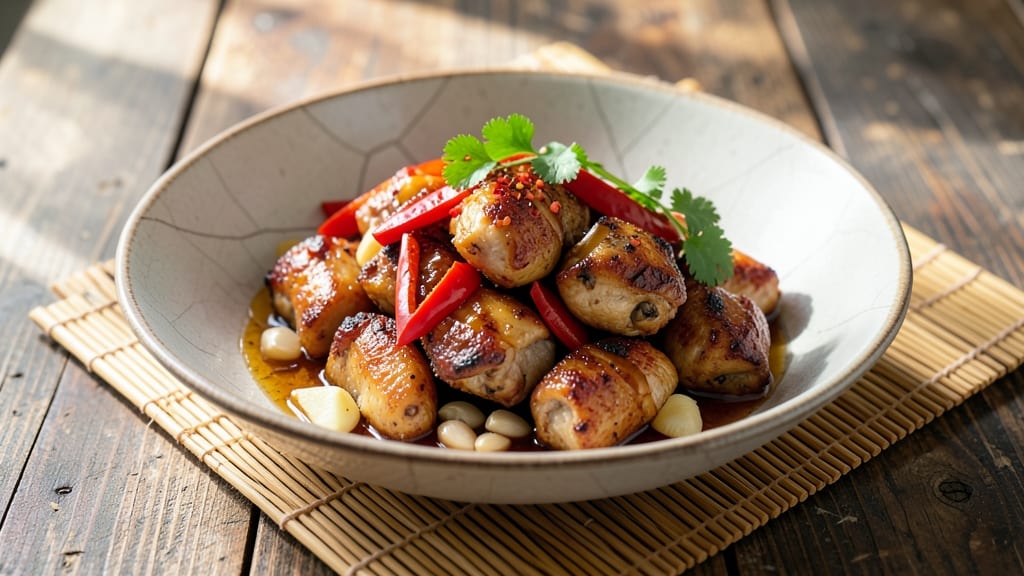
This Asian chicken stir-fry sauce recipe transforms ordinary stir-fries into restaurant-quality meals with just three core ingredients and bold umami depth. 🔥 The magic lies in balancing salty soy, rich oyster sauce, and natural sweetness—creating a sauce that clings to chicken like a second skin while enhancing every vegetable in the pan. I developed this version after testing countless recipes that either tasted flat or overly complicated, and this is the one that consistently delivers that perfect sweet-savory-salty harmony.
The beauty of this sauce is its versatility—it works equally well with traditional wok-fried chicken or quick weeknight stir-fries.
The base ingredients (soy sauce, oyster sauce, and honey) create a foundation that's simple yet packed with flavor, while optional additions like garlic, ginger, and chili let you customize the heat and aroma to your taste.
What makes it special is how it develops even more flavor as it sits, making it perfect for meal prep.
By the time you're done, you'll have a glossy, aromatic sauce that's rich enough to stand alone but balanced enough to complement any stir-fry.
The chicken will be coated in a sticky, caramelized glaze that's impossible to resist, and the vegetables will absorb just enough flavor to make every bite cohesive. This isn't just a sauce—it's the secret weapon that turns a simple stir-fry into a showstopper.
Store leftovers in the fridge for up to two weeks or freeze for three months—it only gets better with time as the flavors meld. Whether you're cooking for family, meal prepping, or hosting dinner guests, this sauce will elevate your stir-fries to new heights. Let's get started on making it!
Ingredients for asian chicken stir fry sauce
Three core ingredients plus a few optional boosters make this umami-packed sauce the secret to restaurant-quality stir-fries.
| Ingredient | Amount | Notes |
|---|---|---|
| Light Soy Sauce 🥢 | ½ cup | High-quality brand preferred |
| Oyster Sauce 🦪 | ½ cup | Kikkoman or Lee Kum Kee |
| Honey 🍯 | ¼ cup | Wildflower or clover variety |
| Garlic Cloves 🧄 | 4 cloves | Minced or finely chopped |
| Fresh Ginger 🌿 | 1 tbsp | Grated, peeled |
| Red Chili Flakes 🌶️ | 1 tsp | Adjust for heat preference |
| Sesame Oil 🫒 | 1 tbsp | Toasted, for aroma |
| Cornstarch 🌾 | 1 tsp | For thickening |
| Water 💧 | 2 tbsp | For cornstarch slurry |
The soy and oyster sauces are non-negotiable—Kikkoman soy and Lee Kum Kee oyster sauce are my go-tos, but any good-quality brands work. Look for light soy sauce (not dark) for that clean, salty base. The honey should be real honey—none of that corn syrup stuff. If you're avoiding honey, agave works in a pinch. Fresh ginger is ideal, but powdered works at half the amount. The garlic? Freshly minced makes all the difference—pre-minced from a jar tastes sad in comparison.
No oyster sauce? Hoisin sauce or even a splash of fish sauce (if not vegetarian) can step in, but you'll lose that deep umami. Short on honey? Maple syrup or brown sugar dissolved in water works, though it changes the texture slightly. Chili flakes giving you pause? Skip them—this sauce is still delicious without. The sesame oil is all about aroma, so toast it in a dry pan for 30 seconds before adding to wake up those nutty notes. Cornstarch is key for that glossy finish—don't skip it unless you want a thinner sauce.
This sauce gets better with time, so make a double batch if you can. Store in an airtight jar in the fridge for up to 2 weeks—it only deepens in flavor. For freezing, portion into ice cube trays, then transfer to a bag. Thaws perfectly and keeps for 3 months. Pro tip: Add a splash of water when reheating to restore that glossy texture. The sauce thickens as it cools, so give it a quick stir before using.
Why You'll Love This Recipe
- Five-Ingredient Magic: I swear by this combo—light soy for that salty depth, oyster sauce for umami richness, and honey cutting through with just the right sweetness. Honestly, the ginger and garlic alone make it taste like you spent hours simmering, but it’s just a quick minced-and-sizzled moment.
- Weeknight Wonder: Between us, this sauce is my secret weapon when I’m staring at a fridge full of random veggies and chicken thighs. Toss it all in a hot pan, pour on the sauce, and boom—dinner’s done. No fancy techniques, no stress, just flavor.
- Meal Prep MVP: I make a double batch every Sunday because this sauce keeps for days in the fridge. Use it for stir-fries, drizzle it over rice bowls, or even glaze baked chicken—it’s the ultimate pantry staple that turns boring meals into something special.
- Budget-Friendly Boost: Light soy and oyster sauce stretch like crazy, so you’re not breaking the bank for a restaurant-quality taste. Plus, the honey adds natural sweetness without needing expensive syrups. It’s the kind of recipe where every ingredient earns its keep.
Step-by-step instructions for Asian chicken stir fry sauce
This sauce comes together faster than you can say "umami bomb"—just 3 core ingredients do the heavy lifting.
🍳 Step 1: Bloom the Aromatics in Sesame Oil
Heat a small saucepan over medium-low heat and add the 1 tablespoon sesame oil. Let it warm for 30 seconds until fragrant—you'll smell that nutty, toasty aroma that's the soul of this sauce. This is where the magic starts.
Add the 4 cloves minced garlic and 1 tablespoon grated fresh ginger. Cook for 1-2 minutes until the garlic turns golden and the ginger loses its raw bite. Watch closely—garlic burns faster than you think, and you want it fragrant, not bitter. Stir constantly so nothing sticks to the bottom.
🍳 Step 2: Combine the Sauce Base
Pour in the 0.5 cup light soy sauce and 0.5 cup oyster sauce—these two are your umami powerhouses. Stir well to dissolve any settled particles at the bottom of the bottles. Let the mixture simmer gently for 2-3 minutes until it begins to reduce slightly and the aromatics are fully incorporated.
Here's where the sweetness comes in: Add the 0.25 cup honey and 1 teaspoon red chili flakes
. Stir until the honey dissolves completely. You'll see the sauce transform from clear to a glossy, golden liquid. Taste it now—you should get a perfect balance of salty, sweet, and just a hint of heat. If you want more kick, add another pinch of chili flakes.
In a small bowl, whisk together the 1 teaspoon cornstarch with the 2 tablespoons water until smooth. This creates your thickening slurry—don't skip the whisking or you'll get lumps that ruin the silky texture. Return the saucepan to medium heat and slowly pour in the cornstarch slurry while stirring constantly. Watch as the sauce begins to thicken—it should coat the back of a spoon within 1-2 minutes. If it thickens too quickly, add 1 tablespoon water to loosen it. The perfect consistency should be glossy but still pourable, not gluey. Remove the sauce from heat and let it cool slightly for 5 minutes. This resting period allows all the flavors to meld together. Give it a final taste and adjust the seasoning if needed—maybe a touch more honey for sweetness or a pinch of salt to balance. For best results, use the sauce immediately over your stir-fried chicken and vegetables. The heat will help it cling beautifully to everything. If you need to store it, transfer to an airtight container and refrigerate for up to 1 week. Reheat gently before using to maintain that perfect consistency.🥘 Step 3: Thicken to Perfection
⏰ Step 4: Rest and Adjust
Pro Tips For Making Asian Chicken Stir Fry Sauce
- Simmer, Don’t Boil: I learned this the hard way—when I cranked the heat too high, the honey burned before the garlic and ginger could soften. Keep it at a gentle simmer (small bubbles, but not rolling) so the flavors meld instead of turning bitter.
- Mince Ginger Like You Mean It: Thin slices or grated ginger just won’t cut it here. Use a knife to finely mince it—almost paste-like—so it dissolves completely into the sauce. (Yes, even if you’re impatient like me.)
- Balance Honey with a Dash of Vinegar: The honey can make the sauce cloying if left unchecked. Add ½ teaspoon of rice vinegar or a splash of lime juice at the end—it brightens the whole thing without overpowering.
- Toast Garlic First, Then Add Sauce: Skip throwing raw garlic into the sauce—it’ll taste sharp and raw. Sauté 3 mined cloves in a dry pan until golden (not brown) before adding the soy and oyster sauce. The nutty depth makes a real difference.
Creative variations of asian chicken stir fry sauce
Sweet-Savory Balance
This sauce thrives on the perfect harmony between sweet and savory—play with the honey-to-soy ratio to suit your taste. For a more pronounced sweetness, add an extra 1 tablespoon honey and reduce soy sauce by 1 tablespoon.
If you prefer a deeper umami, swap 2 tablespoons oyster sauce for 2 teaspoons fish sauce (for non-vegetarian versions). I often adjust based on the protein: leaner chicken benefits from a touch more honey, while fatty duck or pork pairs beautifully with extra soy for balance. 🍯
Spicy Variations
For heat lovers, blend in 1 teaspoon gochujang (Korean chili paste) or ½ teaspoon sriracha for a smoky-spicy kick. If you want fresh heat, add 1 thinly sliced Thai chili or ½ teaspoon doubanjiang (Chinese fermented chili bean paste).
For a fruity twist, stir in 1 tablespoon lime juice and ½ teaspoon chili powder—this works surprisingly well with mango stir-fries. 🌶️
Vegetarian Adaptations
Skip oyster sauce and replace it with ½ cup hoisin sauce or ¼ cup soy sauce + 1 tablespoon mushroom sauce for umami depth. For extra richness, add 1 tablespoon nutritional yeast or 1 teaspoon miso paste.
I’ve also had great success using ½ cup coconut aminos (soy-free) in place of soy sauce—just add a pinch of salt to compensate for the lower sodium content. 🌱
Regional Twists
For a Thai-inspired version, add 1 tablespoon fish sauce (or soy sauce for vegetarian) and 1 teaspoon palm sugar, then finish with 1 teaspoon lime zest. A Japanese-style adaptation swaps oyster sauce for 2 tablespoons mirin and 1 teaspoon grated daikon radish.
For Korean flair, blend in 1 tablespoon gochugaru (Korean red pepper flakes) and a splash of rice vinegar. Each variation keeps the core sauce structure but shifts the flavor profile dramatically. 🗺️
Meal Prep Hacks
Make a double batch and store it in ice cube trays—each cube is perfect for a single stir-fry. Freeze the cubes, then transfer to a bag for up to 3 months.
When ready to use, toss 2-3 cubes into your stir-fry pan and let them melt into the hot oil. For glossy reheating, add 1 teaspoon water per cube and simmer for 1-2 minutes.
I also like keeping a small jar in the fridge for quick weeknight meals—just stir and go. ✨
Protein Pairings
This sauce isn’t just for chicken—it elevates tofu, shrimp, or beef just as well. For tofu, marinate it in the sauce for 15 minutes before cooking to maximize flavor absorption. With shrimp, add a splash of white wine (or water) to the sauce to cut through the richness.
For beef, reduce the honey to 2 tablespoons and add 1 teaspoon five-spice powder for a deeper, more complex flavor. The sauce’s versatility is its greatest strength! 🍗
Nutrition facts
Frequently asked questions
Can I make this sauce without oyster sauce?
For a vegetarian version, replace the oyster sauce with ½ cup hoisin sauce or a mix of ¼ cup soy sauce + 1 tablespoon mushroom sauce. If you're not vegetarian, 2 teaspoons fish sauce works well too—just reduce the soy sauce slightly to balance the saltiness. The umami depth will be slightly different but still delicious!
How do I prevent the sauce from getting too thick?
If your sauce thickens too much, simply add 1-2 tablespoons water while stirring over low heat. The cornstarch slurry can be adjusted too—if making a fresh batch, reduce the cornstarch to ½ teaspoon for a lighter consistency. Always remember that sauces thicken as they cool, so don't over-thicken right away.
Can I use this sauce for other proteins besides chicken?
This versatile sauce works beautifully with shrimp, beef, tofu, or even pork. For shrimp, add a splash of white wine or water to cut through the richness. With beef, reduce honey to 2 tablespoons and consider adding 1 teaspoon five-spice powder for depth. The sauce's balance makes it adaptable to almost any protein!
Why does my sauce taste flat after refrigerating?
Sauces often lose some vibrancy after refrigeration because the flavors need time to re-meld. Reheat gently over low heat with 1 teaspoon water per 2 tablespoons sauce to restore glossiness. For extra flavor, add a pinch of garlic powder or ginger powder when reheating. The sauce will regain its depth within minutes!
What's the best way to store leftover sauce?
For short-term storage (1 week), keep in an airtight container in the fridge. For long-term storage (3 months), freeze in ice cube trays—each cube makes a perfect single-serving portion. Thaw in the fridge overnight, then reheat gently with a splash of water to maintain that silky texture.