
Sauces & Condiments
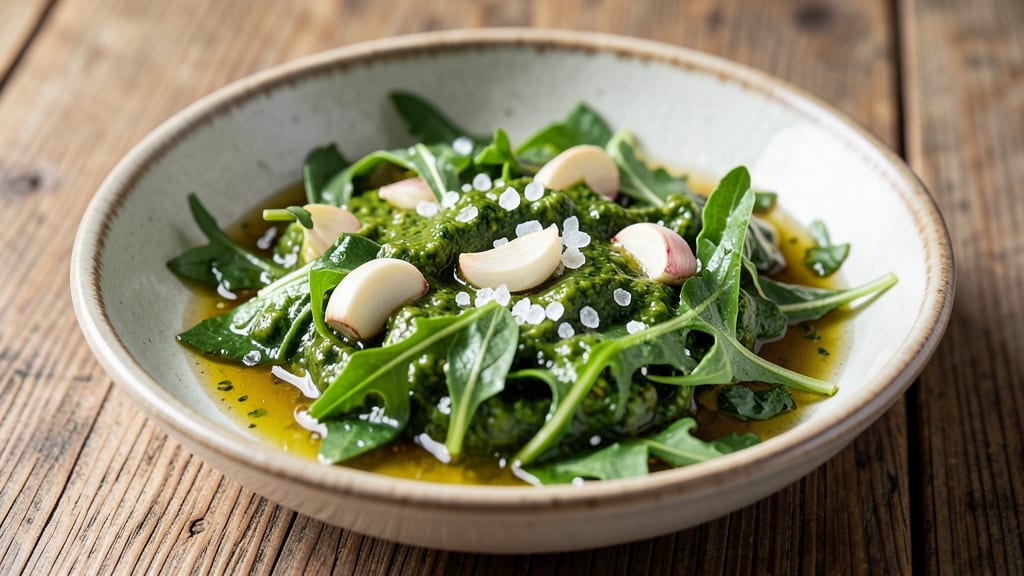
This arugula chimichurri sauce recipe transforms traditional chimichurri into a vibrant, herb-packed sauce that brightens every dish with its peppery bite and freshness. The secret lies in blending arugula with garlic, parsley, and olive oil—creating a sauce that's more complex and aromatic than classic parsley-based versions.
What sets this apart is the arugula, which adds a peppery depth while keeping the sauce light and versatile.
The process is straightforward: pulse fresh herbs, garlic, and arugula in a food processor, then stream in olive oil and vinegar until perfectly emulsified.
Let it rest for 10 minutes, and the flavors meld into a bold, herbaceous sauce that clings beautifully to grilled meats, roasted vegetables, or even toasted bread. Unlike traditional chimichurri, this version stays fresh longer and delivers a modern twist with its vibrant green hue.
What makes this sauce truly special is its versatility—it elevates everything from steak and shrimp to avocado toast or even as a marinade. The arugula keeps it fresh and peppery, while the garlic and herbs add layers of flavor that develop as it rests.
Store it in the fridge for up to 5 days, or freeze for longer shelf life, making it a go-to condiment for quick meals.
Pair it with grilled meats for a restaurant-worthy finish, drizzle over roasted vegetables for extra brightness, or spread on toast with a sprinkle of flaky salt. The possibilities are endless, and the preparation takes just 5 minutes—perfect for busy weeknights or entertaining.
Let’s make this sauce that’ll become your new favorite condiment.
Ingredients for arugula chimichurri sauce
Nine vibrant ingredients transform into this restaurant-quality sauce in under five minutes.
| Ingredient | Amount | Notes |
|---|---|---|
| Fresh Arugula Leaves 🌿 | 2 cups | Packed, stems removed for best texture |
| Fresh Flat-Leaf Parsley 🌿 | ½ cup | Stems removed, tightly packed |
| Garlic Cloves 🧄 | 4 cloves | Peeled, roughly chopped for even distribution |
| Extra-Virgin Olive Oil 🫒 | ¾ cup | High-quality, fruity variety preferred |
| Red Wine Vinegar 🍷 | 2 tbsp | Bold, dry vinegar for tangy balance |
| Diamond Crystal Kosher Salt 🧂 | ¾ tsp | Fine grain for even dissolution |
| Freshly Ground Black Pepper 🌶️ | ½ tsp | Freshly cracked for maximum aroma |
| Red Pepper Flakes 🌶️ | ¼ tsp | Adjust to taste for heat intensity |
| Lemon Zest 🍋 | 1 tsp | Freshly grated for citrus brightness |
The arugula is the star here—young, tender leaves work best for their peppery punch. Whole Foods or local farmers markets typically carry the freshest varieties, but avoid wilted or yellowing leaves. Fresh parsley should be bright green with no browning; Trader Joe's sells it pre-washed in convenient bunches. Garlic cloves should be firm and free of sprouts—store-bought jars often have sprouted cloves, so check carefully. For the olive oil, California extra-virgin brands like Corto or Lucini deliver the fruity notes that elevate this sauce. Red wine vinegar should be aged at least one year for depth of flavor—Bartles & Jaymes is a reliable choice if you prefer convenience.
No arugula? Baby spinach or baby kale can substitute at the same quantity, though the peppery bite will be milder. Running out of parsley? Cilantro or basil work in a pinch, but reduce to 0.25 cup for a more delicate flavor profile. Garlic powder can replace fresh garlic at half the amount, though it lacks the complexity. For vinegar, balsamic or apple cider vinegar add different but complementary tangs—reduce the amount to 1.5 tbsp if using balsamic. The red pepper flakes can be omitted entirely for a mild version, or increased to 0.5 tsp for extra heat. If you lack lemon zest, lemon juice at half the amount provides similar acidity, though it won't add the same aromatic brightness.
This sauce keeps beautifully in an airtight container in the fridge for 5-7 days, with flavors deepening over time. For longer storage, portion into ice cube trays and freeze for up to 3 months
Why You'll Love This Recipe
- No Pulse Required: I swear by this sauce because it’s the only chimichurri I’ll ever make—no food processor, no blender, just a knife and a bowl. The arugula and parsley stay chunky enough to keep texture, but the olive oil and vinegar work their magic with barely any effort.
- Herb Bomb Flavor: That first bite of bright, peppery arugula with the garlic’s sharp punch? It’s like a flavor grenade in the best way. The red wine vinegar cuts through the richness, so it’s never overpowering—just right.
- Weeknight Magic: Drizzle it on grilled chicken, toss it with pasta, or smear it on toast with leftover roasted veggies. I’ve used it for everything from lazy breakfasts to last-minute dinner rescues, and it never lets me down.
- Lasts All Week: Between us, this sauce gets better as it sits. The flavors meld, and it keeps for days in the fridge—no weird texture changes, just pure, bright goodness. Honestly, I make a double batch just so I don’t have to think about it again.
Step-by-step instructions for arugula chimichurri sauce
Here's how to craft vibrant, herb-forward chimichurri with perfect balance in minutes.
Prepare the Herb Base
In a food processor, combine the 2 cups fresh arugula leaves and 0.5 cup fresh flat-leaf parsley, stems removed. Pulse until finely chopped but not completely pureed—you want texture, not a smooth paste. The arugula should dominate the flavor profile, adding that signature peppery bite that sets this chimichurri apart from traditional parsley-based versions.
Stop processing when the herbs resemble coarse sand. Over-chopping releases bitter compounds from the arugula, so resist the urge to pulse further. The ideal consistency should allow you to see individual herb flecks while still creating a cohesive texture. Transfer the chopped herbs to a medium bowl and set aside.
Incorporate Aromatics and Acid
Add the 4 peeled garlic cloves (roughly chopped) to the herb mixture. Using your hands, gently crush the garlic against the bowl's sides to distribute it evenly. This manual approach ensures better flavor integration than simply tossing it in. Next, add the 1 tsp lemon zest, 0.75 tsp Diamond Crystal kosher salt, 0.5 tsp freshly ground black pepper, and 0.25 tsp red pepper flakes. The zest adds brightness that cuts through the richness of the olive oil.
Mix thoroughly with a wooden spoon, pressing down on the herbs to release their oils. The red pepper flakes should be distributed evenly—this is where the subtle heat comes from. Taste at this stage: you should detect sharp garlic, citrusy lemon, and a peppery kick from both the arugula and red pepper flakes.
Create the Emulsion
With the motor running on low speed, slowly drizzle in the 0.75 cup extra-virgin olive oil through the food processor's feed tube. This gradual addition prevents the sauce from separating. The oil should begin to emulsify almost immediately, creating a vibrant green sauce that coats the back of a spoon. If using a bowl instead, whisk continuously to incorporate the oil.
After adding all the oil, pulse once more to fully combine. The sauce should now have a thick, creamy consistency—similar to heavy cream but with vibrant color. If it appears too thick, add 1-2 teaspoons of red wine vinegar to loosen it. The vinegar also enhances the acidity, balancing the herbs' intensity.
Finish with Vinegar and Rest
Pour in the 2 tablespoons red wine vinegar and mix well. The vinegar should brighten the sauce and cut through the richness of the olive oil. Taste again and adjust seasoning if needed—you may want to add a pinch more salt or red pepper flakes to achieve the perfect balance of tangy, herby, and slightly spicy flavors.
Cover the bowl and let the chimichurri rest at room temperature for 10 minutes. This brief resting period allows the flavors to meld and the sauce to thicken slightly. The result should be a vibrant green sauce with a fresh, herbaceous aroma that's ready to elevate any dish it touches.
Pro Tips For Making Arugula Chimichurri Sauce
- STACK THE GREENS FIRST: DESCRIPTION: Tear the arugula and parsley separately—don’t chop them into tiny pieces. The arugula’s peppery bite works best when it’s still in larger, recognizable chunks, while the parsley softens into a smooth base. I used to blend everything together, but now I mix them by hand after pulsing the parsley alone—it keeps the texture lively.
- SALT THE GARLIC: DESCRIPTION: Toss the minced garlic with a pinch of salt before adding it to the oil. This draws out moisture and prevents the sauce from turning bitter or separating later. I learned this the hard way after making a batch that tasted like raw garlic had been drowned in vinegar.
- PULSE DON’T BLITZ: DESCRIPTION: Use the food processor in short bursts—three or four 2-second pulses max. Over-blending turns chimichurri into a sad, mushy paste. You want it chunky enough to cling to meat or pasta without losing its freshness. I now set a timer for 10 seconds total—yes, it’s annoying, but the result is worth it.
- LET IT REST: DESCRIPTION: Walk away for 10 minutes after mixing everything. The flavors meld better when the arugula and parsley have a chance to soften slightly without turning to sludge. I used to serve it immediately, thinking it needed to be "fresh," but now I wait—it tastes richer and more balanced.
Troubleshooting perfect results
Herb Texture Issues
If your chimichurri turns out too chunky, pulse the herbs in the food processor for 5-10 extra seconds—just until they resemble coarse sand. Over-processing releases bitter compounds from the arugula, so stop before it becomes paste-like.
For a smoother texture, blend the herbs with 1-2 tablespoons of water before adding oil, but this will mute the peppery bite slightly. 🌿
Oil Separation
Oil separation happens when you add oil too quickly or don’t emulsify properly. To fix it, whisk in 1 teaspoon of red wine vinegar or lemon juice while blending—this helps bind the emulsion.
For a quick fix, add 1 tablespoon of cold water and pulse again. Always drizzle oil slowly while blending on low speed to prevent separation. 💫
Weak Flavor Profile
If your sauce tastes bland, boost the garlic to 5 cloves (peeled) or add ½ teaspoon more red pepper flakes. For extra brightness, increase the lemon zest to 1.5 teaspoons or add 1 teaspoon of lemon juice.
Fresh herbs are key—if using wilted arugula, swap in ½ cup fresh basil for a sweeter contrast. Taste as you go and adjust gradually. ✨
Sauce Too Thin
Thin sauce happens when too much vinegar or oil is added. Reduce liquid by 1 tablespoon at a time and let it rest for 5 minutes—it thickens as it sits.
For immediate thickening, mix in 1 teaspoon of cornstarch with 1 tablespoon water, then stir in. Avoid over-blending, as this can break the emulsion further. 💡
Bitterness Overpowering
Over-chopping arugula or using older leaves can make the sauce bitter. To fix it, add 1 teaspoon of honey or maple syrup to balance the bitterness. For prevention, use young, tender arugula leaves and pulse just until coarse.
If the bitterness persists, reduce the arugula to 1.5 cups and add ½ cup fresh cilantro for a milder profile. 🌱
Sauce Too Spicy
Reduce the red pepper flakes to ¼ teaspoon or omit entirely. Balance the heat with 1 extra teaspoon of honey or lemon juice. If the sauce is already made, stir in 1 tablespoon of plain yogurt or sour cream to mellow the spice.
For future batches, taste before adding all the red pepper flakes—add gradually! 🌶️
Nutrition facts
Frequently asked questions
Can I make this sauce without a food processor?
Yes! You can achieve great results with a sharp knife and mortar/pestle. Finely chop the 2 cups arugula and 0.5 cup parsley by hand, then crush the garlic in a mortar. Mix everything in a bowl, then gradually whisk in the 0.75 cup olive oil while adding the vinegar. The texture will be slightly chunkier but still flavorful. For extra emulsification, add 1 tablespoon water and whisk vigorously.
How long can I store this sauce in the fridge?
This vibrant sauce keeps beautifully for 5-7 days in an airtight container in the fridge. The flavors actually improve as it rests, developing deeper herb notes. For longer storage, portion into ice cube trays and freeze for up to 3 months. Thaw overnight in the fridge before using. The green color may fade slightly but won't affect the taste!
What's the best way to use up leftover sauce?
This versatile sauce works on everything! Drizzle over grilled chicken or steak for instant flavor, toss with roasted potatoes or zucchini, or spread on toasted baguette slices with a sprinkle of flaky salt. It also makes an excellent marinade for shrimp or fish—just coat and let sit for 15-20 minutes before cooking. The peppery arugula adds a unique twist to any dish!
Can I adjust the spice level for kids?
For a milder version, reduce the red pepper flakes to ¼ teaspoon or omit them entirely. You can also blend in 1 tablespoon of plain yogurt or sour cream to mellow the flavors while keeping the herby goodness. Kids often love the bright lemon and garlic notes—just balance the heat to their preference. The arugula's peppery bite will still be present but more subtle!
What if I don't have red wine vinegar?
No problem! Substitute with apple cider vinegar or white wine vinegar at the same amount. For a different flavor profile, use lemon juice (reduce to 1.5 tablespoonsbalsamic vinegar (reduce to 1 tablespoon