
Sauces & Condiments
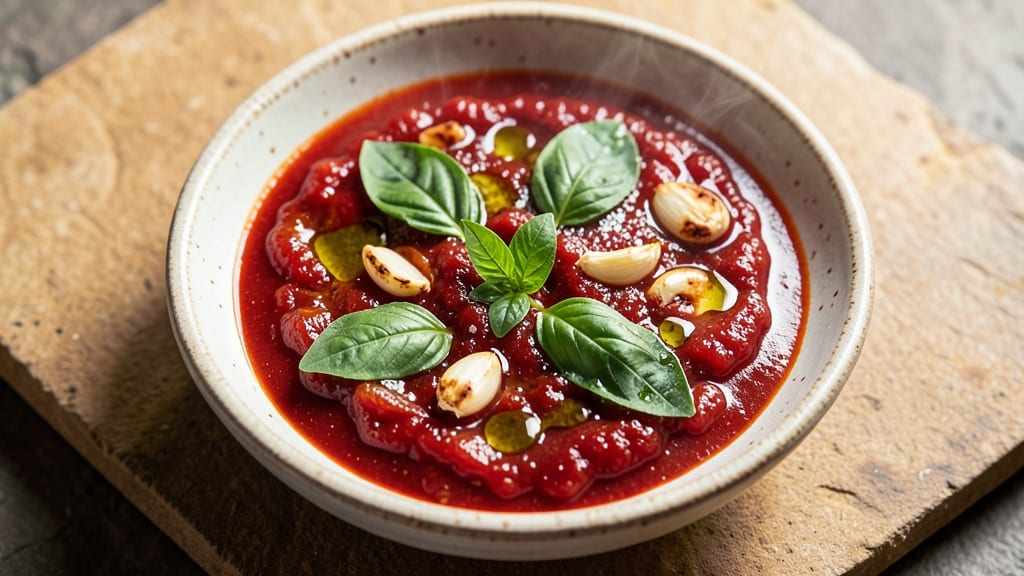
This artisan pizza sauce recipe delivers restaurant-quality flavor without hours of simmering—just fresh tomatoes, vibrant herbs, and a simple technique that transforms ordinary sauce into something extraordinary. The secret lies in balancing acidity and sweetness while preserving the natural brightness of the tomatoes, creating a sauce that's perfect for any pizza style. No cookdown means no waiting, just vibrant, flavorful sauce ready when you are.
What sets this sauce apart is the focus on fresh, high-quality ingredients and minimal processing. We'll use ripe tomatoes (or canned San Marzano for convenience), fresh basil, and a touch of garlic to build layers of flavor.
The sauce maintains its natural texture while delivering deep umami and herbal notes that elevate any pizza—whether it's classic New York, crispy Neapolitan, or loaded deep-dish.
By the time you're done, you'll have a sauce that's rich, aromatic, and perfectly balanced—sweet enough to please, tangy enough to brighten, and herby enough to make every bite sing.
The best part? It keeps beautifully in the fridge for up to a week, so you can make a big batch and enjoy homemade pizza night after night.
This recipe also includes variations for white pizza sauce, spicy versions, and even a vegan adaptation, ensuring everyone at the table gets to enjoy the magic. Let's get started on creating sauce that tastes like it came from a pizzeria kitchen.
Ingredients for artisan pizza sauce
Fresh tomatoes, vibrant herbs, and a few pantry staples—this sauce is all about bright, balanced flavor.
| Ingredient | Amount | Notes |
|---|---|---|
| Fresh Roma Tomatoes 🍅 | 2 ½ lbs | Ripe, firm, and vibrant red |
| Fresh Basil Leaves 🌿 | 1 ½ cups | Packed, stems removed |
| Garlic Cloves 🧄 | 4 cloves | Fresh, peeled, and minced |
| Extra-Virgin Olive Oil 🫒 | ½ cup | High-quality, fruity variety |
| Red Wine Vinegar 🍷 | 2 tbsp | For brightness and acidity |
| Granulated Sugar 🍚 | 1 tbsp | Balances acidity naturally |
| Salt 🧂 | 1 ½ tsp | Diamond Crystal kosher preferred |
| Black Pepper 🌶️ | ½ tsp | Freshly ground for warmth |
| Dried Oregano 🌿 | 1 tsp | Mexican oregano if available |
| San Marzano Tomato Paste 🍅 | 1 tbsp | For concentrated flavor |
The tomatoes are the heart of this sauce, so pick the ripest, firmest Roma tomatoes you can find. Trader Joe's or your local farmers market usually have the best selection. If fresh tomatoes aren't available, San Marzano canned tomatoes are the next best thing—they're sweeter and less acidic than regular canned tomatoes. For the basil, fresh is non-negotiable here. Giant-Eagle or Whole Foods often have the freshest bunches, but any bright green basil will work. The garlic should smell pungent and fresh—no musty cloves allowed.
No fresh basil? Dried basil at one-third the amount works in a pinch, but it won't have the same vibrant flavor. Short on tomatoes? Canned crushed tomatoes (San Marzano if possible) will give you similar texture. The red wine vinegar is key for that bright, tangy note—substitute with balsamic vinegar if needed, but it'll be slightly sweeter. Want to skip the sugar? Ripe tomatoes naturally sweeten as they cook, so just taste as you go. For a spicier kick, add a pinch of red pepper flakes or a dash of hot sauce.
This sauce keeps beautifully in the fridge for up to 1 week, though it tastes best within the first 3 days. Store it in an airtight container with a thin layer of olive oil on top to preserve freshness. For longer storage, freeze in ice cube trays—just thaw and stir when ready to use. The sauce thickens as it cools, so a splash of water or broth can help restore its consistency if needed. Leftovers make amazing bruschetta or pasta sauce too.
Why You'll Love This Recipe
- No-Chop Necessary: I just toss Roma tomatoes into boiling water for 30 seconds, peel them, and they’re ready—no knife skills required. The vinegar and olive oil do the work of breaking them down while you sip your coffee.
- Taste Like Sunday: That bright, briny vinegar cut through the sweetness of fresh tomatoes, while the garlic and basil sing when toasted just enough in the oil. It’s the kind of sauce you’ll drizzle on everything—not just pizza.
- Weeknight Magic: Make a double batch on Sunday, store it in the fridge, and grab it for quick weeknight dinners or last-minute guests. It’s my secret for stress-free meals when life gets loud.
- Pantry-Perfect Savings: Fresh tomatoes and basil might sound fancy, but they’re cheaper than jars of sauce—and this recipe stretches to feed four with leftovers that taste better the next day. Budget-friendly and restaurant-quality? Yes, please.
Step-by-step instructions for artisan pizza sauce
Here's how to create a vibrant, balanced pizza sauce that skips the long cookdown.
Prep and Roast the Tomatoes
Preheat your oven to 450°F and line a baking sheet with parchment paper. Cut the 2.5 lbs fresh Roma tomatoes in half lengthwise, removing the cores. Place them cut-side down on the prepared sheet, leaving a little space between each tomato. This arrangement allows them to roast evenly and develop concentrated flavor.
Roast for 20-25 minutes until the tomatoes are blistered and their edges start to brown. You'll see the juices pooling beneath them—this is perfect. The high heat caramelizes the natural sugars, creating a deeper, more complex tomato flavor without needing to simmer for hours. Let them cool slightly before handling.
Blend the Roasted Tomatoes
Transfer the roasted tomatoes to a food processor or high-powered blender. Add the 1.5 cups fresh basil leaves, 4 cloves garlic cloves, 1 tbsp granulated sugar, 1.5 tsp salt, and 0.5 tsp black pepper. Pulse or blend until completely smooth, scraping down the sides as needed. You want a silky, velvety texture with no chunks remaining.
Here's the thing—this blend should be vibrant red with a rich aroma. If it looks too thick, add 1-2 tablespoons of water to help it reach a pourable consistency. The sugar balances the acidity from the tomatoes, while the basil adds that fresh, aromatic brightness that makes this sauce special.
Cook the Sauce Base
Heat the 0.5 cup extra-virgin olive oil in a medium saucepan over medium heat. Add the 1 tbsp San Marzano tomato paste and stir continuously for 2-3 minutes until it darkens slightly and releases its deep, concentrated flavor. This step builds a rich foundation for your sauce.
Pour in the blended tomato mixture and stir in the 2 tbsp red wine vinegar and 1 tsp dried oregano. Bring the sauce to a gentle simmer, then reduce the heat to low. Let it cook uncovered for 10-12 minutes, stirring occasionally, until it thickens slightly but remains smooth and glossy. You're aiming for a consistency that coats the back of a spoon but isn't gluey.
Finish and Adjust
Taste the sauce and adjust the seasoning if needed. You might want to add a pinch more salt or a splash of red wine vinegar for brightness. The sauce should be tangy, sweet, and herby with a perfect balance—no single flavor should overpower the others. If it's too thick after cooking, thin it with a little water or pasta water to reach your desired consistency.
Let the sauce cool to room temperature before using it on your pizza. This resting period allows the flavors to meld even further. You'll have enough sauce to generously cover a 12-inch pizza, with a little left over for dipping or topping other dishes. Store any leftovers in an airtight container in the refrigerator for up to 5 days.
Pro Tips For Making Artisan Pizza Sauce
- CHAR THE TOMATOES: Cut those Roma tomatoes in half and place them cut-side down in a dry, screaming-hot skillet for 3–4 minutes. The edges should blacken just slightly—this caramelizes the sugars and deepens the flavor more than any slow simmer ever will. (Yes, even if you’re impatient like me, resist the urge to rush this.)
- SALT THE GARLIC: Toss your minced garlic cloves in a pinch of salt before cooking—it mellows out the sharpness and prevents burning. I learned this the hard way after one batch turned bitter; now I do it without thinking.
- STRAIN THE BASIL: After blending the basil, strain the sauce through a fine-mesh sieve to remove any fibrous bits. It’s a tiny effort that makes the texture silky, not chunky—trust me, your pizza will taste smoother for it.
- FINISH WITH VINEGAR LAST: Add the red wine vinegar right at the end, just before serving, to brighten the sauce without letting it turn sour. I used to mix it in early, and the flavor would fade into the background—now I treat it like a final seasoning.
Essential equipment for this dish
High-Quality Blender
For a silky-smooth sauce, I swear by a high-powered blender like the Ninja BN601 or Vitamix 5200. These workhorses handle the roasted tomatoes and basil leaves effortlessly, creating that velvety texture without watery separation.
If you're on a budget, the Cuisinart DBC-30 is a solid mid-range option that still delivers professional results. Avoid cheap blenders—they struggle with fibrous ingredients like tomatoes and leave chunks behind. 💫
Heavy-Bottomed Saucepan
A stainless steel saucepan with a thick base (like the All-Clad Stainless or Calphalon) is essential for even heating and preventing scorching. The sauce needs gentle, controlled cooking to develop flavor without burning.
I use my 1.5-quart saucepan for this recipe—it gives enough room for stirring while maintaining precise temperature control. Cast iron works too, but it can overheat easily if left unattended.
Baking Sheet & Parchment
Roasting tomatoes on a rimmed baking sheet lined with parchment paper ensures even browning and easy cleanup. I prefer half-sheet pans (18x13 inches) for this recipe—they fit perfectly in most home ovens. If you don’t have parchment, a lightly oiled sheet works, but the tomatoes might stick slightly.
Pro tip: Poke holes in the parchment with a fork to let excess moisture escape while roasting. 🔥
Wooden Spoon & Ladle
Use a wooden spoon (I love Oxo Good Grips) for stirring the sauce—it won’t scratch your pan like metal utensils. A heatproof silicone spatula is another great alternative.
For tasting and adjusting, a small ladle (like the Ozeri Touch) makes it easy to scoop sauce without spills. Avoid plastic—it can melt or warp under high heat.
Measuring Tools
Precision matters in sauce-making! Invest in a stainless steel measuring spoons set (like OXO Good Grips) for accurate vinegar, sugar, and spice measurements. A digital kitchen scale (such as the Escali Primo) is optional but helpful for weighing tomatoes if you prefer grams.
For liquids, a clear glass measuring cup (like Pyrex) lets you see the sauce’s consistency clearly. Never eyeball measurements—this sauce relies on balance.
Nutrition facts
Frequently asked questions
Can I substitute canned tomatoes for fresh in this artisan pizza sauce?
Yes, but choose San Marzano canned tomatoes for the best results—they're sweeter and less acidic than regular brands. For freshness, use 2 (28 oz) cans crushed tomatoes instead of roasting. Simmer them for 5 minutes first to soften, then blend with the other ingredients. The sauce will be slightly less caramelized but still vibrant and flavorful.
Why does the recipe call for roasting tomatoes instead of just cooking them?
Roasting intensifies the tomatoes' natural sweetness and deepens their flavor through caramelization—no long simmering required! The high heat breaks down the cell walls, creating a concentrated, jammy texture that's perfect for pizza. This method also removes excess water, resulting in a sauce that's naturally thicker and more flavorful with minimal effort.
How do I adjust this sauce for a white pizza base?
For a white pizza sauce, replace the tomatoes with 1/2 cup heavy cream or Greek yogurt, 1/4 cup grated Parmesan, 2 tbsp olive oil, and 1 tbsp lemon juice. Blend until smooth, then simmer for 5 minutes to thicken. Season with salt, pepper, and a pinch of nutmeg. This version pairs beautifully with mozzarella and prosciutto.
What's the best way to store leftover pizza sauce?
Store in an airtight container in the fridge for up to 5 days, with a thin layer of olive oil on top to preserve freshness. For longer storage, freeze in ice cube trays—thaw overnight in the fridge. The sauce thickens as it cools, so add a splash of water or broth when reheating. Never freeze with metal utensils, as they can rust.
Can I make this sauce spicier?
Add 1/2 tsp red pepper flakes or 1 tsp hot sauce during blending, or stir in 1-2 tbsp minced jalapeño with the fresh basil. For extra heat, finish with a sprinkle of cayenne or a dash of ghost pepper flakes. Adjust to taste—this sauce works great on spicy Neapolitan-style pizzas or as a dipping sauce for wings.