
Sauces & Condiments
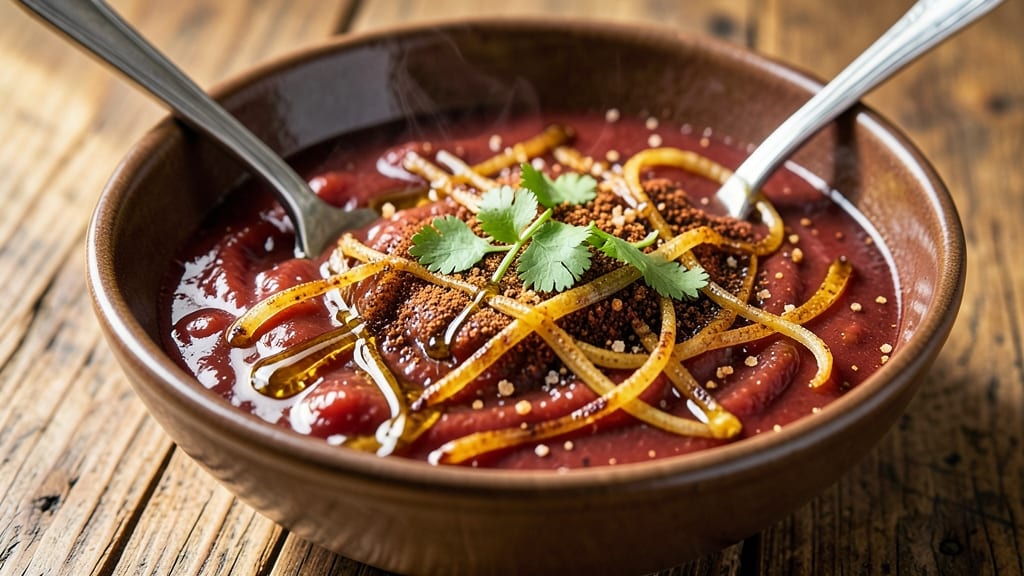
This ancho chile BBQ sauce delivers deep smoky heat that transforms grilled meats, roasted vegetables, and dips into something extraordinary. 🔥 After years of perfecting my smoky rubs, I developed this sauce to capture that same rich, complex flavor profile in liquid form—where the roasted tomato base meets the earthy intensity of ancho chile powder.
The result is a sauce that's equally at home on ribs, brisket, or as a bold dip for chips.
The foundation starts with roasted tomatoes and onions, which build a sweet, caramelized base before blending with ancho chile powder, smoked paprika, and a touch of brown sugar for balance. I use apple cider vinegar to brighten the sauce while maintaining that signature smoky depth.
The key is simmering it low and slow, allowing all those flavors to meld together into something cohesive and irresistible.
What you'll end up with is a sauce that's rich, smoky, and subtly sweet—perfect for basting meats, glazing vegetables, or serving as a bold condiment. The ancho chile adds a deep, earthy heat that lingers, while the roasted tomato base keeps it from being too overwhelming.
This sauce is the kind that turns ordinary dishes into something special, every time.
Once you try it, you'll want to make a big batch—it keeps well in the fridge for up to two weeks and freezes beautifully. Let's get started on creating this versatile, restaurant-quality sauce that will elevate your cooking.
Ingredients for ancho chile bbq sauce
Nine ingredients, endless smoky flavor. This sauce transforms grilled meats and veggies into something extraordinary.
| Ingredient | Amount | Notes |
|---|---|---|
| Roma Tomatoes 🍅 | 4 whole | Halved, seeds removed |
| Yellow Onion 🧅 | 1 whole | Quartered, skin on |
| Ancho Chile Powder 🌶️ | 3 tbsp | High-quality, not pre-mixed |
| Smoked Paprika 🌶️ | 2 tbsp | For extra smokiness |
| Brown Sugar 🍯 | 2 tbsp | Light or dark variety |
| Apple Cider Vinegar 🍏 | ½ cup | For tangy brightness |
| Extra-Virgin Olive Oil 🫒 | ¼ cup | For richness |
| Garlic Cloves 🧄 | 4 cloves | Peeled, roughly chopped |
| Ground Cumin 🌿 | 1 tsp | Toasted for depth |
| Salt 🧂 | 1 ½ tsp | Kosher or sea salt |
The ancho chile powder is the heart of this sauce—look for brands like La Costeña or Gourmet Mexicain for the most authentic flavor. Trader Joe's often carries a good quality, but if you can find dried ancho chiles, toast them first for extra depth. The Roma tomatoes? Heirloom or vine-ripened if you can get them—they're sweeter and caramelize better. I usually hit the farmers market for these, but grocery store Roma tomatoes work just fine. The onions? Yellow or red both work, but yellow has a slightly sweeter flavor that pairs well with the smokiness.
No ancho chile powder? Substitute 1 tbsp chipotle powder plus 1 tsp smoked paprika—it won't be identical, but close. Running low on brown sugar? Maple syrup or agave works in a pinch (use half the amount). The apple cider vinegar can be swapped for red wine vinegar or balsamic, but apple cider gives that perfect tang. For the olive oil, avocado oil is a great alternative if you prefer a neutral flavor. The garlic can be roasted (wrap in foil with the tomatoes and onions) for a sweeter, deeper taste—worth the extra minute if you're feeling fancy.
This sauce tastes even better the next day as the flavors meld. Keeps in the fridge for 2 weeks sealed in a jar, or 6 months frozen. I like to make a big batch—it's perfect for meal prep. For freezing, portion into ice cube trays and pop out as needed. The sauce thickens when cooled, so add a splash of water or vinegar if it gets too thick when reheating. Trust me, you'll want to make extra—this stuff disappears fast!
Why You'll Love This Recipe
- Pantry Magic: I’ll bet you’ve got every single ingredient already—no special shopping trips needed. That smoky ancho powder and brown sugar? They’re the secret handshake that turns a basic tomato base into something ridiculously good.
- Smoky-Sweet Fix: The combo of charred tomatoes, sweet onion, and that deep ancho heat is my go-to for anything grilled. It’s got this perfect balance—sweet enough to please the kids, smoky enough to make me reach for seconds.
- Weeknight Hero: This sauce is my lazy-day champion: slather it on chicken thighs for dinner, toss it with roasted potatoes for lunch, or even drizzle it over avocado toast when I’m not feeling fancy. Honestly, it’s the only sauce I keep in the fridge.
- Budget Stretch: A single batch feeds my family for days—leftovers taste just as good reheated as they do fresh. Plus, ancho chile powder is cheap and lasts forever, so I’m always stocked without breaking the bank. (Yes, even on a Tuesday night.)
Step-by-step instructions for ancho chile BBQ sauce
Let's build this smoky, tangy sauce that'll transform your grilled meats.
🔥 Step 1: Roast the Tomatoes and Onion
Preheat your oven to 425°F and line a baking sheet with parchment paper. Arrange the halved Roma tomatoes and quartered yellow onion (skin on) cut-side up on the sheet. Drizzle with 1 tablespoon of the extra-virgin olive oil and sprinkle with ½ teaspoon of the salt.
Roast for 25-30 minutes until the tomatoes collapse and the onion edges turn golden brown. You'll smell that sweet, caramelized aroma—this is the flavor foundation. If the tomatoes aren't soft enough, roast another 5 minutes. Let them cool slightly before handling.
🍳 Step 2: Char the Garlic and Toast the Spices
While the vegetables roast, heat a dry skillet over medium heat. Add the 4 cloves garlic cloves and cook for 1-2 minutes until fragrant and just beginning to turn golden. Watch closely—they burn quickly! Remove and set aside.
In the same skillet, add the 3 tbsp ancho chile powder, 2 tbsp smoked paprika, and 1 tsp ground cumin. Toast for 30 seconds, stirring constantly, until the spices release their aroma. This step deepens their flavor—don't skip it! Transfer the spices to a bowl to cool.
🥘 Step 3: Blend the Roasted Base
Transfer the roasted tomatoes and onion to a blender or food processor. Add the toasted spices, charred garlic, 2 tbsp brown sugar, and remaining 1 teaspoon salt. Pulse until combined, then add 0.5 cup apple cider vinegar and 0.25 cup extra-virgin olive oil.
Blend until completely smooth, scraping down the sides as needed. Taste and adjust seasoning—you might want to add another ½ teaspoon salt or 1 teaspoon brown sugar to balance the flavors. The sauce should be thick but pourable, with a deep red color and rich aroma.
⏰ Step 4: Simmer for Depth of Flavor
Pour the sauce into a saucepan and bring to a gentle simmer over medium-low heat. Let it cook uncovered for 15-20 minutes, stirring occasionally, until it thickens slightly and the raw flavors mellow. You're looking for a sauce that coats the back of a spoon with a glossy finish.
Here's where the magic happens: the acidity of the vinegar brightens, the spices meld, and the sweetness balances the heat. If it gets too thick, whisk in 1-2 tablespoons water to reach your desired consistency. Let it cool completely before using—this allows the flavors to fully develop.
Pro Tips For Making Ancho Chile Bbq Sauce
- Char the Onions Properly: I learned this the hard way—sautéing onions until they’re just soft and translucent won’t cut it. You need deep golden-brown spots, almost caramelized edges, to balance the smoky depth of the ancho. Use medium-high heat and resist stirring constantly; let them sit and develop those spots for 5-7 minutes, even if it looks messy.
- Toast the Dried Chilies: Skip the store-bought pre-ground ancho powder if you can—whole dried chilies add complexity. Lightly toast them in a dry skillet for 30 seconds per side until fragrant (not burnt). Then, soak in hot water for 10 minutes before blending. This step makes the sauce richer and smoother, not just dusty.
- Simmer Low and Slow: After blending the tomatoes, onions, and chilies, reduce heat to a gentle simmer. A fast boil can turn the sauce bitter or separate it. Let it cook uncovered for 20-25 minutes—this thickens it naturally and lets the flavors meld. Stir occasionally, but don’t obsess; just let it work.
- Balance the Sweet Early: Brown sugar can clump or make the sauce taste one-note if added too late. Mix it into the raw sauce before simmering, and taste after 10 minutes. If it’s too sweet, add a splash of apple cider vinegar or a pinch of salt to cut through it. Adjusting early saves you from overcorrecting later.
Perfect pairings for this recipe
Meat Glazing Magic
This sauce is a game-changer for grilled meats—especially pork ribs, brisket, or chicken thighs. Brush it on during the last 10-15 minutes of cooking to create a glossy, caramelized crust.
For ribs, I like to apply it after the fall-off-the-bone stage and broil for 2-3 minutes to intensify the flavor. The ancho chile's earthy heat pairs perfectly with the smoky richness of slow-cooked meats. 🔥
Veggie Roasting Boost
Toss portobello mushrooms, sweet potatoes, or Brussels sprouts in 1 tablespoon olive oil and 1 tablespoon sauce before roasting. The smoky-sweet glaze caramelizes beautifully, adding depth to vegetables. For extra flavor, sprinkle with feta cheese or crumbled cotija after roasting.
I love using this sauce on grilled corn on the cob too—just brush it on and sprinkle with chili powder.
Dip Perfection
Serve this sauce as a bold dip with tortilla chips, plantain chips, or even crispy tostadas. The smoky-sweet balance makes it irresistible. For a creamy twist, mix ¼ cup sour cream or Greek yogurt into ½ cup sauce to create a smoky ranch-style dip.
I also love pairing it with queso fresco and pickled red onions for a fiesta-style platter. 🌶️
Breakfast Upgrade
Use this sauce to elevate breakfast dishes like scrambled eggs, huevos rancheros, or breakfast tacos. Drizzle it over eggs or use it as a marinade for chorizo before cooking. The ancho chile adds a deep, smoky warmth that wakes up your taste buds.
For a quick breakfast, spread it on toasted brioche with a fried egg—trust me, it's a crowd-pleaser. 💛
Drink Pairings
Pair this rich, smoky sauce with drinks that complement its depth. A Mexican lager like Modelo Especial or Pacifico cuts through the heat beautifully. For something bolder, try a smoky mezcal cocktail with orange juice and lime.
If you prefer wine, a Malbec or Syrah brings out the sauce's complexity. I also love sipping on iced hibiscus tea to refresh my palate between bites. 🍺
Nutrition facts
Frequently asked questions
Can I substitute ancho chile powder with other dried chilies?
While ancho chiles are ideal, you can use 3 tbsp guajillo or pasilla chile powder for a similar earthy flavor. For extra heat, add ½ tsp cayenne pepper. Toast the powder first to deepen the flavor—this step is crucial for any chile substitute.
How do I adjust the heat level in this sauce?
For milder heat, reduce the ancho chile powder to 2 tbsp and add ½ tsp cinnamon for warmth. For extra kick, increase to 4 tbsp ancho powder and add ½ tsp chipotle powder. Always taste as you go—this sauce builds flavor beautifully!
Can I make this sauce without roasting the tomatoes?
Yes, but the flavor will be less complex. If skipping roasting, sauté 1 diced onion and 4 halved tomatoes in olive oil for 10 minutes until softened. This adds depth, though roasting creates that signature caramelized sweetness. Don't skip the garlic charring—it's essential!
How should I store and reheat this sauce?
Store in an airtight container in the fridge for 2 weeks or freeze for 6 months. To reheat, warm gently on low heat with 1 tbsp water to loosen thickness. Never microwave directly—it can break the sauce's emulsified texture. Stir constantly for best results!
What's the best way to use this sauce on chicken?
Marinate chicken thighs in ½ cup sauce for 2-4 hours before grilling. For wings, brush on during the last 8 minutes of baking at 400°F to create a sticky glaze. The sauce works best on bone-in cuts where it can cling and caramelize beautifully.