
Sauces & Condiments
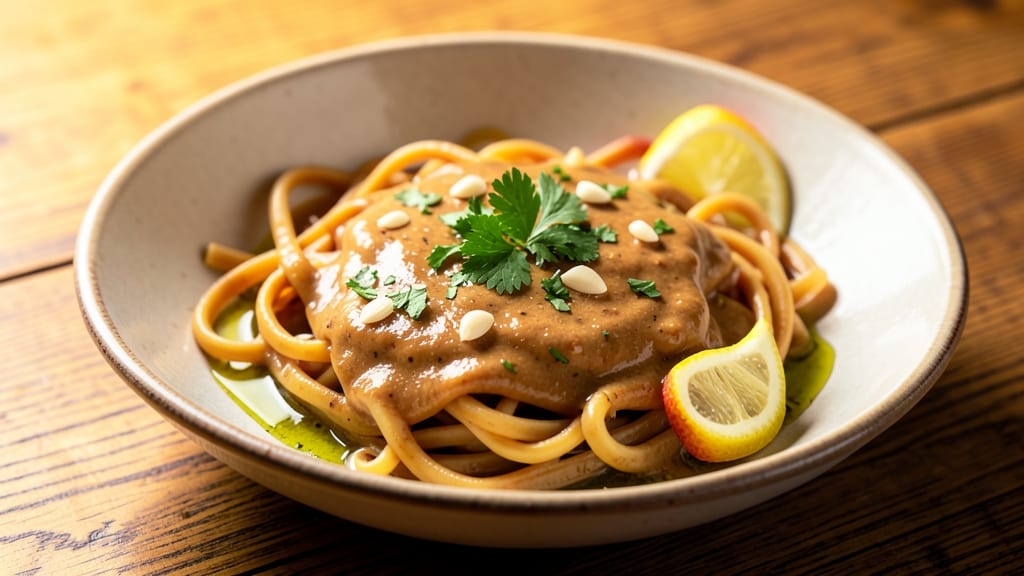
This almond pasta sauce recipe transforms simple ingredients into a velvety, nutty sauce that clings to every strand of fettuccine—no cooking required beyond a quick simmer. The secret lies in blending almond butter with warm broth and herbs, creating a rich, dairy-free base that's surprisingly versatile.
I developed this sauce after craving creamy pasta without the heaviness of traditional béchamel, and it quickly became a staple in my kitchen for both weeknight dinners and special occasions.
The beauty of this sauce is its simplicity: just six core ingredients come together in minutes to create a flavor profile that's both elegant and approachable. Almond butter provides the creamy foundation, while garlic, lemon juice, and fresh herbs add depth and brightness.
A quick simmer with broth ensures the sauce is smooth and cohesive, ready to coat pasta perfectly. It's vegetarian-friendly by design, though you can easily adapt it to be dairy-free with a splash of coconut milk if needed.
What makes this sauce truly special is its adaptability—it works as a standalone sauce for fettuccine, tosses beautifully with roasted vegetables, or even elevates grilled chicken or fish. The nutty richness pairs well with earthy flavors like mushrooms or spinach, making it a go-to for any meal.
Once you taste how effortlessly it transforms a simple pasta dish, you'll never reach for jarred sauce again.
Ready in just 15 minutes, this sauce delivers restaurant-quality results without the fuss. The blend of almond butter and herbs creates a complex flavor that's both comforting and sophisticated, proving that creamy pasta doesn't require dairy or hours of prep. Let's make it—your taste buds will thank you.
Ingredients for almond pasta sauce
Six simple ingredients transform into a velvety almond sauce that clings to pasta like magic.
| Ingredient | Amount | Notes |
|---|---|---|
| Almond Butter 🥜 | ½ cup | Natural, unsweetened preferred |
| Vegetable Broth 💧 | 1 ½ cups | Low-sodium preferred |
| Fresh Garlic Cloves 🧄 | 3 cloves | Minced for maximum flavor |
| Fresh Lemon Juice 🍋 | 1 tbsp | Freshly squeezed |
| Fresh Parsley Leaves 🌿 | ¼ cup | Chopped, loosely packed |
| Extra-Virgin Olive Oil 🫒 | ¼ cup | For richness and balance |
| Salt 🧂 | ½ tsp | Kosher or sea salt |
| Black Pepper 🌶️ | ¼ tsp | Freshly ground preferred |
| Coconut Milk 🥥 | ¼ cup | Optional, for extra creaminess |
Almond butter is the star here—Trader Joe's or store-brand natural works perfectly, but avoid sweetened varieties. The garlic should be fresh (no pre-minced jars), and I always grab extra since it makes such a difference. For the parsley, farmers market bunches stay fresh longer than grocery store containers. If you're in a pinch, dried parsley works at half the amount, but fresh is ideal. The olive oil adds richness, so pick something fruity and high-quality—none of that cheap cooking oil stuff.
No almond butter? Cashew butter works in a pinch, though the flavor will be slightly sweeter. Short on parsley? Basil or cilantro add a different but still delicious twist. The coconut milk is optional but worth it for extra creaminess—full-fat canned coconut milk gives the best texture. Want to make it even smoother? Blend the sauce for 10 seconds after simmering. The broth is non-negotiable for depth, but if you're out, water plus a pinch of bouillon gets you close.
This sauce keeps beautifully—5 days in the fridge sealed in a jar. For longer storage, freeze portions in ice cube trays, then transfer to a bag. Reheat gently on the stove, stirring often, and add a splash of water if it thickens too much. I always make extra because it disappears fast—perfect for pasta, roasted veggies, or even as a dip for bread. The flavor actually improves after a day as everything melds together.
Why You'll Love This Recipe
- No-Fuss Pantry Magic: I swear by this sauce when I’ve got nothing but almond butter and broth staring back at me. The lemon brightens it up so fast—no fancy ingredients needed.
- Creamy Without Dairy: That almond butter makes it rich and velvety, but the garlic and parsley cut through it just enough. It’s the kind of sauce that feels indulgent but won’t weigh you down.
- Weeknight Meal Prep: Double the batch and store it for up to five days. Toss it with pasta, stir-fry veggies, or even drizzle it over roasted chicken—it’s my go-to for busy evenings.
- Budget-Friendly Luxury: Honestly, this costs me pennies but tastes like a restaurant dish. The almond butter stretches far, and the broth keeps it hearty without breaking the bank.
Step-by-step instructions for almond pasta sauce
This creamy almond sauce comes together in minutes with no cooking required.
Warm the Almond Butter and Broth
In a medium saucepan, combine the 0.5 cup almond butter and 1.5 cups vegetable broth over medium-low heat. Stir gently with a silicone spatula until the mixture reaches a smooth, creamy consistency—this should take about 3-4 minutes. You'll know it's ready when the sauce looks silky and any graininess from the almond butter has fully dissolved.
Here's the thing—don't rush this step. If you heat it too quickly, the almond butter can separate. Keep the heat low and stir frequently. The sauce should be warm to the touch but not hot enough to burn your fingers. This base is the foundation of your sauce, so getting it smooth now prevents any gritty texture later.
Add Garlic and Olive Oil
Remove the saucepan from heat and let it cool slightly for 1-2 minutes. Then stir in the 3 cloves minced fresh garlic cloves and 0.25 cup extra-virgin olive oil. The garlic should infuse immediately, releasing its aromatic oils into the warm mixture. You'll notice the sauce becomes even richer and more velvety in texture.
This is where the magic happens. The olive oil adds depth and balance to the nutty almond flavor, while the garlic brings a bright, savory punch. If you're using a high-quality almond butter, you might even detect subtle caramelized notes from the garlic. Let the mixture sit for 30 seconds to allow the flavors to meld before moving to the next step.
Finish with Lemon and Seasonings
Return the saucepan to low heat and stir in the 1 tbsp fresh lemon juice, 0.5 tsp salt, and 0.25 tsp black pepper. The lemon juice will brighten the flavors and cut through the richness of the almond butter. Taste the sauce and adjust the seasoning if needed—you want a balance of nutty, tangy, and savory notes.
If you're using the 0.25 cup coconut milk, add it now and stir until fully incorporated. The coconut milk adds a luxurious creaminess without overpowering the almond flavor. Keep the heat at low to prevent the sauce from curdling. The sauce should be thick enough to coat the back of a spoon but still pourable.
Blend and Garnish
Transfer the sauce to a blender or food processor and blend until completely smooth. If the sauce is too thick to blend easily, add 1-2 tablespoons of warm water and blend again. The result should be a velvety, creamy sauce with no lumps. Pour the sauce back into the saucepan and stir in the 0.25 cup chopped fresh parsley leaves for a fresh, herbaceous finish.
Here's a pro tip: If you plan to serve the sauce immediately, keep it warm over low heat with a splash of water to maintain its consistency. For best results, serve the sauce over cooked pasta while it's still warm, as the sauce will thicken slightly as it cools. The parsley not only adds color but also a bright, fresh contrast to the rich almond base.
Pro Tips For Making Almond Pasta Sauce
- Warm the Almond Butter: Cold almond butter clumps like a stubborn guest at a dinner party—no one wants that. Whisk it into the warm broth first, then add the lemon juice and garlic. The heat melts it smoothly, and you’ll avoid that grainy texture that ruins the whole dish.
- Toast the Garlic Right: Sauté those garlic cloves in olive oil until they’re golden, not burnt—just a few minutes until they smell like a forest after rain. Overcooking turns them bitter, and no one wants a sauce that tastes like charred regret.
- Balance the Lemon Last: Add the lemon juice after the almond butter and broth have thickened slightly. Taste as you go—too much too soon, and you’ll need extra almond butter to fix it. Think of it like seasoning: better to adjust gradually.
- Blend the Parsley Roughly: Pulse the parsley in a blender or food processor for 2-3 seconds—just enough to chop it finely, not turn it into paste. Whole leaves add texture, but tiny bits make the sauce sing without overpowering the almond flavor. (Yes, I’ve made that mistake.)
Essential equipment for perfect results
Saucepan Essentials
Start with a medium-sized stainless steel saucepan—I love my All-Clad—because it distributes heat evenly and prevents scorching. A silicone spatula (like OXO Good Grips) is a game-changer for stirring the almond butter without scratching the pan.
Avoid nonstick pans here; they can't handle the low-and-slow simmering needed to fully emulsify the almond butter. 🔥
Blender for Smoothness
A high-speed blender (I use Ninja) or immersion blender is key for achieving that ultra-smooth texture. If you don’t have one, a food processor works too—just pulse until completely silky.
For extra creaminess, add 1-2 tablespoons of warm water if the sauce is too thick to blend. The goal is a velvety consistency that clings perfectly to pasta. ✨
Measuring Tools
Precision matters here—use a liquid measuring cup for the broth and olive oil, and a small kitchen scale (or measuring spoons) for the almond butter. I swear by OXO’s stainless steel measuring spoons because they’re durable and accurate.
For garlic, a microplane is faster than mincing by hand, but fresh minced garlic still wins for flavor. 🧄
Optional: Immersion Blender
If you’re blending directly in the saucepan, an immersion blender (like Hamilton Beach) saves cleanup. Just submerge it fully and blend for 10-15 seconds until smooth. This method keeps everything in one pot, which I love for easy transfers.
The only downside? It can’t handle thicker sauces as well as a standalone blender. 💡
Storage Containers
For leftovers, transfer the sauce to glass jars (like Ball Mason jars) with airtight lids. They’re microwave-safe and won’t absorb odors like plastic. Label them with the date—this sauce keeps for 5 days in the fridge or 3 months in the freezer.
For freezing, use silicone ice cube trays for portion control, then transfer to a freezer bag. 🧊
Nutrition facts
Frequently asked questions
Can I make this almond pasta sauce without a blender?
Yes! If you don't have a blender, simply whisk the warm almond butter and broth mixture vigorously for 2-3 minutes until smooth. For extra creaminess, mash the ingredients with a potato masher or immersion blender (if available). The texture will be slightly thicker but still delicious.
How does this sauce compare to traditional cream-based pasta sauces?
This almond version is lighter, dairy-free, and packed with plant-based protein while still delivering rich, velvety texture. Unlike heavy cream sauces, it won't weigh you down—perfect for warm weather or those watching their fat intake. The nutty depth actually enhances the pasta's flavor rather than masking it.
What's the best pasta shape to use with this sauce?
Ribbon-shaped pastas like fettuccine, tagliatelle, or pappardelle work best—the sauce clings beautifully to their flat surfaces. For extra texture, try penne or farfalle, but avoid small shapes like orzo where the sauce might get lost.
Can I make this sauce ahead of time?
This sauce actually tastes better after resting for 1-2 hours as flavors meld together. Store in an airtight container in the fridge for up to 5 days or freeze for 3 months. Reheat gently on low heat, adding a splash of water if needed to restore creaminess. The texture thickens slightly when cold, so warm it before serving.
What if my sauce separates after blending?
This happens if heated too quickly or blended improperly. Fix it by placing the saucepan over low heat and whisking continuously until smooth. For stubborn separation, add 1 tablespoon of warm water and blend again. The key is patience—always work on low heat and stir frequently during the initial warming step.