
Sauces & Condiments
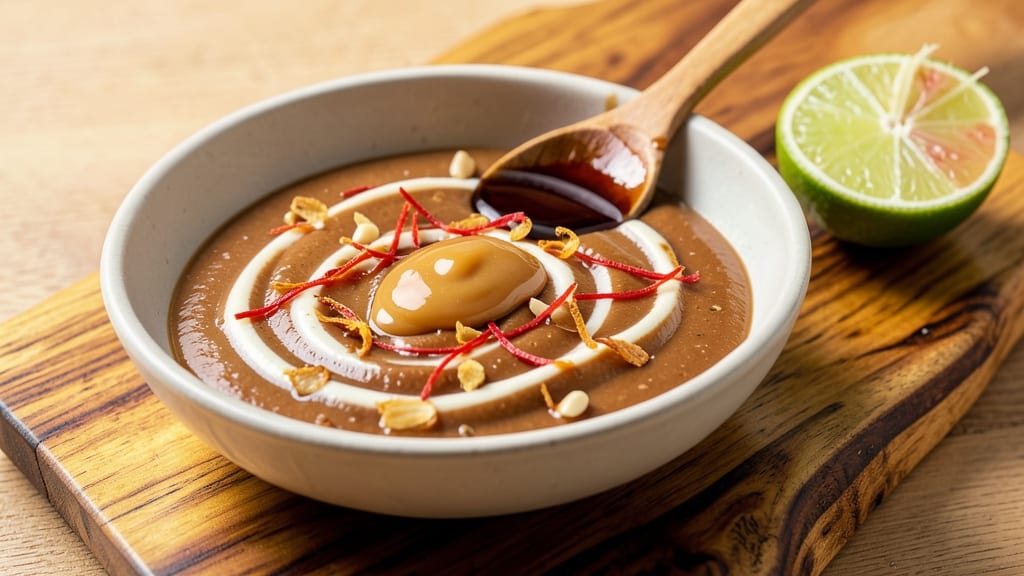
This almond butter satay sauce recipe transforms ordinary grilled meats into restaurant-worthy masterpieces with its rich, nutty-sweet balance. The secret lies in blending creamy almond butter with coconut milk, creating a velvety base that clings perfectly to every bite.
I developed this sauce after craving that signature satay flavor without the heaviness of traditional versions—it’s lighter, brighter, and packed with depth.
The beauty of this sauce is its versatility—it elevates grilled chicken, beef, or even tofu with minimal effort. A touch of tamari adds umami, while lime juice and garlic brighten the richness, ensuring each spoonful delivers a harmonious blend of sweet, savory, and tangy notes.
The sauce thickens naturally as it cools, making it ideal for dipping or drizzling over finished dishes.
What sets this recipe apart is its foolproof technique: no complicated reductions or emulsions required. Simply whisk together the ingredients, simmer until fragrant, and let the flavors meld.
The result is a glossy, aromatic sauce that transforms simple proteins into something extraordinary. It’s the kind of condiment that turns weeknight dinners into memorable meals.
Store any leftovers in an airtight container in the refrigerator for up to 5 days, or freeze for longer shelf life. Pair it with grilled skewers, roasted vegetables, or even as a dipping sauce for spring rolls. Let’s make this sauce—your taste buds will thank you.
Ingredients for almond butter satay sauce
Nine ingredients transform simple grilled proteins into restaurant-quality masterpieces with nutty depth and vibrant balance.
| Ingredient | Amount | Notes |
|---|---|---|
| Creamy Almond Butter 🥜 | ½ cup | Natural, unsweetened preferred |
| Full-Fat Coconut Milk 🥥 | 13 ½ oz | Canned, well-shaken |
| Tamari 🥢 | 2 tbsp | Gluten-free soy sauce alternative |
| Lime Juice 🍋 | 2 tbsp | Freshly squeezed |
| Garlic Cloves 🧄 | 3 cloves | Minced, not powdered |
| Ginger Root 🌿 | 1 tbsp | Freshly grated |
| Maple Syrup 🍁 | 1 ½ tbsp | Pure, grade B preferred |
| Red Chili Flakes 🌶️ | ½ tsp | Adjust for heat preference |
| Extra-Virgin Olive Oil 🫒 | 1 tbsp | For glossy finish |
| Sea Salt 🧂 | ½ tsp | Diamond Crystal preferred |
The almond butter and coconut milk form the sauce's velvety foundation. Store-brand almond butter works fine, but premium brands like Justin's or 88 Acres deliver richer flavor. For coconut milk, Aroy-D brand is my go-to—it's thicker and creamier than most, ensuring that signature satay texture. Fresh ginger and garlic are non-negotiable here; the difference between fresh and powdered is night and day. Whole Foods or Trader Joe's carry excellent quality for both. If you're using jarred ginger, make sure it's labeled 'fresh'—the canned stuff lacks the same punch.
No tamari? Regular soy sauce works in a pinch, though it'll lack the umami depth. Substituting maple syrup? Agave nectar at a 1:1 ratio keeps the sauce vegan while maintaining sweetness. Red chili flakes can be swapped for cayenne pepper at half the amount—just remember to taste as you go. The olive oil isn't just for flavor; it creates that glossy finish that makes the sauce look as good as it tastes. For extra richness, add 1 tsp coconut cream at the end, but don't skip the olive oil entirely—it's what makes this sauce truly shine.
This sauce thickens beautifully as it cools, making it perfect for dipping or drizzling. Store in an airtight container in the fridge for up to 5 days, though I rarely have leftovers that long. For longer storage, freeze in ice cube trays—3 months with no flavor degradation. The sauce reheats perfectly; just give it a quick whisk to restore that silky texture. If it separates slightly, stir in a splash of warm water or coconut milk to bring it back together. The flavor actually improves after resting, so plan ahead if you're making it for a dinner party.
Why You'll Love This Recipe
- Five-Ingredient Magic: I swear, this sauce comes together with fewer ingredients than my grocery list for coffee. Just blend, simmer, and—boom—rich, nutty depth from the almond butter and coconut milk, with that bright zing of lime cutting through the richness. No fancy techniques, no stress.
- Umami Bomb: That tamari and garlic combo? It’s the secret weapon. The tamari adds this deep, savory punch while keeping it gluten-free, and the garlic—when you toast those cloves first—releases a fragrance that makes the whole kitchen smell like a restaurant. The almond butter ties it all together with a velvety, slightly sweet contrast.
- Weeknight Superstar: I use this sauce on everything—grilled chicken, tofu skewers, even as a dip for veggies when I’m too tired to cook. It’s my go-to for meal prep because it keeps well in the fridge for a week, and the flavors only get better as it sits. Plus, it’s the kind of sauce that makes a simple weeknight dinner feel like a celebration.
- Budget-Friendly Luxury: Honestly, this is one of those recipes where the pantry staples do all the heavy lifting. Almond butter and coconut milk are affordable, and a little goes a long way. I’ve made this for date nights, potlucks, and lazy Sundays—no one ever guesses it’s this easy or this cheap. The lime juice is the only thing I splurge on, and it’s worth every penny.
Step-by-step instructions for almond butter satay sauce
This rich, nutty-sweet sauce delivers perfect balance every time—creamy yet tangy, with just the right heat kick.
Bloom the Aromatics in Olive Oil
Heat the 1 tablespoon extra-virgin olive oil in a medium saucepan over medium-low heat. Add the 3 cloves minced garlic and 1 tablespoon freshly grated ginger root, stirring constantly for 1-2 minutes until fragrant but not browned. The aroma should fill your kitchen—this is where the sauce's depth begins.
Watch the heat carefully—garlic burns in seconds, turning bitter. If the mixture starts to sizzle too aggressively, reduce to low heat immediately. Once the aromatics are fragrant, remove the pan from heat for now. We'll return to it in the next step, but this initial bloom prevents raw garlic flavor from overpowering the sauce later.
Combine Wet Ingredients and Simmer
Return the pan to medium heat and add the 0.5 cup creamy almond butter, stirring constantly until fully melted and smooth. The sauce will thicken slightly as the almond butter incorporates. Next, pour in the 13.5 oz full-fat coconut milk (be sure to shake the can well first) and the 2 tbsp tamari, stirring to combine.
Bring the mixture to a gentle simmer over medium-low heat, then reduce to the lowest setting that maintains a slow bubble. Let it cook uncovered for 10-12 minutes, stirring occasionally with a wooden spoon. You're looking for the sauce to thicken noticeably—it should coat the back of a spoon but still flow smoothly when stirred. This slow reduction develops the sauce's complex flavor profile.
Incorporate Sweet and Tangy Elements
Remove the sauce from heat and stir in the 2 tbsp freshly squeezed lime juice, 1.5 tbsp maple syrup, 0.5 tsp red chili flakes, and 0.5 tsp sea salt. Taste immediately—this is your quality checkpoint. The sauce should balance sweet, salty, tangy, and slightly spicy notes. If it needs more brightness, add another ½ tablespoon lime juice. For more depth, a pinch more salt or chili flakes works.
Real talk: The lime juice is critical here. It cuts through the richness of the almond butter and coconut milk, preventing the sauce from tasting heavy. If you skip this step, you'll end up with something cloyingly sweet. Let the sauce sit off heat for 5 minutes while you prepare your protein—this resting period allows all the flavors to meld completely.
Strain and Finish for Silky Texture
Line a fine-mesh strainer with cheesecloth or a coffee filter and set it over a clean bowl. Pour the sauce through, pressing gently with a spoon to extract all the liquid. This step removes any lingering ginger fibers or garlic bits, giving you an ultra-smooth satay sauce. The strained sauce should be glossy with a velvety consistency—this is what makes it perfect for drizzling over grilled meats.
Return the strained sauce to the saucepan and warm gently over low heat for 2-3 minutes to restore its temperature. If it thickens too much during straining, thin with 1-2 tablespoons hot water until you reach the perfect drizzling consistency. The sauce should be thick enough to coat the back of a spoon but still flow freely when poured.
Pro Tips For Making Almond Butter Satay Sauce
- STIR CONSTANTLY LOW: Low and slow wins here—simmer your sauce on medium-low, stirring every 30 seconds with a wooden spoon. I learned this the hard way when my first batch split into a greasy mess because I walked away. The almond butter’s oils separate if you’re not paying attention, and once it does, you’re fighting to fix it.
- TOAST THE GARLIC: Smash those garlic cloves flat with the side of your knife first, then pan-toast them in a dry skillet for 30 seconds until golden. This adds depth that raw garlic can’t match, and it prevents that bitter aftertaste that sneaks in when you just mince it. Trust me, your sauce will taste richer for the effort.
- DILUTE THE ALMOND BUTTER: Don’t just dump the almond butter in—mix it with a splash of warm water (about 2 tablespoons) first to loosen it up. Full-fat coconut milk is thick, and if you add the butter straight, you’ll end up with a gloppy, uneven sauce. This step makes blending smoother and the texture silky.
- TASTE BEFORE THE LIME: Add the tamari and simmer the sauce until it’s reduced by half, then taste it plain before squeezing in the lime. Lime juice is acidic, and if you add it too early, you’ll overcompensate with more salt or sweetener later. The sauce should balance on its own first—then adjust with lime for brightness.
Pro cooking tips for perfect results
Simmering Secrets
Keep the heat low and steady during simmering—this is where the sauce develops its depth. I use a medium saucepan (not a deep pot) to maximize surface area for even cooking.
If your sauce starts to bubble too vigorously, reduce to the lowest heat setting that maintains a gentle simmer—this prevents scorching and keeps the almond butter from separating. Stir every 2-3 minutes with a wooden spoon to distribute heat evenly and prevent sticking. 🌡️
Watch for the 10-12 minute mark carefully—the sauce should thicken to a pudding-like consistency that coats the back of a spoon. If it reduces too quickly, add 1-2 tablespoons of coconut milk to maintain balance.
The goal is a sauce that's smooth but still pourable, not a thick paste. This texture ensures it clings beautifully to grilled meats or tofu.
Straining Like a Pro
Straining isn't just about removing bits—it's about achieving that restaurant-quality silkiness. Use a fine-mesh strainer lined with cheesecloth or a coffee filter for the smoothest results. I press gently with a rubber spatula to extract every last drop of flavor, even from the aromatics.
For extra clarity, you can double-strain through a second fine-mesh sieve if you're feeling fancy. 🥄
If your sauce separates slightly after straining, don't panic. Simply whisk in 1 tablespoon of hot water or coconut milk to restore its velvety texture. The key is to work quickly—reheat the sauce over low heat for 2-3 minutes to prevent it from breaking again.
This step ensures your final product has that glossy, professional finish that makes it irresistible.
Heat Control Tips
Almond butter has a low smoke point, so never let it sit unattended. If you see it darkening or developing a nutty aroma (beyond the natural almond scent), immediately remove from heat and stir in 1 tablespoon of coconut milk to stabilize it.
The sauce should smell fragrant and sweet, not burnt or acrid. For even more control, I recommend using an instant-read thermometer—ideal simmering temperature is 180-190°F.
When adding lime juice and spices, always remove from heat first. The acidity can cause the sauce to curdle if exposed to direct heat. Let it sit off heat for 5 minutes before tasting—this resting period allows flavors to marry perfectly.
I've learned the hard way that rushing this step leads to an unbalanced sauce where the sweet and sour notes don't harmonize. 💡
Equipment Upgrades
While this sauce works in any saucepan, a heavy-bottomed stainless steel pan (like All-Clad) prevents hot spots and ensures even cooking. For straining, I've found that a nut milk bag works even better than cheesecloth—it's more durable and gives you ultra-smooth results with minimal effort.
If you're making this sauce frequently, invest in a small immersion blender to create a completely seamless texture without straining.
For heat control, a digital thermometer with a probe is a game-changer. It helps you monitor the sauce's temperature precisely, preventing those unwanted scorching moments. I keep my ThermoWorks Thermapen handy for all my sauce-making—it's worth every penny for the peace of mind.
Even a basic instant-read thermometer will work in a pinch, though. 🌡️
Nutrition facts
Frequently asked questions
Can I make this sauce without coconut milk?
Yes, but the texture will be lighter. Replace the 13.5 oz coconut milk with 1 cup unsweetened almond milk plus 1 tbsp coconut cream for richness. The sauce will be thinner but still delicious—great for dipping. For a creamier alternative, try cashew cream (blend soaked cashews with water) at a 1:1 ratio.
How do I adjust the heat level?
Start with the 0.5 tsp red chili flakes and taste before serving. For milder heat, reduce to ¼ tsp or swap for ½ tsp smoked paprika. Need more fire? Add ½ tsp cayenne pepper or a dash of chili garlic sauce. Always taste after simmering—heat intensifies as the sauce cools.
What's the best way to use leftover sauce?
Store in an airtight container in the fridge for up to 5 days. The sauce thickens further when chilled—stir in 1-2 tbsp warm water to restore consistency. Freeze in ice cube trays for 3 months; thaw overnight in the fridge. Use as a marinade, dipping sauce for veggies, or glaze for roasted chicken. The flavor actually improves after resting!
Can I make this sauce vegan?
This recipe is already vegan-friendly. Just ensure your almond butter and tamari are certified vegan (some brands contain honey or fish sauce). For extra richness, add 1 tbsp vegan coconut yogurt at the end. The sauce pairs perfectly with vegan grilled tofu or tempeh skewers.
Why did my sauce separate?
Separation usually happens from sudden temperature changes or overcooking. To fix it, whisk in 1 tbsp hot water or coconut milk while reheating on low heat. For prevention:
- Simmer gently (never boil),
- Remove from heat before adding lime juice, and
- Stir constantly when melting the almond butter. The sauce should stay creamy if handled carefully!