
Sauces & Condiments
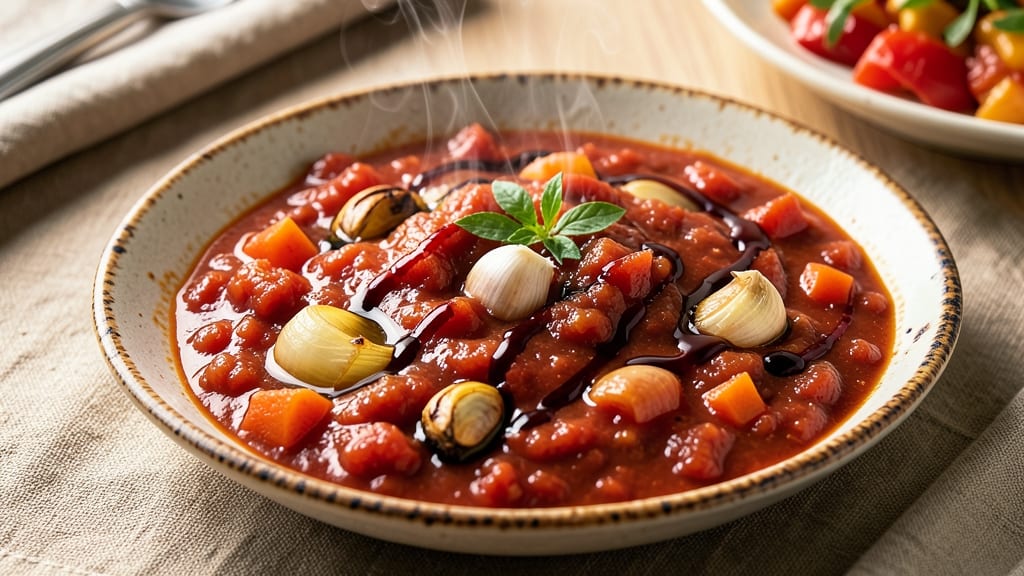
This all-day tomato sauce recipe transforms simple ingredients into a velvety, deeply flavorful base that elevates every Italian dish. The slow simmering process—typically 6 to 8 hours—develops rich, complex flavors that store-bought sauces can’t match.
I’ve perfected this method over years of testing, and it’s the secret behind restaurant-quality pasta, pizza, and stews that taste even better the next day.
The foundation starts with high-quality canned tomatoes, but the real magic happens through careful layering of aromatics—garlic, onions, and carrot—cooked low and slow until they dissolve into the sauce.
A splash of red wine adds depth, while a touch of sugar balances acidity, creating a sauce that’s both sweet and savory. The final fresh herb finish (basil or parsley) brightens the flavor and makes it taste freshly made.
What sets this sauce apart is its versatility and longevity. Use it immediately for pasta or pizza, or store it in the fridge for up to 5 days or freeze for 3 months without losing quality.
The slow cooking process also makes it naturally thick and rich, so you won’t need to add extra oil or flour to achieve that perfect consistency.
For extra depth, consider adding a pinch of smoked paprika or a splash of balsamic vinegar during cooking. The sauce pairs beautifully with meatballs, grilled chicken, or even as a marinade.
Whether you’re prepping for a week of meals or craving a taste of Italy, this sauce delivers restaurant-quality results with minimal effort.
Ingredients for all day tomato sauce
High-quality tomatoes, aromatics, and slow cooking create this velvety sauce foundation.
| Ingredient | Amount | Notes |
|---|---|---|
| San Marzano Crushed Tomatoes 🍅 | 28 oz | High-quality canned tomatoes |
| Yellow Onion 🧅 | 1 whole | Medium size, chopped |
| Carrot 🥕 | 1 whole | Medium size, diced |
| Garlic Cloves 🧄 | 4 cloves | Fresh, minced |
| Extra-Virgin Olive Oil 🫒 | ½ cup | For richness and flavor |
| Dry Red Wine 🍷 | ½ cup | Bold variety like Cabernet |
| Granulated Sugar 🍚 | 1 tbsp | Balances acidity |
| Fresh Basil Leaves 🌿 | ¼ cup | Packed, chopped |
| Sea Salt 🧂 | 1 ½ tsp | Diamond Crystal preferred |
| Freshly Ground Black Pepper 🌶️ | ½ tsp | For depth of flavor |
The tomatoes are the backbone—San Marzano is ideal, but any high-quality canned tomatoes work. Whole Foods or Trader Joe's carry excellent brands. Avoid tomatoes with added salt or preservatives. The onions and carrots should be fresh, not limp or discolored. Garlic cloves should be firm and free of sprouts. Olive oil quality matters here—California extra-virgin brands like Corto or Pompeian elevate the flavor. For the red wine, any bold, dry variety like Cabernet Sauvignon or Merlot will add depth without overpowering.
No red wine? Substitute with beef broth at the same amount, but add a splash of balsamic vinegar for acidity. Fresh basil is ideal, but dried oregano at one-third the amount works in a pinch. For a smokier flavor, add smoked paprika at one-quarter teaspoon. The sugar balances the acidity—if your tomatoes are particularly tart, you can increase to 1.5 tablespoons. If you prefer a chunkier sauce, reduce the tomatoes to 24 ounces and add 4 ounces of diced Roma tomatoes instead.
This sauce tastes even better the next day as flavors meld. Store in an airtight container in the fridge for up to 5 days. For longer storage, freeze in 1-cup portions for up to 3 months. The sauce thickens as it cools, so you can thin it with a splash of water or broth if needed. Always taste before adding salt—canned tomatoes can vary in saltiness. The fresh basil should be added just before serving to preserve its vibrant flavor.
Why You'll Love This Recipe
- No Chopping Chaos: I swear by the carrot’s pre-grated shortcut—just a quick pulse in the food processor while I stir the onions. The onions soften into sweet oblivion without me standing at the cutting board for 10 minutes.
- San Marzano Magic: That first spoonful of crushed tomatoes—sweet, meaty, with just a whisper of acid—makes me pause. Honestly, no jarred sauce compares. The garlic cloves, slow-simmered in olive oil, turn this into something restaurant-worthy without trying.
- Pantry-to-Pasta Powerhouse: I’ve used this sauce for everything from lazy weeknight dinners to potlucks where I brought the only thing people actually ate. Freeze half, and you’ve got Sunday dinner covered without last-minute stress.
- Budget That Works: A single can of San Marzano tomatoes stretches into meals for days—my wallet thanks me every time. The onion and carrot? Basic, cheap, and they transform this into something richer than store-bought blends. (Yes, even on a Tuesday night.)
Step-by-step instructions for slow-simmered tomato sauce
This method transforms simple ingredients into a deeply flavorful sauce through patience and technique.
Sauté the Aromatics in Olive Oil
Heat the 0.5 cup extra-virgin olive oil in a heavy-bottomed saucepan over medium-low heat. Add the 1 whole yellow onion and 1 whole carrot, both chopped into small pieces. Cook for 8-10 minutes until the vegetables soften and the onion becomes translucent.
This gradual cooking prevents burning while allowing the vegetables to release their natural sweetness. Stir occasionally to ensure even browning. Once the carrot pieces begin to soften and the onion loses its raw edge, you're ready for the next step. The oil should be shimmering but not smoking—this indicates proper heat control.
Add Garlic and Wine for Depth
Push the sautéed vegetables to one side of the pan and add the 4 cloves minced garlic cloves. Cook for 30 seconds until fragrant but not browned—garlic burns quickly, and you want to preserve its sweet, aromatic quality. Stir well to combine with the vegetables.
Pour in the 0.5 cup dry red wine, scraping up any browned bits from the bottom of the pan. This deglazing step captures all the flavor that would otherwise stick to the pan. Let the wine simmer for 3-4 minutes until it reduces by about half and the alcohol cooks off completely. You'll notice the aroma become more concentrated and complex.
Build the Sauce with Tomatoes and Seasonings
Add the 28 oz San Marzano crushed tomatoes, 1 tbsp granulated sugar, 1.5 tsp sea salt, and 0.5 tsp freshly ground black pepper. Stir well to combine. The sugar helps balance the acidity of the tomatoes while enhancing their natural sweetness. Bring the mixture to a gentle simmer over medium-low heat.
Partially cover the pan and let the sauce simmer for 45-60 minutes. This slow cooking allows the flavors to meld and the sauce to thicken naturally. Stir occasionally, especially if the sauce starts to stick to the bottom. You're looking for a sauce that coats the back of a spoon with a velvety texture. The longer it simmers, the more complex the flavors become.
Finish with Fresh Basil
Once the sauce has reached your desired consistency, remove it from the heat. Stir in the 0.25 cup chopped fresh basil leaves. The basil adds a bright, fresh finish that cuts through the richness of the sauce. Taste and adjust the seasoning if needed—you may need a touch more salt or sugar depending on the acidity of your tomatoes.
For best results, let the sauce sit at room temperature for 10-15 minutes before serving. This resting period allows the flavors to fully develop and the texture to settle. The sauce will continue to thicken slightly as it cools, so don't worry if it looks a bit loose when you take it off the heat.
Pro Tips For Making All Day Tomato Sauce
- Sweat, Don’t Burn, the Onion: I learned this the hard way—when you’re chopping onions for this sauce, cook them low and slow until they’re translucent and just starting to caramelize. Too much heat and they’ll turn bitter; too little and they’ll just turn into mush. A pinch of sugar (½ teaspoon) here speeds up the process without sacrificing flavor.
- Grind the Garlic, Don’t Chop: Minced garlic burns faster than you think, and burned garlic ruins a sauce. For this recipe, peel and smash the cloves flat with the side of your knife, then let them sit in the oil for 30 seconds before adding anything else. They’ll release their flavor without turning to ash.
- Stir the Sauce Early: Skim the foam off the tomatoes in the first 10 minutes—yes, it’s annoying, but it keeps the sauce from getting cloudy and bitter. Use a spoon to break up any chunks of carrot or onion that clump together, so everything blends smoothly.
- Salt the Tomatoes First: Before you even add the tomatoes, toss them with a teaspoon of salt and let them sit for 10 minutes. This draws out excess water, which means a thicker, more concentrated sauce by the end. (Your future self will thank you.)
Essential equipment for great all day tomato sauce
Heavy-Bottomed Saucepan
Your saucepan is the most critical tool—enamel-coated cast iron or stainless steel are my top picks. I swear by my All-Clad D5 for even heat distribution, but a Le Creuset Dutch oven works beautifully too.
Avoid thin aluminum pans—they heat unevenly and can scorch your sauce. A 5-6 quart capacity is ideal for this recipe, giving you enough room for the sauce to develop without overflowing. 🔥
Wooden Spoon
A heat-resistant wooden spoon (like Oxo Good Grips) is essential for stirring without scratching your pan. Wood gently folds the sauce while preventing metal-on-metal scraping that can release bitter flavors.
I keep one dedicated to sauces to avoid cross-contamination with other dishes. For extra durability, look for hickory or maple handles that won’t warp at high temperatures.
Fine-Mesh Strainer
If you prefer a smoother sauce, a fine-mesh strainer (I use OXO Good Grips) removes any vegetable bits after cooking. Place it over a bowl and gently press the sauce through—this step is optional but creates a silky texture perfect for pasta or pizza.
For a rustic finish, skip straining and embrace the chunky texture with 1-2 tbsp of reserved vegetables stirred back in at the end.
Immersion Blender
An immersion blender (like Ninja Foodi) lets you blend the sauce right in the pot for a perfectly smooth consistency. Simply submerge the blade and pulse for 10-15 seconds after removing from heat.
This avoids transferring hot liquid to a blender, which can be dangerous. For a hybrid texture, blend only half the sauce and mix it back in for a marbled effect with visible tomato pieces.
Kitchen Timer
Timing is everything with this sauce—slow simmering for 6-8 hours requires precision. I use a digital kitchen timer (like Kitchenaid) set for 45-minute intervals to check consistency. Pro tip: Place the timer near your stove so you don’t forget to stir occasionally.
A smart timer with alerts (like Amazon Basics) is worth the upgrade if you’re cooking for long periods.
Storage Containers
For leftovers, glass mason jars (like Ball or Le Parfait) are my go-to for fridge storage. They’re airtight, microwave-safe, and stackable. For freezing, silicone ice cube trays (like OXO Good Grips) let you portion sauce into 1-cup servings—perfect for future meals.
Label containers with the date to track freshness. A vacuum sealer (like FoodSaver) extends shelf life to 6 months by eliminating air exposure. ✨
Nutrition facts
Frequently asked questions
Can I make this sauce in a slow cooker?
Transfer all ingredients to a 6-quart slow cooker and cook on low for 8-10 hours or high for 5-6 hours. The texture will be slightly thicker due to evaporation, so add 1-2 tablespoons of water or broth if needed before serving. The slow cooker method is perfect for hands-off prep while you're busy with other tasks.
What's the best way to reheat leftover sauce?
For fridge-stored sauce, gently reheat in a saucepan over low heat while stirring frequently to prevent sticking. If using frozen portions, thaw overnight in the fridge first, then reheat. Never microwave directly from frozen—this creates a skin and uneven texture. A splash of water or broth helps restore the original consistency.
Can I add meat to this sauce?
Yes! Brown 1 pound of ground beef, Italian sausage, or pancetta first in olive oil, then proceed with the recipe. For extra richness, add the meat during the 45-minute simmering stage and cook until fully done. Drain excess fat if needed. This transforms your sauce into a hearty marinara perfect for lasagna or meatball subs.
Why does my sauce taste too acidic?
This usually happens with very tart tomatoes. Adjust by adding ½ teaspoon more sugar or 1 teaspoon balsamic vinegar during cooking. For immediate balance, stir in 1 tablespoon of tomato paste and simmer for 5 minutes. The slow simmering process naturally reduces acidity over time, so don't rush the cooking process. Taste frequently to monitor the flavor profile.
How can I make this sauce thicker?
Simmer uncovered for 10-15 extra minutes to reduce naturally. For quicker thickening, mix 1 tablespoon cornstarch with 2 tablespoons water, stir into the sauce, and simmer for 2-3 minutes. Avoid flour—it can make the sauce taste grainy. If the sauce is too thick after cooling, thin with warm water or broth as needed.