
Sauces & Condiments
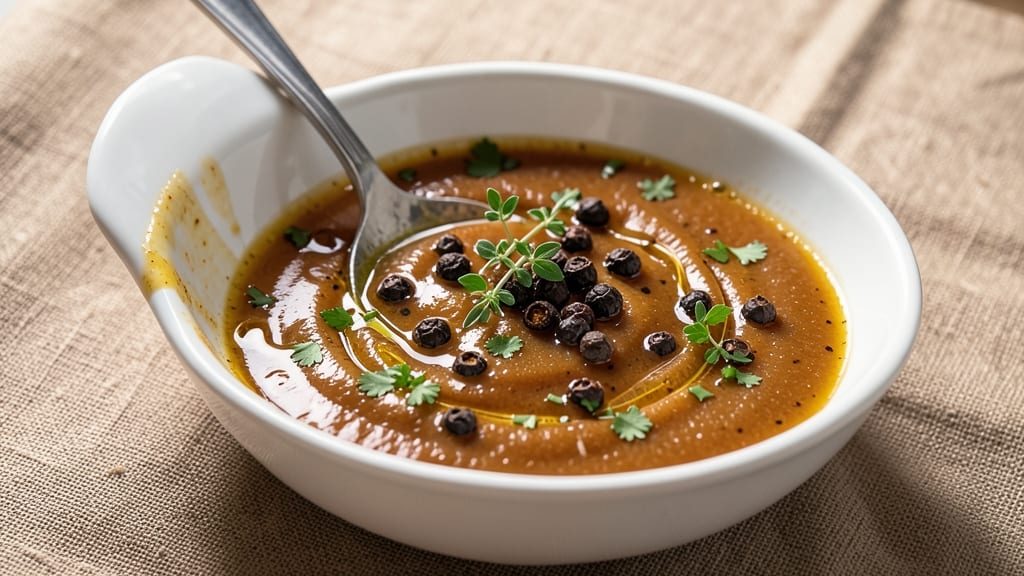
This alcohol-free peppercorn sauce delivers restaurant-quality depth and complexity without a drop of alcohol. The secret lies in slow simmering peppercorns with aromatic vinegar and rich broth, creating layers of warm, spicy-sweet flavor that clings to every bite.
I developed this version after craving that classic peppercorn sauce but wanting to keep it family-friendly and versatile for all occasions.
The sauce builds flavor through a 30-minute reduction process, where peppercorns release their natural oils and meld with the broth. A touch of honey or brown sugar balances the heat, while fresh herbs add brightness.
What makes this recipe special is how it transforms simple ingredients into something sophisticated—perfect for elevating roasted meats, creamy mashed potatoes, or even seafood dishes.
Once cooled, this sauce keeps beautifully in the refrigerator for up to 5 days, making it ideal for meal prep. Simply reheat gently on the stove, stirring occasionally, until warmed through.
The texture becomes velvety when strained, with just the right balance of peppery bite and smooth richness. It's the kind of sauce that makes ordinary meals feel like an occasion.
Pair it with grilled steak for a classic combination, drizzle over creamy scalloped potatoes, or use as a glaze for roasted vegetables. The possibilities are endless, but the technique remains simple: simmer, strain, and enjoy the depth of flavor without the alcohol. Here's how to make it perfectly every time.
Ingredients for alcohol free peppercorn sauce
Ten ingredients transform into a sophisticated peppercorn sauce without alcohol’s bite.
| Ingredient | Amount | Notes |
|---|---|---|
| Black Peppercorns 🌶️ | 2 tbsp | Whole, high-quality preferred |
| Vegetable Broth 💧 | 2 cups | Low-sodium preferred for balance |
| Apple Cider Vinegar 🍏 | ½ cup | Bragg or organic preferred |
| Brown Sugar 🍯 | 2 tbsp | Light or dark, packed |
| Fresh Thyme Leaves 🌿 | ¼ cup | Stems removed, finely chopped |
| Fresh Parsley Leaves 🌿 | ¼ cup | Flat-leaf, finely chopped |
| Extra-Virgin Olive Oil 🫒 | ½ cup | High-quality, fruity |
| Garlic Cloves 🧄 | 3 cloves | Peeled, minced |
| Shallots 🧅 | 2 whole | Peeled, finely minced |
| Salt 🧂 | 1 tsp | Diamond Crystal preferred |
The peppercorns are the foundation—look for whole, dark, and plump at specialty stores like Penzeys or bulk bins at Whole Foods. They should smell aromatic, not stale. Fresh thyme and parsley from the market add brightness, but dried works in a pinch (use half the amount). For vinegar, Bragg or organic apple cider vinegar delivers the best acidity balance. The broth matters too—low-sodium vegetable broth ensures you control the seasoning without hidden salt. If you can’t find shallots, sub with extra minced onion, but the shallot’s sweetness is worth the hunt.
No fresh thyme? Dried thyme at one-third the amount works, but fresh is ideal. Swap brown sugar for honey if preferred—both balance the peppercorn’s heat. The olive oil should be extra-virgin and fruity; none of that bitter, cheap stuff. For a deeper flavor, toast the peppercorns in a dry pan for 2 minutes before adding to the broth. The sauce’s velvety texture comes from straining—use a fine-mesh sieve or cheesecloth for the smoothest result. If you’re short on time, a quick blend and strain still delivers great flavor.
Store the sauce in an airtight container in the fridge for up to 5 days. The flavor deepens over time, so make extra—it’s perfect for drizzling over steak, roasted vegetables, or even mashed potatoes. To reheat, warm gently on low heat, stirring occasionally. For a restaurant-quality finish, finish with a drizzle of high-quality olive oil and a sprinkle of fresh parsley. Freezes beautifully for 3 months if stored in a sealed container.
Why You'll Love This Recipe
- Pantry Powerhouse: Honestly, this sauce comes together with stuff you already have—no fancy shopping required. Toss in crushed peppercorns, a splash of vinegar, and simmer until the thyme releases its magic. No last-minute grocery runs, no stress.
- Sweet Heat Balance: That brown sugar and apple cider vinegar combo? It’s the secret—sweet, tangy, with just enough peppery kick to wake up your taste buds. I’ll be real: the first time I tasted it, I immediately drizzled it on everything.
- Weeknight Flex: Dinner guests coming over? Slap this on roasted chicken, toss it with tofu, or drizzle it over mashed potatoes. It’s the kind of sauce that turns simple meals into something special without needing a recipe rewrite.
- Leftovers That Shine: Make a double batch—it keeps for days in the fridge and freezes like a dream. The flavors actually deepen over time, so you’re not stuck with lukewarm leftovers. (Yes, even on a Tuesday night.)
Step-by-step instructions for alcohol-free peppercorn sauce
This method delivers restaurant-quality depth using only pantry staples and fresh aromatics.
Toast the Peppercorns and Aromatics
Heat the 0.5 cup extra-virgin olive oil in a medium saucepan over medium-low heat. Add the 2 tbsp black peppercorns and toast them for 2-3 minutes until they begin to sizzle and release their essential oils—you'll smell an immediate aromatic punch. This step unlocks their full complexity.
Add the 2 whole shallots and 3 cloves garlic, cooking for another 3-4 minutes until the shallots soften and become translucent. Watch carefully—they should caramelize slightly at the edges but not brown. Remove the pan from heat and set aside for now. The residual heat will continue cooking the aromatics while we prepare the remaining components.
Build the Sauce Base
Return the pan to medium heat and add the 2 cups vegetable broth. Bring to a gentle simmer, then reduce heat to low and let it cook uncovered for 10 minutes to allow the flavors to meld. You'll notice the liquid reduce slightly and develop a deeper aroma—this is when the sauce begins to take shape.
Stir in the 0.5 cup apple cider vinegar and 2 tbsp brown sugar, then add the 1 tsp salt. The vinegar will brighten the flavors while the sugar helps balance the acidity. Simmer for an additional 5 minutes, stirring occasionally, until the mixture thickens slightly and coats the back of a spoon. This is your flavor foundation—don't rush this step.
Incorporate Herbs and Finish
Remove the pan from heat and stir in the 0.25 cup fresh thyme leaves and 0.25 cup fresh parsley leaves. Let the mixture steep for 5 minutes off the heat—the herbs will infuse the sauce with their bright, fresh notes. I like to press a spoon against the thyme leaves to release their oils into the sauce for maximum flavor impact.
For a smoother texture, strain the sauce through a fine-mesh sieve into a clean saucepan. Return it to low heat and simmer for another 3-4 minutes to reduce slightly if needed. The sauce should coat the back of a spoon with a velvety consistency. Taste and adjust seasoning—you may need a touch more salt or sugar to balance the flavors perfectly.
Rest and Serve
Transfer the sauce to a bowl and let it rest at room temperature for 15-20 minutes. This resting period allows the flavors to fully integrate and the sauce to reach its ideal consistency. The longer it sits, the more complex the flavor profile becomes.
Serve the sauce warm or at room temperature over roasted meats, grilled vegetables, or as a dipping sauce for crusty bread. For best results, reheat gently over low heat if needed, stirring constantly to prevent separation. This sauce keeps well in the refrigerator for up to 5 days, making it perfect for meal prep.
Pro Tips For Making Alcohol Free Peppercorn Sauce
- CRUSH THE PEPPERCORNS: I learned this the hard way—whole peppercorns just float and don’t release flavor. Use a mortar and pestle or a heavy-bottomed pan to toast them first (dry heat, 2-3 minutes), then grind them while warm—they’ll crack easier and infuse faster into the broth.
- SIMMER LOW AND SLOW: This sauce isn’t a race. After adding vinegar and sugar, reduce heat to a gentle simmer—not a boil—so the sugar caramelizes instead of turning bitter. I used to rush it, and the sauce always tasted harsh.
- STRAIN THE THYME STEMS: Fresh thyme leaves are great, but stems? They’re tough and add bitterness. Strip them off before adding—it takes 30 seconds and makes a real difference. (Yes, even if you’re impatient like me.)
- BALANCE THE VINEGAR: Apple cider vinegar adds tang, but too much overpowers the peppercorn depth. Start with 1 tablespoon per cup of broth, taste as you go, and adjust. You can always add more, but fixing astringency is harder.
Common mistakes when making your alcohol free peppercorn sauce
Skipping the Toast
Never skip toasting the peppercorns—this is where their essential oils release, creating that signature depth. I've made this mistake and ended up with a flat, one-dimensional sauce. Toast them in the olive oil over medium-low heat for 2-3 minutes until fragrant.
This step unlocks the full peppercorn flavor profile that makes your sauce stand out. 🌶️
Using Low-Quality Vinegar
Cheap vinegar will make your sauce taste harsh and unbalanced. I recommend Bragg apple cider vinegar or a high-quality organic brand. The acidity should complement, not overpower, the other flavors.
If your vinegar smells sharp or chemical-like, it's time to upgrade. The right vinegar adds brightness and complexity that cheap alternatives can't match.
Over-Simmering the Broth
Simmering too long reduces the broth too much, concentrating flavors unevenly. Aim for 10-15 minutes total simmering time after adding the broth. If you let it boil vigorously, you'll end up with a bitter, over-reduced sauce.
Keep the heat at low and stir occasionally to prevent scorching at the bottom of the pan.
Neglecting the Resting Time
Rushing to serve immediately means missing out on flavor development. Let the sauce rest for 15-20 minutes at room temperature before serving. This allows all the components—peppercorns, herbs, and aromatics—to meld together harmoniously.
I've learned the hard way that skipping this step results in a sauce that tastes disjointed rather than cohesive. 💫
Straining Too Early
Straining before the herbs have infused means losing valuable flavor. Let the herbs steep for 5 minutes off the heat before straining. If you strain too soon, you'll miss out on the bright, herbal notes that balance the peppercorn's intensity.
Use a fine-mesh sieve or cheesecloth for the smoothest texture without losing too much flavor.
Ignoring the Honey/Sugar Balance
The brown sugar or honey isn't just for sweetness—it balances the peppercorn's heat and vinegar's acidity. If you skip it or use too little, your sauce will taste sharp and unbalanced.
Start with 2 tbsp and adjust to taste. I often find I need a little more sugar than I think, especially if I'm using tart vinegar. Taste as you go!
Nutrition facts
Frequently asked questions
Can I substitute white peppercorns for black in this recipe?
Yes, but expect a milder flavor profile. White peppercorns have a subtler, slightly sweeter taste compared to black's bold heat. Use the same amount, but you may need to add an extra pinch of salt to compensate for their gentler flavor. For best results, toast them just like black peppercorns to release their oils.
How can I make this sauce thicker or thinner?
For a thicker sauce, simmer uncovered for an extra 5-10 minutes to reduce the liquid further. If it's too thick, whisk in 1-2 tablespoons of warm water or broth until you reach your desired consistency. Remember, the sauce will thicken slightly more as it cools, so adjust gradually.
Is this sauce suitable for vegetarians or vegans?
This recipe is naturally vegetarian and can be easily adapted for vegans. Simply ensure your vegetable broth is vegan-friendly (check for meat-based additives) and use vegan olive oil. The sauce's rich, peppery flavor works beautifully with plant-based dishes like roasted mushrooms or lentil stews.
What's the best way to reheat this sauce?
Reheat gently over low heat in a saucepan, stirring constantly to prevent separation. Avoid high heat, which can make the sauce split or develop a skin. If needed, add a splash of warm water or broth to loosen the texture. For microwave reheating, use 30-second intervals on low power, stirring well between each.
Can I make this sauce without vinegar?
While vinegar adds brightness, you can substitute with lemon juice (use ¼ cup) or a splash of white wine vinegar (if alcohol isn't a concern). For a completely alcohol-free alternative, try rice vinegar or a touch of tomato paste (1 tsp) for depth. The sauce will be less tangy but still delicious.