
Sauces & Condiments
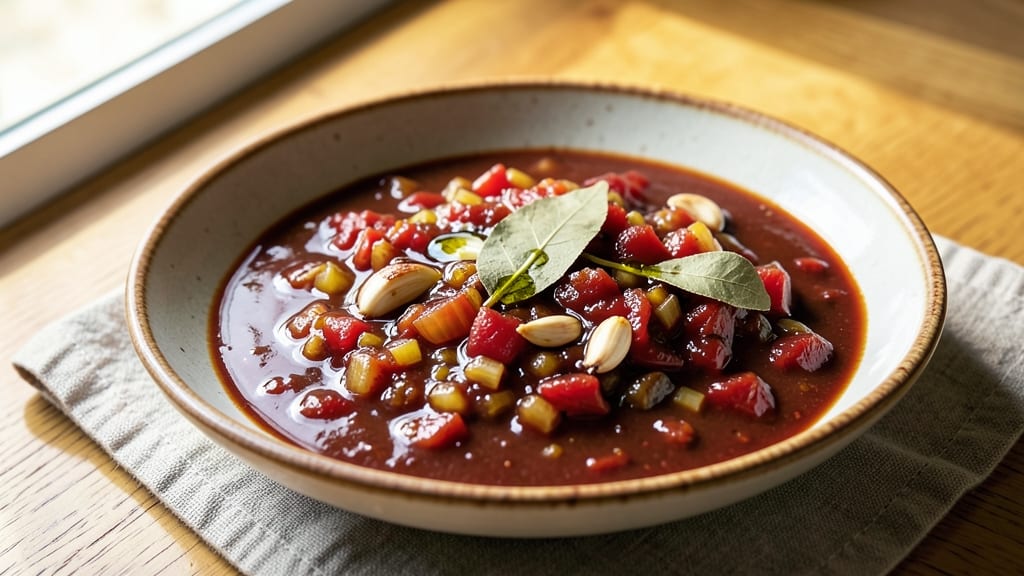
This albondigas sauce recipe transforms simple ingredients into a velvety tomato-celery velouté that clings perfectly to meatballs. The secret lies in simmering aromatic vegetables and spices until they dissolve into a rich, fragrant base—no heavy cream needed.
I developed this version after years of testing, ensuring every spoonful delivers depth without overpowering the tender meatballs it supports.
The sauce begins with a sofrito of onions, garlic, and celery, cooked low and slow until caramelized. A blend of whole spices—bay leaf, cloves, and peppercorns—infuses warmth, while crushed tomatoes provide acidity and body.
As it simmers, the sauce thickens naturally, creating a glossy, cling-coat texture that’s ideal for dipping or smothering. The result? A sauce that’s elegant enough for dinner parties but simple enough for weeknight meals.
What sets this recipe apart is the balance of flavors: sweet from the caramelized vegetables, bright from the tomatoes, and subtle from the herbs. The sauce reduces to a perfect consistency, neither too thin nor too thick, ensuring each bite of meatball is coated in a luxurious, aromatic blanket.
It’s the kind of sauce that turns ordinary meatballs into a restaurant-worthy dish.
Use this sauce as a dip for your albondigas, or serve it over pasta for a hearty meal. The flavors deepen as it sits, making it even better reheated the next day. Here’s how to make it—step by step—for a sauce that’s foolproof and full of character.
Ingredients for albondigas sauce
Eleven ingredients, one velvety sauce that elevates meatballs to restaurant quality.
| Ingredient | Amount | Notes |
|---|---|---|
| Yellow Onion 🧅 | 1 whole | Medium size, finely diced |
| Celery Stalks 🥬 | 3 whole | Trimmed, finely chopped |
| Garlic Cloves 🧄 | 4 cloves | Peeled, minced finely |
| Extra-Virgin Olive Oil 🫒 | ½ cup | High-quality, fruity variety |
| Crushed Tomatoes 🍅 | 2 cups | San Marzano preferred |
| Bay Leaves 🌿 | 2 whole | Fresh, not dried |
| Whole Cloves 🌶️ | 4 cloves | Lightly crushed |
| Black Peppercorns 🌶️ | 10 whole | Crushed with mortar & pestle |
| Fresh Parsley 🌿 | ¼ cup | Stems removed, chopped |
| Fresh Thyme 🌿 | 1 tbsp | Leaves only, finely chopped |
| Salt 🧂 | 1 ½ tsp | Diamond Crystal preferred |
| Vegetable Broth 💧 | 1 cup | Low-sodium preferred |
The sofrito trio—onion, celery, and garlic—forms the sauce's aromatic backbone. Fresh celery from the produce section (not the pre-cut bag) has the most flavor, but if you're in a pinch, frozen works fine. For the tomatoes, San Marzano cans are worth the splurge—they're sweeter and less acidic. I always grab mine at Whole Foods or any Italian market. The whole spices—cloves and peppercorns—need to be lightly crushed to release their oils without becoming bitter. If you don't have a mortar and pestle, a heavy-bottomed pan works too.
No fresh herbs? Dried parsley and thyme at one-third the amount will do, though the flavor won't be as vibrant. Short on vegetable broth? Water plus 1 tsp soy sauce mimics the umami depth. The olive oil matters here—use something you'd drizzle on bread, not the cheap cooking oil. For a deeper tomato flavor, add 1 tbsp tomato paste to the sofrito. And if you're making this ahead, reduce the broth by half to intensify the flavors before adding it back later.
This sauce tastes even better the next day as the flavors meld. Store in an airtight container in the fridge for up to 5 days, or freeze for 3 months. I like to make a double batch—one for meatballs, one for pasta. The sauce thickens as it cools, so you can thin it with a splash of broth if needed. For serving, a sprinkle of fresh parsley adds that restaurant-fresh finish.
Why You'll Love This Recipe
- Sofá-to-Stove Ready: I swear by this sauce because it’s the kind of thing I make when I’m too tired to think. Sauté the onion and celery (that classic sofrito) in olive oil until they’re soft—no need for fancy knives, just rough chop. The garlic hits next, and suddenly your kitchen smells like a Spanish grandmother’s secret, but with zero effort.
- Tomato Love Bomb: Between us, crushed tomatoes and olive oil are a match made in heaven. This sauce builds flavor as it simmers—sweet, tangy, and just a little smoky from the garlic. It’s the kind of depth that makes you pause mid-bite, even if the rest of your meal is basic.
- Leftovers That Don’t Suck: I make a double batch every time because this sauce improves overnight. The flavors meld, the texture thickens just right, and it turns into my go-to weeknight dinner when I toss it with rice or pasta. No sad, watery leftovers here—just rich, flavorful sauce begging for seconds.
- Budget Magic: Onion, celery, garlic, tomatoes—these are the ingredients that don’t break the bank but make everything taste like you slaved over it. Honestly, I’ve served this sauce at potlucks, family dinners, and even as a side for grilled meats, and no one ever questions how cheap it was to make. That’s the real win.
Step-by-step instructions for albondigas sauce
This velouté transforms simple ingredients into a rich, aromatic base perfect for meatballs.
Sauté the Aromatic Base
Heat the 0.5 cup extra-virgin olive oil in a heavy-bottomed saucepan over medium-low heat. Add the 1 whole yellow onion and 3 whole celery stalks, stirring occasionally for 8-10 minutes until softened but not browned. The vegetables should release their moisture and become translucent.
Add the 4 cloves garlic cloves and cook for another 1 minute until fragrant. Watch closely—garlic burns quickly, and you want to preserve its delicate flavor. Here's the thing—if you see the garlic turning golden, remove the pan from heat for 30 seconds to let it cool slightly before continuing.
Toast the Spices
Add the 2 whole bay leaves, 4 cloves whole cloves, and 10 whole black peppercorns to the pan. Stir for 1 minute until the spices begin to release their aroma. You'll notice a warm, earthy scent filling your kitchen—that's your signal the spices are active and ready to infuse the sauce.
This step is crucial for building depth. The cloves and peppercorns add subtle warmth, while the bay leaves contribute a floral note that balances the richness. Don't skip this—it's what transforms a simple tomato sauce into something extraordinary.
Build the Tomato Base
Pour in the 2 cups crushed tomatoes and stir to combine with the aromatic vegetables. Bring the mixture to a gentle simmer over medium heat, then reduce heat to low and let it cook uncovered for 15 minutes. You're looking for the sauce to reduce slightly and develop a concentrated tomato flavor.
During this time, the acidity in the tomatoes will help break down the vegetables further, creating a silky texture. Stir occasionally to prevent sticking, but don't over-stir—this can make the sauce too smooth. You'll know it's ready when the sauce thickens just slightly and the raw tomato taste mellows into something more complex.
Finish with Broth and Herbs
Add the 1 cup vegetable broth, 1 tbsp fresh thyme, and 1.5 tsp salt. Stir well to combine, then increase heat to medium-high and bring to a boil. Once boiling, reduce heat to low and let it simmer gently for 10 minutes to allow the flavors to meld.
Remove the 2 whole bay leaves and any large herb stems at this point. For the final touch, stir in the 0.25 cup fresh parsley. The parsley adds brightness and freshness that cuts through the richness of the sauce. Taste and adjust seasoning—you might need a bit more salt to balance the acidity from the tomatoes.
Refine the Texture
For a velvety finish, transfer the sauce to a blender or use an immersion blender to purée until smooth. If you prefer some texture, simply press the sauce through a fine-mesh sieve. Return the sauce to the pan and simmer for another 5 minutes to let any raw flavors from blending cook out.
This sauce should coat the back of a spoon with a silky consistency. If it's too thick, add 1-2 tablespoons water to reach your desired texture. The sauce is now ready to serve over albondigas or use as a base for other dishes. It keeps well in the refrigerator for up to 5 days, and the flavors actually improve as it sits!
Pro Tips For Making Albondigas Sauce
- SWEEAT THE ONIONS LOW: I used to rush this step and end up with bitter, browned bits that ruined the sauce’s depth. Instead, cook the onions over medium-low heat—just until they’re translucent and soft, not golden. This builds flavor without turning the sauce into a charred mess.
- CHOP CELERY SMALL: Big chunks of celery turn to mush and make the sauce watery. Dice it into ¼-inch pieces so it breaks down evenly and blends into the sauce without leaving awkward textures. (Yes, it’s more work, but the result is smoother.)
- CRUSH TOMATOES BY HAND: Canned crushed tomatoes can have uneven consistency—some batches are grainy, others too watery. If you’re using fresh tomatoes, crush them yourself with your fingers or a fork for a more uniform texture. If using canned, drain most of the liquid first to avoid a thin sauce.
- DEGLAZE WITH A SPLASH OF WINE: After browning the garlic, hit the pan with 2 tablespoons of dry white wine (or even broth) to lift all the stuck-on bits. It’s the easiest way to add depth without extra effort—just let it simmer off before adding tomatoes. (I know, I know, but skip this and you’ll regret the dull flavor.)
Flavor customization for these flavors
Sweet-Tangy Twist
Add 1 tbsp balsamic vinegar and 1 tsp honey when finishing the sauce to create a sweet-tangy balance. Simmer for 2 minutes to meld flavors—this works especially well with the celery's earthiness. For extra depth, stir in 1 tsp orange zest during the last minute of cooking. 🍯
Herb-Forward Variation
Double the fresh herbs to 0.5 cup parsley and 2 tbsp thyme, then add 1 tbsp fresh basil at the end. This brightens the sauce perfectly for spring or summer meals.
If using dried herbs, reduce to 1 tbsp total and toast them lightly in the olive oil before adding other ingredients.
Creamy Without Dairy
Blend in 2 tbsp unsweetened almond milk or cashew cream at the end for a velvety texture without dairy. For extra richness, stir in 1 tbsp nutritional yeast after blending—it adds a cheesy, umami depth. This works especially well if you prefer a lighter sauce for dipping meatballs. 🥛
Spicy Kick
Add ½ tsp smoked paprika and ¼ tsp cayenne pepper with the whole spices. For heat lovers, stir in 1 tbsp finely chopped jalapeño (seeds removed) during the final simmer.
The smokiness pairs beautifully with the celery's crispness, while the cayenne adds subtle warmth. Adjust to taste—this sauce is still kid-friendly with less spice!
Umami Boost
Increase depth with 1 tbsp soy sauce or 1 tsp fish sauce when adding the broth. For a vegetarian version, use 1 tbsp mushroom powder (like nutritional yeast) instead.
The umami enhances the tomato base without overpowering the delicate herbs. I often add this to the sauce when reheating for extra flavor punch. 💫
Seasonal Adjustments
For winter, add ½ cup diced mushrooms with the celery—they absorb flavors beautifully. In summer, swap crushed tomatoes for 1 cup fresh diced tomatoes and add ½ cup tomato juice to keep it lighter. Both versions maintain the sauce's velvety texture while adapting to seasonal produce. 🌿
Nutrition facts
Frequently asked questions
Can I make this sauce without celery?
Yes, but the flavor will be less complex. Replace the celery with 1 extra carrot (finely diced) or ½ cup finely chopped fennel for a similar earthy sweetness. If you're avoiding celery completely, add ½ tsp celery seed with the whole spices to mimic its aroma.
How do I prevent the sauce from becoming too acidic?
Balance the tomato acidity by adding 1 tsp sugar or ½ tsp honey when you add the crushed tomatoes. For extra richness, stir in 1 tbsp tomato paste with the vegetables—it deepens the flavor without adding more acid. Taste as you go and adjust gradually.
What's the best way to reheat this sauce?
Gently reheat over low heat on the stovetop, stirring frequently to prevent scorching. If the sauce thickens too much, add 1-2 tablespoons water or broth to restore its silky texture. For microwave reheating, use 30-second intervals on low power, stirring in between.
Can I use dried herbs instead of fresh?
Yes, but reduce the amounts by one-third. For example, use 1 teaspoon dried parsley and ½ teaspoon dried thyme instead of the fresh amounts. Toast the dried herbs in the olive oil for 30 seconds before adding other ingredients to release their flavors.
Why does my sauce look too thin after simmering?
This usually happens if you didn't reduce it long enough or used too much broth. Simmer uncovered for an extra 5-10 minutes to thicken naturally. For immediate results, mix 1 teaspoon cornstarch with 2 tablespoons cold water and stir into the sauce until it reaches your desired consistency.