
Sauces & Condiments
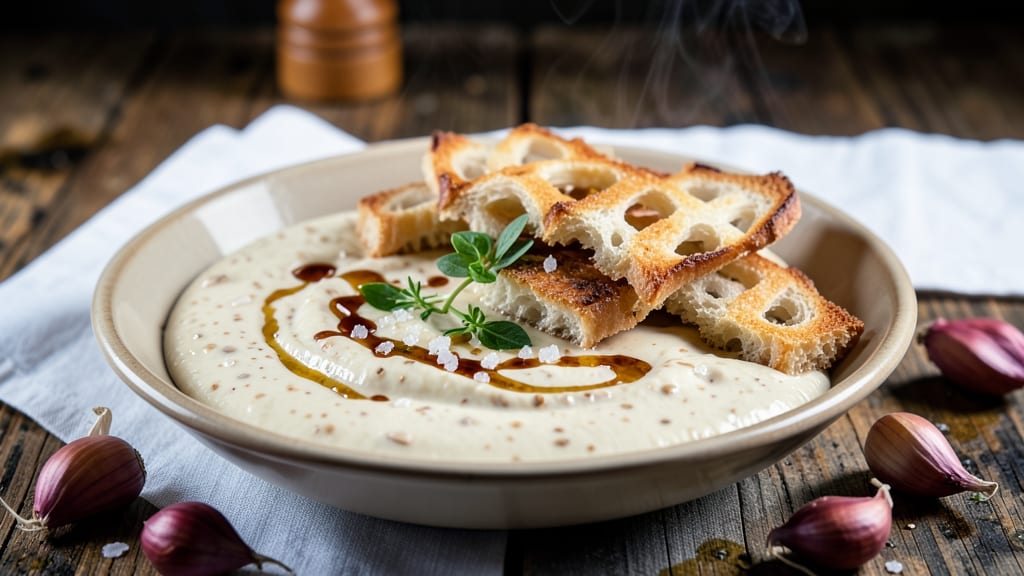
This ajo blanco sauce recipe brings Andalusian charm to your table with its signature chilled, velvety texture and bold garlic-almond flavor profile. 💛 The traditional Spanish sauce transforms simple ingredients into something extraordinary—creamy yet light, with just the right balance of tangy sherry vinegar and nutty almond richness.
What makes ajo blanco special is its versatility: it works as a refreshing chilled soup, an elegant drizzle for seafood, or a sophisticated accompaniment to grilled dishes.
The secret to achieving that signature smooth, almost mousse-like consistency lies in proper almond preparation and blending technique. Toasted almonds provide natural creaminess without dairy, while garlic and bread form the flavor foundation.
I've refined this recipe to deliver restaurant-quality results at home with just 10 minutes of prep and 30 minutes of chilling time. The sauce keeps beautifully in the refrigerator for up to 5 days, making it perfect for meal prep.
By the time you're done, you'll have a sauce that's silky-smooth with a delicate sheen from the olive oil, carrying complex flavors in every spoonful. The garlic's pungency is perfectly balanced by the almond's nuttiness and the vinegar's brightness, creating a harmonious taste experience.
This isn't just a condiment—it's a flavor experience that elevates any dish it touches.
Whether you're serving it as a light first course, drizzling it over grilled shrimp, or using it as a base for seafood stews, ajo blanco brings a touch of Spanish sophistication to your cooking.
The best part? It's equally impressive served at room temperature or chilled—making it perfect for any occasion. Let's create this versatile sauce that will become a staple in your kitchen.
Ingredients for ajo blanco sauce
Eight simple ingredients transform into Andalusian elegance with just a blender and patience.
| Ingredient | Amount | Notes |
|---|---|---|
| Raw Almonds 🥜 | 1 cup | Toasted for nutty depth |
| Extra-Virgin Olive Oil 🫒 | 1 cup | High-quality, fruity variety |
| Garlic Cloves 🧄 | 6 whole | Peeled, lightly crushed |
| Stale Bread 🍞 | ½ cup | Crusts removed, cubed |
| Sherry Vinegar 🍷 | ¼ cup | Dry, aged variety preferred |
| Salt 🧂 | ½ tsp | Fine sea salt preferred |
| Cold Water 💧 | ½ cup | For blending consistency |
| Lemon Juice 🍋 | 1 tbsp | Freshly squeezed |
Almonds are the heart of ajo blanco, so look for raw, not blanched—they toast better and add more texture. Trader Joe's and Whole Foods carry the best quality, but any store's bulk bin works. Toast them until golden (about 5 minutes) for maximum flavor. The bread? Stale is key—fresh bread makes the sauce gummy. Save crusts from your last loaf or buy a baguette specifically for this. For sherry vinegar, Spanish brands like La Salada give the most authentic tang, but any dry vinegar will work in a pinch.
No almonds? Cashews or macadamias work beautifully—just soak them first for creaminess. Running short on sherry vinegar? White wine vinegar or apple cider vinegar both work, but you'll lose that signature Spanish depth. The bread can be any kind—baguette, sourdough, or even gluten-free—but avoid sweet breads like brioche. For extra richness, add 1 tbsp tahini to the blend. And if your garlic is too strong, roast it first to mellow the flavor—trust me on this.
This sauce keeps 5 days in the fridge, sealed tightly under olive oil to preserve freshness. For serving, chill it at least 30 minutes—the texture improves dramatically. If it thickens too much, whisk in cold water a teaspoon at a time. Freezes beautifully for up to 3 months—just thaw in the fridge overnight. The longer it sits, the more the flavors meld together, so make a double batch if you can—it disappears fast.
Why You'll Love This Recipe
- I’ll be real: this recipe saves me money and scraps. That stale bread? Would’ve gone straight to the bin. The almonds? A bulk-buy staple. And the leftovers? They keep for days in the fridge, ready to elevate whatever’s on my plate. Not the prettiest, but the taste makes up for it—every time.
- Pantry Magic: I swear by this sauce because it turns nothing into something special—no fancy shopping required. That stale bread? Perfect. Raw almonds? Already in your cupboard. The moment I blend garlic, olive oil, and sherry vinegar into a silky emulsion, my kitchen smells like a tapas bar.
- Garlic Love: Between us, this sauce is all about the garlic—crushed, toasted, and blended until it’s velvety but still packs a punch. The raw almonds add this nutty richness that balances the sharpness, and the sherry vinegar? It’s the secret that keeps the flavors bright and addictive. Honestly, I’ll make it just for dipping bread.
- Cold or Warm: Here’s what sold me—this sauce works anytime. Toss it with roasted veggies straight from the oven, drizzle it over chilled seafood, or slather it on grilled bread for breakfast. It’s my go-to for lazy Sundays or last-minute weeknight dinners. No rules, just flavor.
Step-by-step instructions for ajo blanco sauce
This Andalusian classic transforms humble ingredients into velvety, chilled perfection—ideal for seafood.
🔥 Step 1: Toast the Almonds and Garlic
Heat a dry skillet over medium-low heat. Add the 1 cup raw almonds and toast for 4-5 minutes, stirring constantly until they turn a rich golden brown and release their nutty aroma. Remove from heat immediately—they'll continue cooking from residual heat.
While the almonds toast, add the 6 whole garlic cloves (peeled) to the same skillet and cook for 1-2 minutes until fragrant but not browned. You want sweet, mellow garlic flavor—not bitter. Transfer both to a food processor immediately to preserve their freshness.
👨🍳 Step 2: Blend the Base Ingredients
Add the toasted almonds and garlic to the food processor along with the 0.5 cup stale bread cubes and 0.5 tsp salt. Pulse until everything forms a coarse crumbly texture, about 10-15 seconds. This creates the perfect foundation for the sauce's signature texture.
With the processor running, slowly drizzle in the 1 cup extra-virgin olive oil through the feed tube. This gradual addition emulsifies the mixture beautifully. Stop when the texture resembles wet sand—smooth but still slightly granular. Scrape down the sides to ensure even blending.
🥘 Step 3: Incorporate the Acidic Elements
Add the 0.25 cup sherry vinegar and 1 tbsp lemon juice to the processor. Pulse again until fully combined. The acidity brightens the flavors and balances the richness. Taste at this stage—the sauce should be tangy with a subtle sweetness from the toasted almonds.
With the processor running, very slowly pour in the 0.5 cup cold water. This liquid helps create the signature silky consistency while preventing the sauce from becoming too thick. Process until completely smooth, about 30-45 seconds. The sauce should coat the back of a spoon but still be pourable.
⏰ Step 4: Chill and Refine
Transfer the ajo blanco to a bowl and cover with plastic wrap, pressing the wrap directly onto the surface to prevent a skin from forming. Refrigerate for at least 2 hours—this chilling time is crucial for developing the sauce's signature creamy texture and allowing flavors to meld.
Before serving, give the sauce a final taste and adjust seasoning if needed. It should be perfectly balanced between nutty, garlicky, and tangy. If too thick, thin with an additional 1-2 tablespoons cold water. If too thin, blend in 1 teaspoon extra-virgin olive oil to restore body.
Pro Tips For Making Ajo Blanco Sauce
- TOAST THE ALMONDS LOW: Skip the high-heat blitz—toast your raw almonds in a dry pan over medium-low for 8-10 minutes until they smell nutty and turn pale gold. Burning them turns the sauce bitter, and I learned that the hard way after one disastrous batch where the whole kitchen smelled like smoke.
- SOAK THE BREAD FIRST: Tear your stale bread into chunks and soak them in cold water for 10 minutes before blending. This prevents a gummy, gluey texture in the sauce—no one wants to taste wet cardboard. (Yes, even if you're impatient like me.)
- PULSE THE GARLIC: Add your garlic cloves to the blender after the bread and almonds, then pulse 3-4 times instead of blending continuously. This keeps the sauce smooth without turning it into garlic paste—trust me, your guests will notice the difference.
- SWEAT THE OIL: Heat your olive oil in the pan until it shimmers at 300°F (150°C) before adding the garlic-almond mixture. This ensures the sauce gets that rich, nutty depth without the garlic burning. Use a thermometer if you’re skeptical—your future self will thank you.
Dietary considerations for this dish
Gluten-Free Adaptation
Ajo blanco traditionally contains bread, but you can easily make this gluten-free by using a gluten-free bread like Canyon Bakehouse or Schar for the 0.5 cup stale bread cubes.
For an even lighter texture, substitute with gluten-free crackers (like Simple Mills) or certified gluten-free corn tortillas—just toast them lightly first to mimic the bread's role. The sauce's creaminess comes from the almonds and olive oil, so the texture stays intact. 🌱
Nut-Free Version
If you're avoiding nuts, swap the 1 cup raw almonds for 1 cup cooked and cooled white beans (like cannellini or great northern) or 1 cup silken tofu for a dairy-free, nut-free option. For beans, drain and rinse well to remove excess starch, then blend with the other ingredients.
Silken tofu adds a naturally creamy texture without altering the sauce's balance. Both alternatives require slightly more water (1-2 tbsp extra) to reach the ideal consistency.
Dairy-Free & Vegan
This sauce is already naturally dairy-free and vegan, but you can enhance its richness by adding 1 tbsp tahini or 1 tbsp nutritional yeast during blending. The tahini deepens the nutty flavor, while nutritional yeast adds a subtle umami note.
For extra creaminess, blend in 2 tbsp coconut cream (not coconut milk) after chilling. The sauce remains light and refreshing while satisfying plant-based diets. 🌿
Low-Fat Option
To reduce fat without sacrificing flavor, use light olive oil (like Bertolli Light) instead of extra-virgin, cutting the amount to 0.75 cup. Replace the remaining 0.25 cup with unsweetened almond milk or coconut water for a lighter body.
The sauce will still coat the back of a spoon but with fewer calories. For extra texture, add 1 tbsp ground flaxseed—it mimics the almond's creaminess while boosting fiber content.
Allergen-Friendly Tips
For soy-free versions, avoid tahini and use sunflower seed butter instead—it blends smoothly and adds a neutral, nutty depth. If avoiding sesame, skip tahini entirely and rely on the almonds (or substitutes) for creaminess.
Always check labels on bread and vinegar for hidden allergens like mustard or wheat. I keep a cross-contamination-free workspace when making allergen-sensitive versions, using separate utensils and blending tools. 💡
Nutrition facts
Frequently asked questions
Can I make ajo blanco without a food processor?
Yes! For a smoother texture, use a high-powered blender or immersion blender. If you only have a regular blender, pulse the almonds, garlic, and bread into a fine crumb first, then whisk in the olive oil and liquids gradually. For a rustic version, you can even mash the toasted almonds and garlic with a mortar and pestle, then whisk with the other ingredients—it'll be chunkier but still delicious.
Why does my ajo blanco taste bitter?
Bitter ajo blanco usually means the garlic was overcooked or too strong. Always toast garlic just until fragrant (1-2 minutes) and remove it immediately. For mellow flavor, try roasting the garlic whole in its skin at 400°F for 30 minutes before peeling. If it's still too strong, add 1 extra tbsp lemon juice to brighten the flavors.
How long can I store ajo blanco, and can I freeze it?
The sauce keeps in the refrigerator for up to 5 days in an airtight container. For freezing, portion into ice cube trays or small containers—it freezes beautifully for up to 3 months. Thaw overnight in the fridge for best texture. To prevent a skin from forming, always press plastic wrap directly onto the surface before refrigerating.
What's the best way to serve ajo blanco?
This versatile sauce works as a chilled soup, drizzled over grilled seafood, or paired with cold cuts and crusty bread. For a traditional Spanish presentation, serve it in shallow bowls with a drizzle of olive oil and a sprinkle of smoked paprika. It also makes an excellent base for seafood stews or as a dip for fresh vegetables. The colder it gets, the creamier it becomes!
Can I make ajo blanco ahead of time for a party?
This sauce actually tastes better after 24 hours as the flavors meld together. Make it a day ahead and store it in the fridge. For serving, give it a quick whisk to restore its silky texture. If you're prepping for a large group, double the recipe—the crowd will disappear! Just